
Youth 2026 Box Office Collection Day 2: Budget, Breakeven Point and ROI Analysis for Ken Karunaas Film

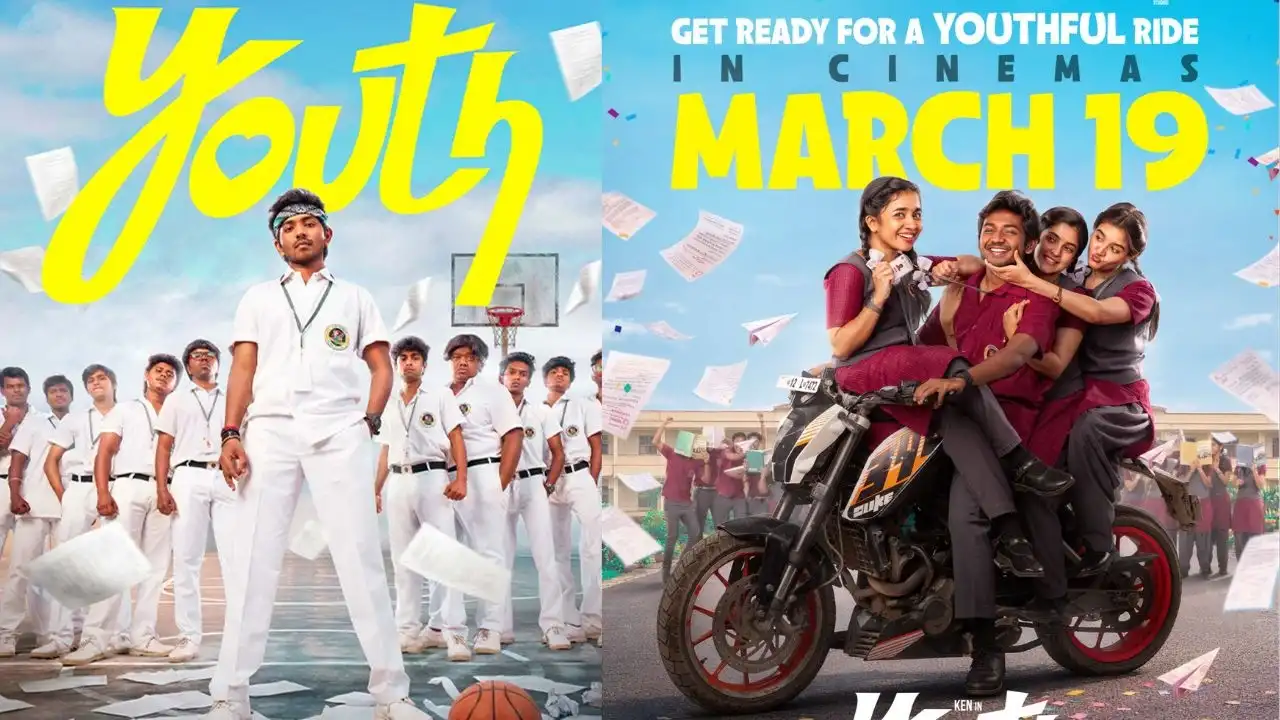
Chennai, Saturday, March 21, 2026 — While the entire trade was busy counting the hundreds of crores of Ranveer Singh’s Dhurandhar 2, a silent storm was brewing in the corridors of Kollywood.
Youth 2026, the directorial debut of Ken Karunaas, has officially turned into the dark horse of the season. After a humble yet solid start of 3.78 crore net on Thursday, the film has defied gravity by crossing the 8 crore mark by the end of its second day. This coming-of-age drama isn’t just surviving the clash with big-budget titans; it is thriving.
With a digital acquisition deal already locked with Netflix and positive word-of-mouth spreading like wildfire, the industry is now asking the million-dollar question: exactly what is the breakeven point for this teenage saga?
The film, which marks the debut of Ken Karunaas as both lead actor and director, has managed to capture the “Attakathi vibe” that today’s generation craves.
Released on the festive occasion of Ugadi, Youth 2026 follows the journey of Praveen, a 15-year-old boy navigating the messy, emotional terrain of school-time love.
Despite being sandwiched between Pawan Kalyan’s Ustaad Bhagat Singh and the Ranveer Singh-led Dhurandhar: The Revenge, the film recorded an impressive 34.8 per cent occupancy on its opening day. This isn’t just a win for the Karunaas family; it is a signal to the industry that content-driven, small-budget films can still claim their theatrical window if they hit the right emotional notes.
The Financial Safety Net: Why Youth 2026 is Already a Winner
Behind the scenes, the economics of Youth 2026 are as fascinating as its screenplay.
While most big-budget films are currently struggling with massive backend deals and high interest costs, Ken Karunaas and producers Karuppiah C. Ram and Sulochana Kumar played a smart game. According to reports from Cinema Express and Sacnilk, the film’s financial risk was significantly mitigated even before the first ticket was sold.
One of the most talked-about “backend deals” in the trade was G.V. Prakash Kumar’s involvement.
At the audio launch, Karunaas revealed that the music director, a heavy hitter in the industry, did not charge a single penny for the score, providing his services for free to support the young filmmaker. This move alone slashed a significant chunk from the production budget.
Furthermore, the post-theatrical rights have already been a major source of ROI (Return on Investment).
Netflix has reportedly bagged the digital acquisition for a sum that covers a substantial portion of the cost of production.
When you combine this with the theatrical rights sold to local distributors at a reasonable valuation, the pressure on the box office to perform was never as high as it is for a superstar vehicle.
However, the current trajectory suggests that the producers won’t just be safe; they are looking at a healthy profit-sharing scenario. The theatrical window for a film like this is usually four weeks, and with no major Tamil releases in the immediate week following, the road is clear for a long-term run.
Where the Rumours Started: Decoding the Trade Numbers
As per trade expert reports from Koimoi and Filmibeat, Youth 2026 has registered Kollywood’s second-biggest opening of 2026, trailing only behind Sivakarthikeyan’s Parasakthi. It even managed to surpass the opening day numbers of Thaai Kizhavi.
The “Reality Check” here is that while 3.78 crore might look small compared to a 100-crore opener, the scale of release was much tighter. The film relied on 66 major shows in prime centres initially, but the occupancy jumped from morning (26%) to night (41%), indicating a genuine organic pull. It’s a direct question to the market: do we really need 200-crore budgets to bring the youth back to the theatres, or do we just need a story that mirrors their own lives?
The mood in the distribution circles is cautiously optimistic.
While Dhurandhar 2 is eating up the 4K and IMAX screens, Youth 2026 is dominating the single screens and suburban multiplexes where the “real” audience for school dramas lives. The absence of a massive star name actually worked in its favour, as there was zero “fanboy hype” to live up to.
Instead, the film relied on the “black cat and golden retriever” dynamic of its characters, which Silambarasan TR recently praised on social media as “new-age and high on emotions.”
The Breakeven Math: Breaking Down the ROI
To understand how much Youth 2026 must earn to be called a “Super Hit,” we have to look at the distribution split. For a film produced under the Paarvathaa Entertainments banner with an undisclosed but estimated modest budget of 10-12 crore, the theatrical breakeven in Tamil Nadu is expected to be around the 15-18 crore gross mark.
The Opening Weekend Projection
| Day | Collection (Net India) | Verdict |
| Day 1 (Thursday) | ₹3.78 Crore | Solid Opening |
| Day 2 (Friday) | ₹3.61 Crore | Strong Growth |
| Total (2 Days) | ₹7.39 Crore+ | On Track |
If the film maintains this momentum through the four-day extended weekend, it is projected to cross the 12 crore mark by Sunday night. In terms of theatrical rights, the distributors are already breathing easy.
With the upcoming Eid holidays providing a further cushion, the theatrical window is expected to stay lucrative. The satellite rights and digital deals act as the “overflow” profit, making every crore earned from here on a direct addition to the producers’ bank accounts.
Digital and Satellite Cushion
The Netflix deal is a game-changer. Reports from OTTPlay suggest that the streaming giant is looking at a mid-April release for the film.
In today’s market, OTT platforms pay a premium for “clean,” family-friendly coming-of-age content because it has high repeat value. This “digital acquisition” essentially guarantees that even if the theatrical run were to stall, the film would still remain a “table profit” venture.
A Masterclass in Budget Management
My Take: This is exactly what the industry needs right now—a “reset” button. For too long, we have been obsessed with “pan-India” scale and VFX-heavy spectacles. Ken Karunaas has proved that if you focus on the “Dopamine Gap” of the audience—delivering more emotion than they expected from a debutant—you can win. The decision of G.V. Prakash to work for free is a significant industry shift; it shows a collaborative spirit that prioritizes the film over individual paychecks.
Youth 2026 is not just a hit; it’s a lesson in ROI management. If the film touches the 20-crore mark in its lifetime theatrical run, it will be a “Triple Blockbuster” in terms of percentage returns. This is great news for new filmmakers who are scared of the “clash” culture.
The bottom line?
Don’t look at the 100-crore numbers of the giants. Look at the profit margins of the small guys. Youth 2026 is well on its way to becoming the most profitable Tamil film of the first quarter of 2026.
Do you think small films like Youth 2026 are better suited for a direct OTT release, or is the theatrical “shaping of growth” still necessary for a filmmaker’s career?
Join BoxOfficeWala
Get Box Office Updates directly on WhatsApp from your personal Box Office Insider.
You May Have Missed





About the Author

Nitesh Mishra
— Business Analyst (Since 2017)
As a Movie buff with years of experience in film blogging, writing and box office analysis, I specialise in delivering accurate box office insights, movie updates OTT deals and Business Insights. [X, Instagram, Reddit, Threds]