
Bhooth Bangla Paychecks: Akshay Kumar Takes Massive Cut For Profit Share

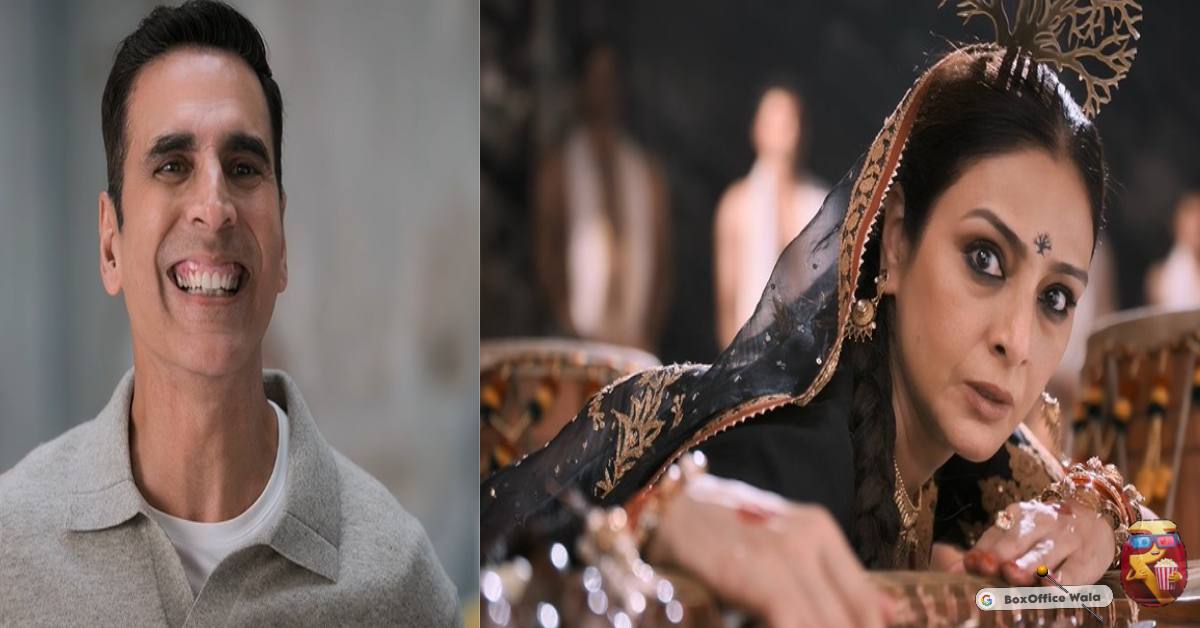
Bhooth Bangla Box Office Economics: Decoding Akshay Kumar’s 18 Crore Fee and 70 Per cent Profit Share Strategy
MUMBAI — The trade winds are shifting, and the numbers are finally out. After a long fourteen-year hiatus, director Priyadarshan and Akshay Kumar have returned to the big screen with Bhooth Bangla, a horror-comedy that hit theatres yesterday, April 17, 2026.
While the audience is busy reacting to the mixed reviews and the day-one collection of roughly 12 crore, my eyes are locked firmly on the balance sheet. The real story here is not just the scares or the laughs.
The actual headline is how a reported 120 to 130 crore budget was tightly managed through massive pay cuts and highly calculated backend deals. Let us break down the exact paychecks and the financial engineering driving this Balaji Motion Pictures and Cape of Good Films co-production.
The Economics Behind The Priyadarshan Reunion
To understand the gravity of these numbers, you have to look at the current theatrical window. The industry has been struggling heavily with bloated star fees that make recovering costs nearly impossible.
Akshay Kumar is historically known for charging premium rates. Just recently, he reportedly commanded a staggering 70 crore for Jolly LLB 3. If he had demanded the exact same upfront fee for Bhooth Bangla, the budget would have instantly crossed the dangerous 180 crore mark. That kind of financial pressure destroys the ROI model for a comedy film right out of the gate.
Instead, the actor completely restructured his contract, taking a massive pay cut on his usual upfront compensation. By moving from a guaranteed 70 crore to a base of 18 crore, the overall production cost remains within a highly recoverable zone.
This is a crucial strategic move. When star fees dictate the budget, the pressure on the theatrical window becomes absolutely unbearable. A tight 120 crore budget allows the distribution team to breathe, knowing that a record-breaking opening weekend is not a desperate necessity for survival.
A Calculated Backend Deal For The Leading Man
Why are we seeing this sudden shift in payment structures? The truth is, upfront fees are becoming a massive liability in today’s unpredictable market. The smartest players in the business are now betting on themselves rather than bleeding the producers dry.
Akshay is doing exactly that. By dropping his base fee to just 18 crore, he has protected the project from sinking before it even releases. But do not think for a single second that he is walking away with pennies. He is playing the long game.
Let us look at the actual profit-sharing mechanics. Akshay Kumar is heavily invested as a co-producer under his banner, Cape of Good Films, alongside Ektaa R Kapoor and Shobha Kapoor. The agreement dictates that Akshay will take home a massive 70 per cent share of the film’s total profits. Ektaa Kapoor holds the remaining 30 per cent.
This means if the film sustains its initial momentum and the digital acquisition and satellite rights fetch a premium price, Akshay’s backend earnings will easily eclipse his standard upfront fee. It is a calculated financial risk that perfectly balances the scale of the film.
The Supporting Cast Salary Breakdown
According to detailed reports from NDTV and Zee News, the rest of the ensemble cast also agreed to very practical remuneration packages.
Tabu, who plays a critical leading role, secured a solid 2 to 2.5 crore. Wamiqa Gabbi, stepping in as the leading lady, charged between 1 and 3 crore for her part.
The veteran comedy lineup that makes a Priyadarshan film feel complete was also compensated reasonably. Paresh Rawal took home 2 crore.
Rajpal Yadav, whose comic timing is crucial to the genre, earned between 75 lakh and 1 crore. Furthermore, Bengali cinema heavyweight Jisshu Sengupta charged 1 crore for his supporting role.
In a bittersweet financial detail, the late legendary actor Asrani, who appears posthumously in this project, was compensated with 2 crore.
When you add up these talent costs, the talent budget remains highly efficient. This allowed the producers to heavily invest the remaining funds into the impressive production design, visual effects, and a 164-minute narrative shot across London, Jaipur, Kochi, Mumbai, Chennai, and Hyderabad.
Analysing the Return on Investment
Now, let us run the recovery math. Bhooth Bangla has already raked in over 12 crore on its opening day, buoyed by strong paid previews that started a day earlier. If the weekend holds strong and the word-of-mouth stabilises, the theatrical distributor’s share will cover a very decent chunk of the 120 to 130 crore production cost.
However, the real safety net for a film like this lies in the non-theatrical revenues. Streaming platforms and television networks pay absolute top dollar for Priyadarshan comedies.
Why?
Because family-friendly comedies have immense repeat value on television and OTT platforms.
Once the satellite and digital acquisition rights are sold and factored into the balance sheet, the project is practically immune to a flop verdict. The math is simple. If the non-theatrical rights recover 80 crore, the theatrical run only needs to bring in a distributor share of around 40 to 50 crore to break even.
Anything earned at the ticket window beyond that point goes straight into the profit pool, immediately triggering that lucrative 70 per cent backend payout for Akshay.
BoxOfficeWala Verdict
The business model of Bhooth Bangla is exactly what the Hindi film industry needs right now.
We have seen too many box office disasters caused by actors taking away 60 percent of the budget before the cameras even roll.
Akshay Kumar taking a severe upfront cut to ensure the film breathes financially is a masterclass in risk management. If the movie holds its ground over the opening weekend, this profit-sharing blueprint might just become the new standard for mid-to-high budget entertainers.
Nitesh Mishra – Box Office Analyst
So, here is a question for all you trade enthusiasts. With a 120 crore budget and an opening of 12 crore, do you think the backend profit-sharing model will yield Akshay Kumar more than his usual 70 crore fee, or is the theatrical risk still too high? Drop your financial theories below!
Join BoxOfficeWala
Get Box Office Updates directly on WhatsApp from your personal Box Office Insider.
You May Have Missed





About the Author

Nitesh Mishra
— Business Analyst (Since 2017)
As a Movie buff with years of experience in film blogging, writing and box office analysis, I specialise in delivering accurate box office insights, movie updates OTT deals and Business Insights. [X, Instagram, Reddit, Threds]