

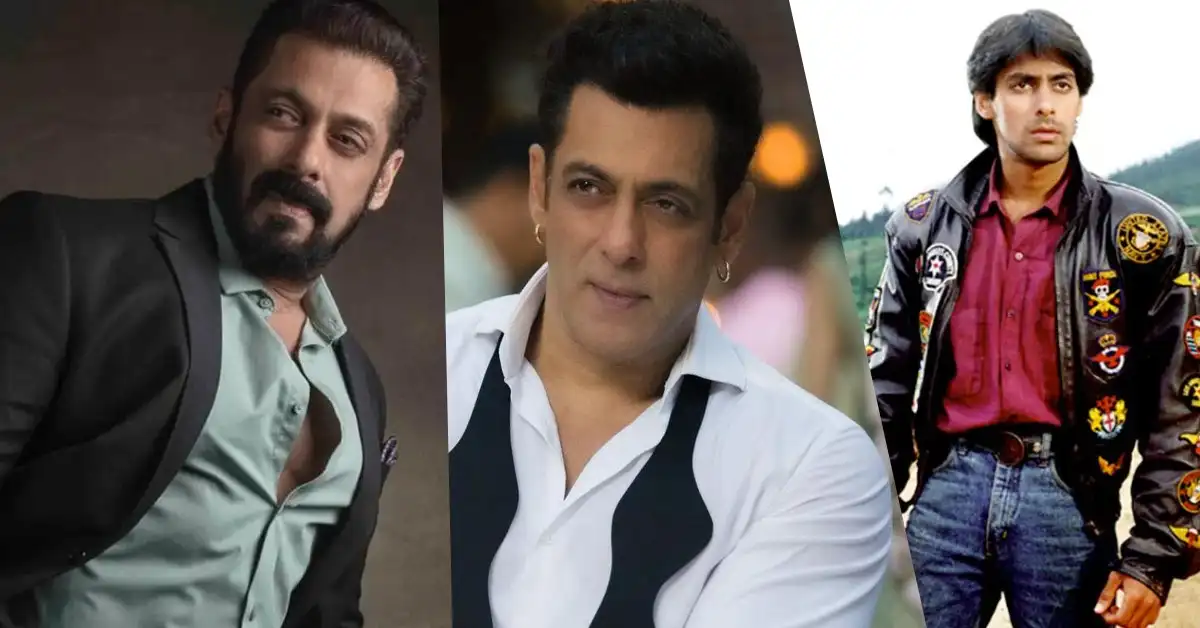
MUMBAI — April 24, 2026. If you want to understand the raw, unfiltered power of mass stardom in Indian cinema, you look at the man they call Bhai. We are sitting in late April 2026, and the trade is still dissecting the aftermath of Salman Khan’s recent theatrical run.
Salman Khan remains the only superstar to have delivered the annual highest-grossing Hindi film in ten individual years—a record that stands tall even today.
From the All Time Blockbuster craze of Maine Pyar Kiya to the high-octane thrill of the Tiger franchise, the numbers speak of a journey that has redefined the distribution business multiple times. But as we look at the recent performance of Sikandar (2025), which managed an India net of ₹110.36 crore against a massive budget, the trade is asking the hard questions about the changing appetite of the Indian heartland.
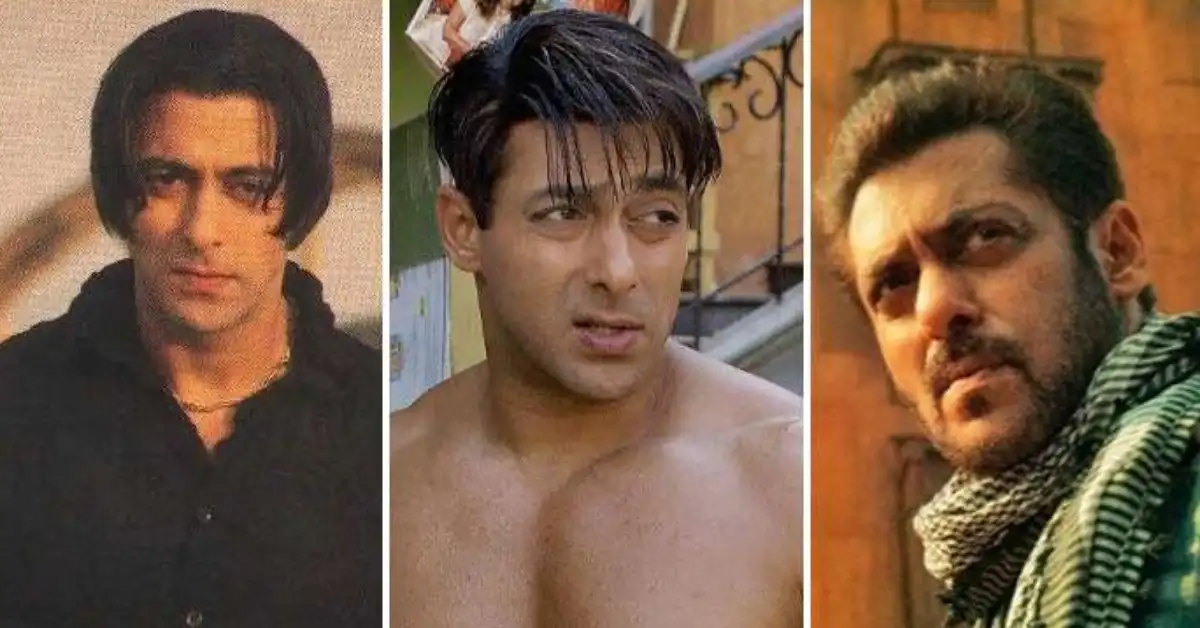
The Evolution Of The Sultan Of The Box Office
If you understand the psychology of the Indian moviegoer, you know that stardom is a double-edged sword. Salman Khan transitioned from the boyish charm of the 90s to the aggressive, whistle-worthy action of the 2010s.
For nearly a decade, his name on a poster meant a guaranteed ₹100 crore opening weekend. This wasn’t just stardom; it was a theatrical monopoly. The trade logic was simple: give him an Eid release, a catchy hook step, and a few punchy dialogues, and the single screens from CP Berar to Bihar would catch fire.
However, the post-pandemic era has been a reality check for every titan.
While Tiger 3 (2023) held its own with a ₹260.33 crore India nett total, settling as a Semi Hit, the audience mood has shifted. The mass audience is no longer content with just a screen presence. They want the spectacle to be backed by a tight narrative.
Look at Kisi Ka Bhai Kisi Ki Jaan (2023) or the recent Sikandar (2025).
Despite the massive hype, Sikandar finished with a worldwide gross of ₹184.89 crore, which distributor data classifies as a disaster given the steep production costs. The footfalls in Rajasthan and CI—once Salman’s bulletproof strongholds—have seen a noticeable drop, signalling a need for a creative reset.
Do you think the era of the “unbeatable” superstar is over? Or is the audience simply waiting for the right director to harness that Sultan energy again?
The trade is currently divided, but one thing is clear: the occupancy rates for Salman’s “average” openers still outshine the lifetime business of many younger stars.
The Prem Era: The Foundation Of A Legend (1990–1999)
The 90s were the years of the All Time Blockbusters. Salman started the decade with Baaghi (1990), a semi-hit that proved his potential. But 1994 changed the history of Indian cinema forever.
Hum Aapke Hain Koun hit the screens and registered a staggering ₹72.46 crore India nett. According to early trade estimates, the footfalls for this film were historic, making it one of the biggest blockbusters ever.
He followed this with Karan Arjun (1995), a Super Blockbuster that netted ₹25.29 crore. The decade was a mix of massive highs and sharp slumps.
Films like Andaz Apna Apna (1994) and Khamoshi (1996) underperformed at the time, but the late 90s brought him back to the peak with Biwi No.1 (Super Hit) and Hum Saath-Saath Hain (Blockbuster). By the end of 1999, Salman Khan was the face of the family audience, commanding a success ratio that was the envy of the industry.
The Wanted Resurrection: Redefining Mass Action (2000–2010)
The early 2000s were sporadic.
Successes like No Entry (Super Hit) and Partner (Super Hit) kept the distributors happy, but the “superstar” tag was waiting for a reset. That reset came in 2009 with Wanted. With a ₹60.24 crore nett, it was a Hit, but more importantly, it birthed the “Bhai” persona.
This led straight into the 1910s Dabangg. The film was a Blockbuster, netting ₹141.25 crore and changing the occupancy dynamics of single screens. Suddenly, the “average opener” was a thing of the past.
Salman was now a machine that delivered Blockbuster after Blockbuster, including Ready (2011), Bodyguard (2011), and Ek Tha Tiger (2012). The demographic had shifted—the urban multiplex crowd joined the single-screen fans to create a unified box office force.
The Peak And The Transition: (2015–2026)
In 2015, we saw the emotional peak with Bajrangi Bhaijaan. It is an All Time Blockbuster with ₹316.79 crore net in India.
He followed this with the wrestling drama Sultan (2016) and the high-octane Tiger Zinda Hai (2017), both crossing the ₹300 crore mark. This was the era when Salman Khan was untouchable.
But the last few years have seen career fluctuations. Race 3 (2018) and Bharat (2019) underperformed compared to his peak standards. The post-COVID market was even tougher.
Antim (2021) and Kisi Ka Bhai Kisi Ki Jaan (2023) both struggled, registering Flop verdicts at the ticket window. Tiger 3 (2023) provided some relief with ₹260.33 crore, but the ₹110.36 crore net of Sikandar in 2025 has been a sobering moment for the trade. The theatrical run was short, and the hold on weekdays was weak.
BoxOfficeWala Verdict: The Forward Looking Outlook
My verdict is simple.
Salman Khan is currently at a crossroads. His mass pull is still the greatest in the country, but the audience is demanding a “New Salman.” The days of relying on a holiday release and a bare-chested climax are fading.
The ROI on his big-budget projects is currently under pressure.
However, with directors like AR Murugadoss and Sajid Nadiadwala experimenting with his image, the comeback is always just one Friday away.
Expect the lifetime collection of his future films to be driven by a more “character-heavy” approach. If he picks scripts that respect the audience’s intelligence while keeping the mass elements intact, he will reclaim that ₹300 crore territory.
For now, the trade is cautious but optimistic. The Sultan is down, but he is certainly not out.
Nitesh Mishra – Box Office Analyst
About the Author

Nitesh Mishra
— Business Analyst (Since 2017)
As a Movie buff with years of experience in film blogging, writing and box office analysis, I specialise in delivering accurate box office insights, movie updates OTT deals and Business Insights. [X, Instagram, Reddit, Threds]