
Why the Cast of Dacoit Took Calculated Paychecks Amidst Dhurandhar 2 Fever



Add BoxOfficeWala on Google
Get the most accurate box office data and movie results directly in your search feed.
Dacoit Budget and Actor Remuneration: Can the Adivi Sesh-Mrunal Thakur Starrer Recover 70 Crores?
MUMBAI — The theatrical landscape today feels like a David vs. Goliath battle. On one side, we have the unstoppable juggernaut of Aditya Dhar’s Dhurandhar 2, and on the other, the gritty, dual-language release of Dacoit: A Love Story.
As the Adivi Sesh and Mrunal Thakur starrer hits screens this Friday, April 10, 2026, the trade circle is buzzing with one specific question: in a movie mounted on a calculated budget of 70 crore, how much did the principal cast actually take home?
The financial strategy behind Dacoit is a fascinating study in mid-budget efficiency.
Unlike the bloated 500-crore spectacles that rely on sheer star power, this film is trying to carve a niche through technical superiority and pan-India curiosity.
However, with Dhurandhar 2 still pulling in 7 crore on its fourth Thursday and chasing the 1050-crore net milestone in India, Dacoit finds itself in a tight spot from day one.
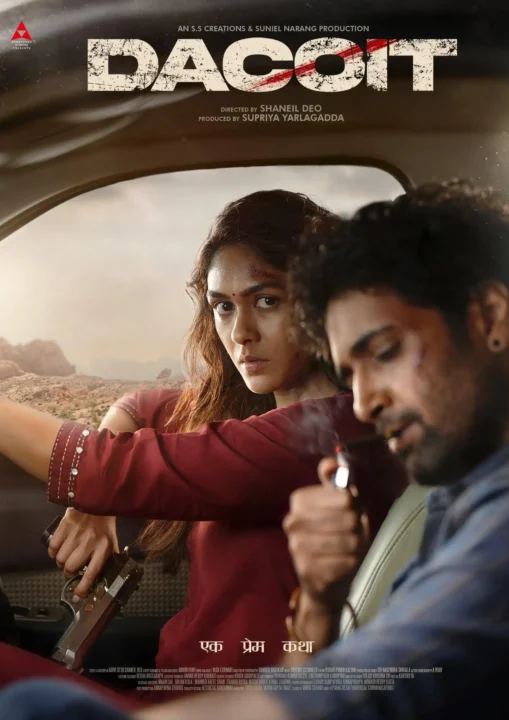
The Mid-Budget Tightrope and Star Remunerations
In the current market, the ROI (Return on Investment) for a film like Dacoit depends heavily on keeping the “above-the-line” costs—actor fees—within a reasonable percentage of the total budget.
For a 70-crore project, spending more than 20-25% on the cast can be suicidal. The industry has been shifting toward backend deals and profit-sharing, especially for stars who are also creatively involved in the project.
Adivi Sesh is not just the face of this film; he is its primary architect. Having delivered consistent hits with Major and Goodachari, his market value in 2026 has stabilised in the 5 to 8 crore range for standalone projects.
However, insiders suggest that for Dacoit, Sesh has prioritised the production’s technical quality over a massive upfront paycheck.
He recently mentioned staying in a 400-rupee lodge during previous shoots to save producer costs, signalling a very “producer-friendly” mindset that likely carried over here. By keeping his upfront fee closer to the 5 or 6 crore mark, he allowed the makers to pour more resources into the sleek visuals and action sequences that reviewers are currently praising.
Decoding the Mrunal Thakur and Anurag Kashyap Paychecks
The leading lady’s casting story is a trade secret in itself. Initially, the project was linked with Shruti Haasan, who was reportedly offered a fancy remuneration of 3 crore back in late 2023.
After she moved on due to creative differences, Mrunal Thakur stepped in.
Given her rising popularity in the South after Sita Ramam and Hi Nanna, her market rate has seen a significant jump. Trade estimates place her earnings for Dacoit at approximately 3 to 4 crore.
This is a smart move for the producers; they secured a highly relatable, talented actress who commands a strong digital and theatrical pull without breaking the bank.
Then there is the wild card: Anurag Kashyap. Playing the antagonist, Inspector Swamy, Kashyap’s involvement is as much about mentorship as it is about acting.
While specialised “villain” roles for actors of his stature usually command 1 to 2 crore for a film of this scale, his contribution reportedly extended to helping with the Hindi dialogues and creative direction. This suggests his deal might be a hybrid one, combining an acting fee with a creative consultant’s paycheck.
The Reality of Recovery in the Face of a Blockbuster
Can a film with an opening prediction of just 4 crore survive?
That is the question keeping the distributors awake. The “Dhurandhar effect” is real. When Ranveer Singh is charging a reported 50 crore for a single film and delivering 1000-crore hits, smaller films like Dacoit are squeezed for screen space. To be a “clean hit,” Dacoit needs to earn between 70 and 80 crore net in India.
The Hindi market, in particular, looks cold. Advance bookings showed only 25,000 tickets sold on major platforms in the final two days before release.
Compare that to the 500,000 tickets sold for The Raja Saab, and you see the uphill climb. However, the film has already grossed over 6 crore worldwide in advance bookings, thanks to a healthy $100,000 preview showing in North America. This international cushion is vital for its survival.
From a business perspective, Dacoit is playing a long game.
The theatrical window might be shorter than expected if the first weekend doesn’t see a massive surge through word of mouth.
However, the film has a safety net. Amazon Prime Video has already secured the digital rights for its 2026 slate. In today’s economy, a strong OTT deal can often cover up to 50% of a mid-budget film’s production cost before the first ticket is even sold.
While the opening numbers might look disappointing compared to Dhurandhar 2, Dacoit represents a healthy trend: making films where the budget is on the screen, not just in the actors’ bank accounts. If the Telugu market holds steady over the weekend, the producers should find themselves in the safe zone eventually.
Do you think mid-budget films like Dacoit should wait for a “clear window” or is it better to clash with big blockbusters and hope for an OTT-driven recovery?