Sharwanand’s Biker Full Guide: Decoding The Timelines And Big Twists!


Add BoxOfficeWala on Google
Get the most accurate box office data and movie results directly in your search feed.
Biker Ending & Timeline Guide: Why Sharwanand’s Motocross Drama Is The Biggest Twist Of 2026.
MUMBAI — This Monday morning is all about one name: Sharwanand. His latest movie, Biker, has been racing through the hearts of fans since it dropped on April 3, 2026.
If you just walked out of the theatre scratching your head about those timeline jumps or that heavy climax, don’t worry.
We are breaking down the ending, those tricky 90s versus 2000s segments, and every big twist that made this motocross drama a winner. This isn’t just a movie review; it is a full-blown map for anyone who felt the adrenaline but missed the emotional cues.
The film has quickly become the talk of the industry because it tackles a sport we rarely see on the big screen: motocross.
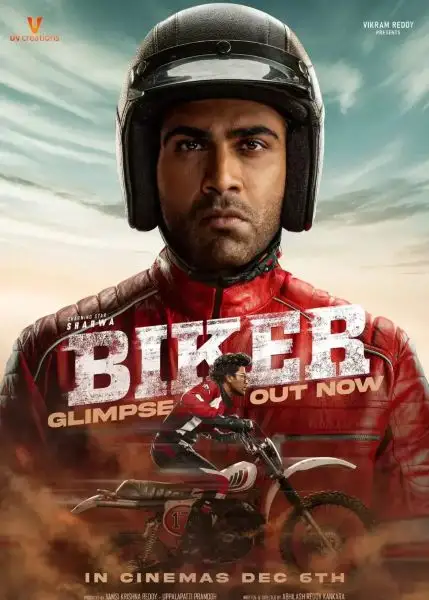
Director Abhilash Reddy Kankara, who gave us the brilliant Loser series, has returned with a story that feels personal, gritty, and incredibly fast. Sharwanand plays Vikas “Vicky” Narayan, a man with a bike-shaped hole in his heart.
The movie doesn’t just show him racing; it shows him surviving. From the high-speed tracks of Coimbatore to the stunning, dusty landscapes of Indonesia, the scale of this film is something Indian cinema hasn’t quite touched before in the sports genre.
As we dive into the structure, you have to understand that Biker is a generational saga. It isn’t told in a straight line.
Instead, it swings between the 1990s and the early 2000s. In the 90s, we see the roots of Vicky’s passion. This was the era of two-stroke bikes and a much more raw version of the sport. His father, Sunil, played by the powerful Rajasekhar, is a former biker himself. Sunil is a man of few words and even less praise.
He pushes Vicky to the absolute limit, believing that discipline is the only way to conquer the dirt. This relationship is the real engine of the movie, even more than the motorcycles themselves.
According to The Hindu, director Abhilash Reddy intentionally chose the 90s setting to use half-helmets. This was a smart move because it allowed the audience to actually see the actors’ expressions during the high-intensity racing scenes.
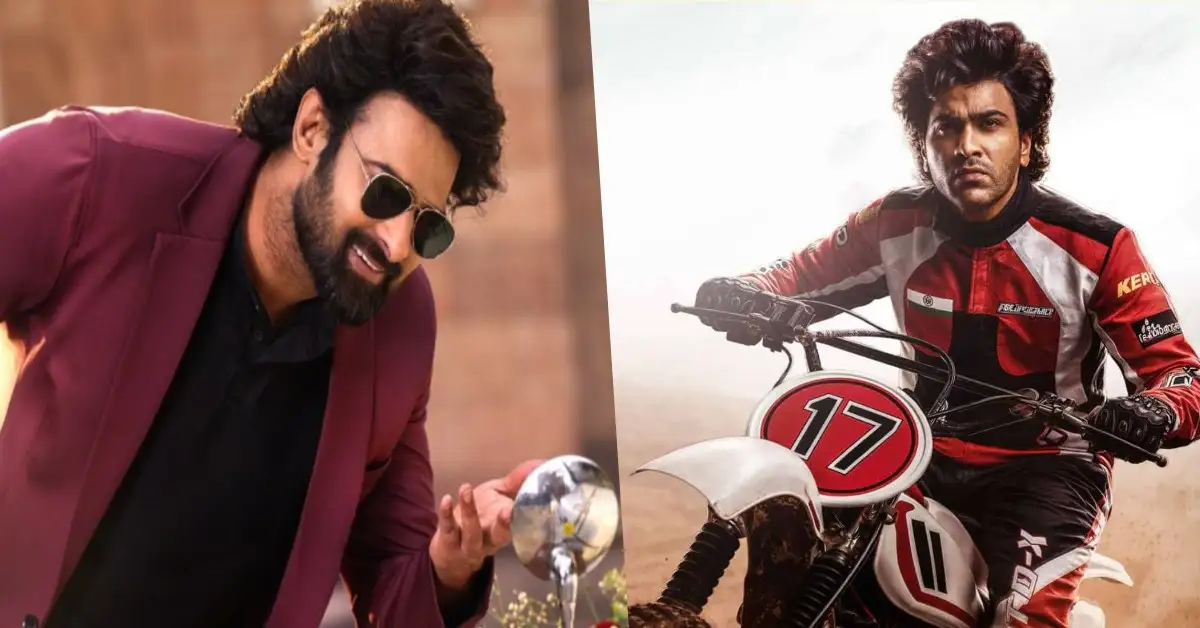
Usually, in bike movies, you just see a colored helmet and hear a roaring engine. But here, you see the sweat, the fear, and the grit on Sharwanand’s face. The transition to the early 2000s showcases the shift to four-stroke vehicles, symbolising Vicky’s own transition from a reckless dreamer to a man burdened by the weight of his father’s expectations.
One of the biggest questions fans have is about the mountain range stunt in the second half. This sequence serves as the emotional pivot of the entire film. Vicky isn’t just racing against other riders; he is racing against the ghost of his father’s failures.
Sunil considered family and friends as distractions, but Vicky tries to prove him wrong. He treats his wife, played by Malvika Nair, and his friends as the fuel for his ambition. The Reality Check here is simple: can a son ever truly surpass a father who refuses to acknowledge his growth? The movie asks this directly when Vicky faces a career-ending choice near the climax.
The ending itself is a masterclass in tension. The final race isn’t just about who crosses the finish line first. It is about Vicky deciding what kind of man he wants to be. He realises that to win, he doesn’t have to become his father. He has to forgive him. The climax shows Vicky giving up a certain path to ensure he doesn’t repeat Sunil’s mistakes.
It is a bittersweet victory that has left many viewers in tears. The technical finesse of the finale, captured with over eight cameras and GoPros, makes you feel every bump on the track. The Hollywood Reporter India noted that while the film can be emotionally muted at times, the technical prowess and the father-son track land very well.
Biker also hides a few twists in its timeline. Many viewers missed that the opening scene of the movie actually happens much later in the chronological order. The film uses a reverse engineering style of storytelling in certain segments, much like a Nolan film, to keep the mystery of Vicky’s “missing years” alive.
Why did he stop racing? What happened in Coimbatore that sent him to Indonesia? These answers are tucked away in the 90s flashback sequences that only reveal the full picture during the final twenty minutes. It is a rewarding experience for anyone paying close attention to the small details.
Ultimately, Sharwanand has delivered his most physically demanding performance yet. He reportedly worked out for months to shed weight and look like a professional motocross rider. Atul Kulkarni as the antagonist provides a cold, calculated obstacle that makes Vicky’s ascent feel even more difficult.
While the rivalry could have been explored more deeply, the focus remains firmly on the internal struggle of the protagonist. This is a story about grit, spirit, and the legacy we choose to carry or leave behind.
The success of Biker proves that Indian audiences are hungry for fresh sports stories beyond cricket and football.
Sharwanand’s transformation is incredible, and Abhilash Reddy Kankara is officially a director to watch for high-stakes drama.
Looking forward, I expect this film to set a new standard for how action sequences are shot in India.
If you haven’t seen it yet, go for the technical brilliance, but stay for the heart-to-heart between a son and his stubborn father.
Gulshan Mishra – Journalist