
Subedaar Streaming Today on Amazon Prime Video: Everything You Need to Know About Anil Kapoor’s Action Comeback


Add BoxOfficeWala on Google
Get the most accurate box office data and movie results directly in your search feed.
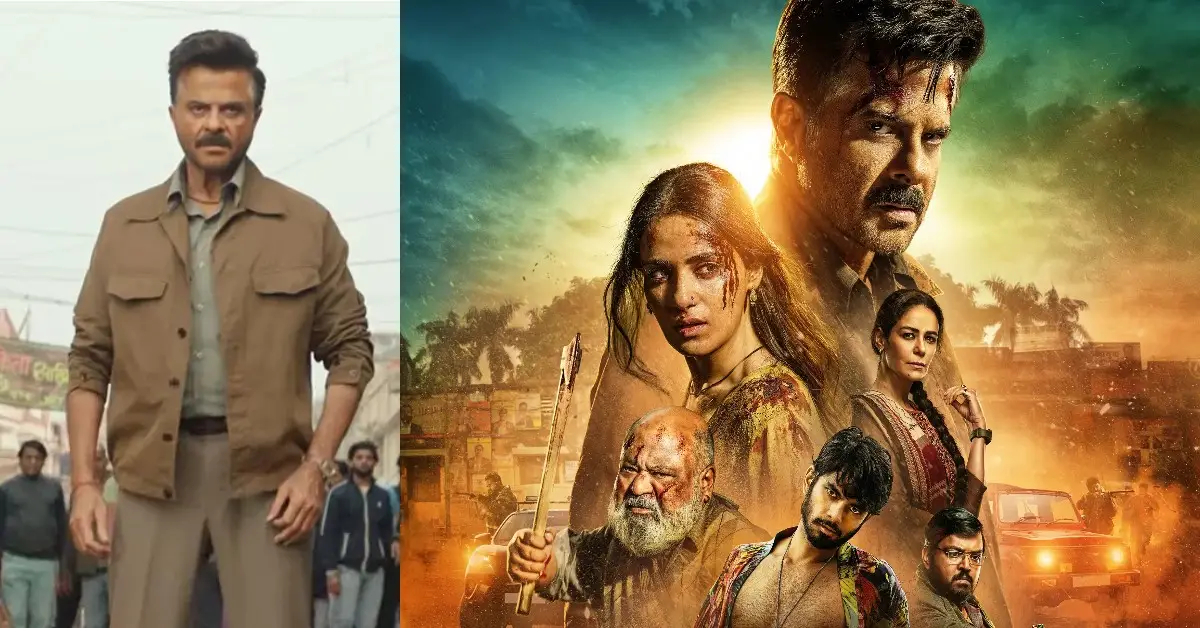
Mumbai is waking up to a major digital storm this Thursday morning, March 5, 2026, as Anil Kapoor’s highly anticipated action drama Subedaar finally makes its grand debut on Amazon Prime Video. This is not just another Friday release hitting the web early; it is a statement by a veteran who has seen the industry shift from the raw 80s to the pixel-perfect modern era.
The story of Retired Subedaar Arjun Maurya, who swaps his military uniform for civilian struggles in the heartland of Madhya Pradesh, is now live for subscribers in over 240 countries. But while everyone is talking about the release date, the real chatter in the trade circles is about how this film was made—or rather, what it refused to use during its production.
Anil Kapoor has officially returned to his roots, but with a gritty twist that nobody saw coming after his recent sleek appearances in films like Fighter or Animal. Directed by Suresh Triveni, the mastermind behind the subtle Tumhari Sulu and the intense Jalsa, this film marks a significant pivot for both the actor and the director. It is a massive industry shift because it challenges the current obsession with computer-generated imagery.
While most big-budget actioners today rely on comfortable studios and green screens to create massive explosions, Kapoor and Triveni decided to take the hard road by shooting in the dusty, crowded, and unforgiving streets of Lucknow, Agra, and Kanpur. This decision has created a unique curiosity among fans who are tired of looking at “video game” action and want something that feels tangible and real.
The Death of CGI Spectacles and the Return of Raw Action
If you look at the current state of Indian cinema, every second film is trying to outdo the other with VFX. We see actors fighting on top of moving trains or flying jets, but the audience knows it is all fake. Why is the industry so scared of reality lately? Is it because real locations are harder to manage, or are stars getting too comfortable in air-conditioned studios?
Subedaar offers a direct contradiction to this trend. During the trailer launch, Anil Kapoor made it very clear that there is no green screen in this film. He wanted every punch to feel heavy and every drop of sweat to be genuine. This approach is a gamble in an era where VFX-heavy films usually dominate the box office and OTT charts. It raises a valid question for the fans: would you rather watch a polished, fake spectacle or a rough, authentic drama?
The evidence of this grit is scattered throughout the production timeline of Subedaar. According to Bollywood Hungama, Anil Kapoor recalled shooting crucial scenes in extremely crowded locations where thousands of bystanders were screaming his famous catchphrases like Jhakaas.
Instead of shutting them out or moving to a private set, Kapoor used that raw energy to fuel his performance as Arjun Maurya. He mentioned that he had to “switch off” the noise mentally, staying in character while the chaos of real India swirled around him. This level of commitment is rare for an actor who has been in the business for four decades. The filming, which began in October 2024 and wrapped up by early 2025, focused heavily on this authenticity.
👇 Receive Box Office Updates, sent directly to your device by your personal Box Office Insider. 👇
👇 Join the inner circle 👇
A Father-Daughter Bond Wrapped in a Sand Mafia Conflict
While the action is the hook, the soul of Subedaar lies in its emotional core.
The plot revolves around Arjun Maurya’s attempt to repair a fractured relationship with his daughter, Shyama, played by the talented Radhikka Madan. Arjun is a man who spent his life following military discipline, but he finds that life outside the battlefield is governed by different, often more corrupt, rules. The primary conflict arises when his path crosses with a ruthless sand-mining kingpin in Madhya Pradesh.
The cast brings together an eclectic mix of powerhouses. Saurabh Shukla plays Prabhakar, Arjun’s loyal friend who runs a security agency and tries to keep Arjun’s simmering anger in check.
On the antagonistic side, we have Mona Singh as the menacing Babli Didi, who runs the illegal sand business from behind bars, and Aditya Rawal as Prince, a local goon who makes the mistake of disrespecting a soldier. Faisal Malik, known for his grounded roles, joins the fray as Softy Bhaiya. This ensemble is not just there for decoration; each character adds a layer to the societal dysfunction that Arjun Maurya decides to dismantle.
As per a report by Mid-day, the makers spent an extended post-production phase not on fixing VFX, but on fine-tuning the storytelling and the background score. The music album, unveiled just days ago, features a powerful track titled Lalla, sung by Vishal Dadlani, which serves as a warning anthem for anyone crossing the Subedaar’s path. The film is 142 minutes of pure, unadulterated drama that promises to satisfy those who miss the 80s-style revenge sagas but want the nuance of modern filmmaking.
The release of Subedaar today is a litmus test for the OTT space. It will determine if the audience is ready to embrace “real” action over high-flying stunts. As the credits roll, viewers will likely be looking for more than just a win for Arjun Maurya; they will be looking for a sign that Bollywood is finally willing to get its hands dirty again.
I think Subedaar is the best news for cinema lovers who are bored of the “plastic” feel of modern actioners. Seeing Anil Kapoor reject the green screen at this stage of his career shows a level of hunger that puts younger stars to shame. It is a bold move that might just pave the way for more grounded, location-heavy storytelling in India. This is definitely a film to watch out for if you value performance over pixels.
The news about the lack of green screens and the focus on real locations was first confirmed by Bollywood Hungama during the Mumbai trailer launch event.
Question For You: Do you think modern action movies are becoming boring because of too much CGI, or do you still prefer the “big screen” VFX experience?