
Vadh 2 Review: Why Sanjay Mishra’s “Silent Kill” is More Dangerous Than Animal’s Violence
Is Vadh 2 the perfect sequel or a forced extension? We analyze Sanjay Mishra’s chilling performance, the psychological warfare, and why this low-budget thriller beats big-budget action.


Add BoxOfficeWala on Google
Get the most accurate box office data and movie results directly in your search feed.
Let’s be real for a second. We live in an era of cinema where “mass” means loud background scores, six-pack abs, and physics-defying punches. But Vadh 2 proves that the most terrifying sound in a theater isn’t an explosion—it’s the heavy breathing of a terrified old man.
Fundamentally, this movie isn’t just a thriller; it is a masterclass in “Resource-Constrained Tension.” Just like in the business of video editing, where a creator must hook the audience immediately because “it only takes one second for someone to leave your video”, Vadh 2 operates on a tightrope. It doesn’t have the luxury of wasted frames.
The brilliance here lies in the “NPC Strategy” (Non-Player Character). We are conditioned to ignore the elderly middle-class couple on the street. They are the background characters of life, the ones with “no aspirations or inspirations,” living a life that expired years ago.
Vadh 2 weaponizes this invisibility. It asks a chilling business question: What happens when the person you think is powerless realizes they have nothing left to lose? This isn’t just a sequel; it’s a case study in how “one bad day” can turn a simple man into an agent of chaos.
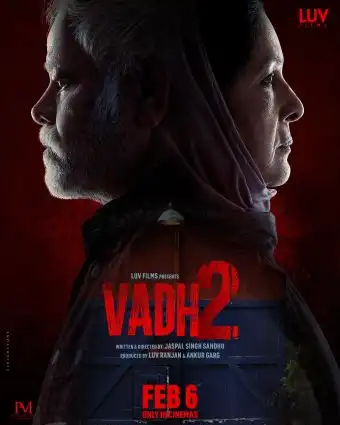
Vadh 2Day 46
The Deep Breakdown: Anatomy of a Perfect Crime
If you thought the first part was dark, Part 2 turns the lights off completely. Here is where the movie shifts from a crime drama to a psychological horror show.
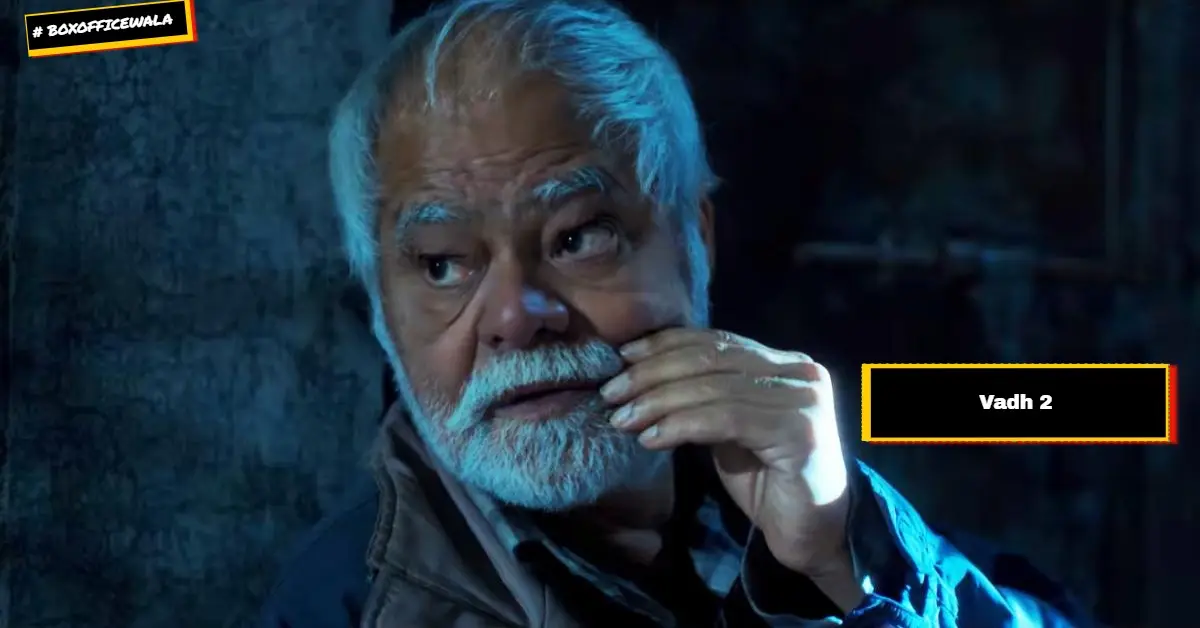
- The “Cognitive Load” of Guilt: The film uses a pacing technique that editors call “cognitive load”—forcing the viewer to process the tension alongside the characters. The camera lingers on Sanjay Mishra’s trembling hands just long enough to make you uncomfortable, creating a “pattern interruption” that shocks your brain because you expect a cut, but the shot holds.
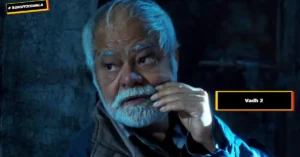
- Manohar’s Transformation: Sanjay Mishra is not playing a villain; he is playing a survivor. The film subtly references the “Joker” philosophy: we are all just pretending to be good, but when survival is on the line, morality goes out the window. He isn’t killing for pleasure; he is killing because his “survival instinct” has overridden his social programming.
- The Neena Gupta Factor: She is the anchor. If Manohar is the panic, she is the silence. Their relationship defies the toxic tropes we often see where partners are just “adjusting” or settling. Here, they are partners in crime, literally. It’s a twisted version of loyalty where the “love” is defined by the secrets they keep, not the romance they show.
- The Pacing Science: The directors seem to understand the “blinking pattern” rule of editing—cutting scenes exactly where the audience’s eyes naturally want to blink, syncing the film’s rhythm with our own heartbeat. This makes the suspense feel physical, not just visual.
The Philosophical Shift: The Horror of Being “Useless”
Let’s zoom out. Why does this movie hit so hard? It’s not because of the murder. It’s because of the loneliness.
Vadh 2 exposes the dark reality of the “Invisible Man”—the man upon whom life never shines a spotlight. Manohar and Manju represent a demographic that society has already discarded. They are the “NPCs” of the real world.
The film forces us to confront a nihilistic truth: sometimes, the only way to feel alive in a world that ignores you is to break its rules. As the philosophy goes, a person might reject all moral principles because they realize life is essentially meaningless without them. When Manohar commits the act, he isn’t just removing a threat; he is reclaiming his existence.
It’s a terrifying thought: We push people to the margins, treat them as “pathetic” or “small”, and then act surprised when they snap. The movie argues that we are all very close to becoming the villain in someone else’s story. We are just “one step away” from being like them.
The Verdict
Vadh 2 is a Must-Watch. It is a victory for script over scale.
It proves that you don’t need a 500-crore budget to scare an audience; you just need to show them a mirror. It effectively uses the “Curiosity Gap”—keeping information incomplete to make our brains itch for the answer. It is uncomfortable, quiet, and deeply disturbing.
The Real Truth? You will walk out of the theater not afraid of the killer, but afraid of how much you understood him.
Question for You: Do you think Manohar and Manju are villains, or are they victims who fought back? Let’s argue in the comments below!
Join BoxOfficeWala
Get Box Office Updates directly on WhatsApp from your personal Box Office Insider.





Leave a Reply