
Midnight Shock: Kerala High Court Slams Brakes on The Kerala Story 2 Just Hours Before Release!

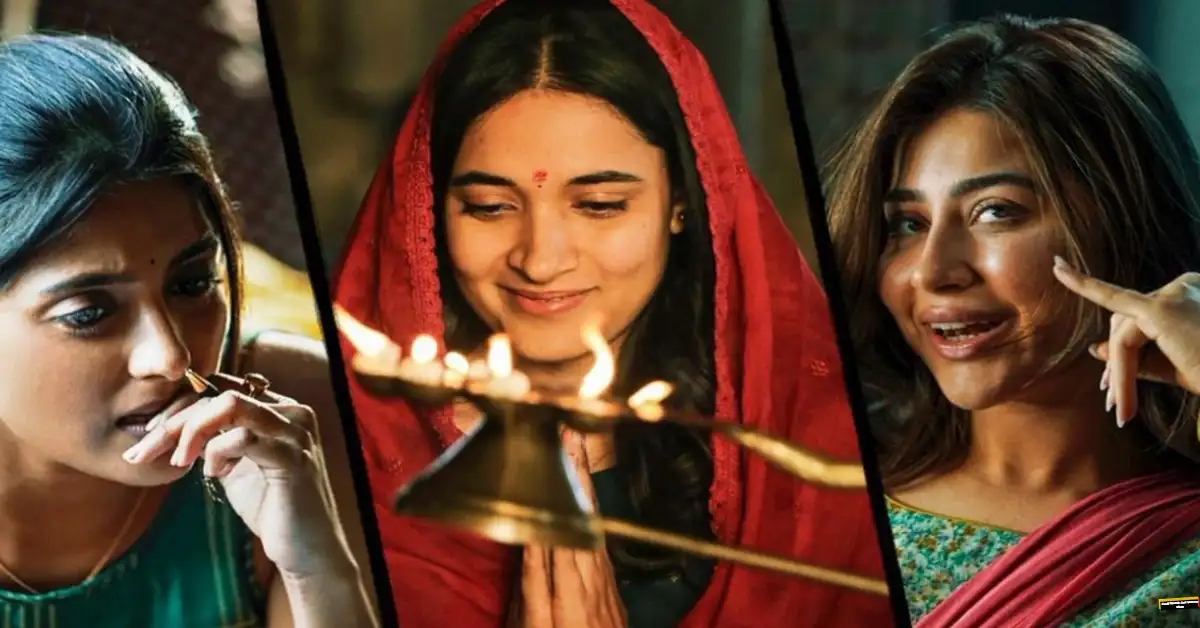
Cinema Or Controversy? The Real Reason Behind The 15-Day Stay On The Kerala Story 2!
The big screen drama just moved to the courtroom and the verdict is a total blackout for the most talked-about sequel of the year.
On Thursday, February 26, 2026, in the coastal city of Kochi, the Kerala High Court dropped a massive legal hammer by staying the release of the Hindi film The Kerala Story 2: Goes Beyond just hours before it was supposed to hit the theaters on Friday.
Justice Bechu Kurian Thomas passed an interim order effectively banning the film from being screened for at least 15 days, citing a serious failure on the part of the Central Board of Film Certification (CBFC). The court didn’t mince words, stating that the Censor Board showed a “prima facie non-application of mind” while granting the movie a U/A certificate despite promotional content that could potentially distort public perception and set the state’s communal harmony on fire.
This isn’t just a legal delay; it is a full-blown industry earthquake that has left exhibitors, distributors, and fan war warriors in a state of absolute chaos.
Why does this matter?
Because the film was tracking to be one of the biggest, albeit most polarizing, openings of the quarter, and now millions in marketing and advance bookings are hanging by a thread. The industry is watching closely because if the court can bypass a CBFC certificate so easily, it sets a precedent that could change how “true story” cinema is handled in India forever.
Everyone is curious to know if this 15-day stay is just a cooling-off period or the first step toward a permanent ban on the sequel that claims to “go beyond” the original’s shock value.
The mood in the industry right now is one of nervous exhaustion. We are seeing a repeating cycle where films are becoming political footballs rather than creative expressions. Is it even about the art anymore, or is the box office now purely fueled by how much noise you can make in a courtroom? Some might even ask: are we entering an era where a film’s “controversy budget” is more important than its screenplay?
The evidence of this legal roadblock is laid out in the court’s sharp observations and the timeline of events leading to this midnight crisis.
“The dissemination of content that could create discord and undermine social harmony cannot come within the gamut of ‘freedom of speech and expression’ enshrined in the Constitution of India,” Justice Thomas remarked during the hearing.
According to a detailed report by Live Law and later confirmed by PTI, the court acted upon petitions filed by Sreedev Namboodiri and Freddy V. Francis. These petitioners argued that the movie unfairly links incidents of forced conversion and terrorism specifically to the state of Kerala, even when the narrative supposedly covers Rajasthan and Madhya Pradesh.
The court noted that the filmmakers seemed hesitant to screen the movie for the judge, which forced the bench to rely on the transcripts of the teaser and trailer—content they found deeply problematic.
The numbers tell a story of high stakes. The film had already cleared the CBFC with 16 recommended cuts, yet the court found that the guidelines for maintaining social harmony were ignored. The producer, Vipul Amrutlal Shah of Sunshine Pictures, had introduced 30 women at a Delhi event claiming to be survivors of forced conversion to bolster the film’s “true story” claims, but the court was more concerned with the potential for immediate communal tension.
As per the interim order, the CBFC now has exactly two weeks to re-examine the film and consider the representations made by the petitioners. This puts the movie’s future in a state of suspended animation. While the makers have denied rumors that the teaser was deleted, the reality is that no theater in India can legally play a single frame of this movie until fresh orders arrive. The industry is now looking forward to the second week of March to see if the Censor Board stands by its original certification or if it buckles under the High Court’s scrutiny.
This is a classic case of a movie becoming bigger than the screen. While I respect the freedom of expression, a film’s title shouldn’t become a label that stigmatizes an entire state without solid, non-sensationalized proof.
The 15-day stay is a much-needed breather to ensure that the “truth” being sold isn’t just a polished piece of propaganda designed to incite. If the makers are so confident, they should have screened it for the judge without hesitation. Transparency is the only way to kill the “propaganda” tag.
My Take
Original Source: First reported by PTI and Bar and Bench, with detailed legal analysis provided by Live Law.
Question For You: Do you think the High Court is right to stay a film that has already been cleared by the Censor Board, or is this an overreach of judicial power? Let me know in the comments!
Join BoxOfficeWala
Get Box Office Updates directly on WhatsApp from your personal Box Office Insider.
You May Have Missed




About the Author

Nitesh Mishra
— Business Analyst (Since 2017)
As a Movie buff with years of experience in film blogging, writing and box office analysis, I specialise in delivering accurate box office insights, movie updates OTT deals and Business Insights. [X, Instagram, Reddit, Threds]