
Dacoit Movie Ending: Why Did Mrunal Thakur Really Betray Adivi Sesh?

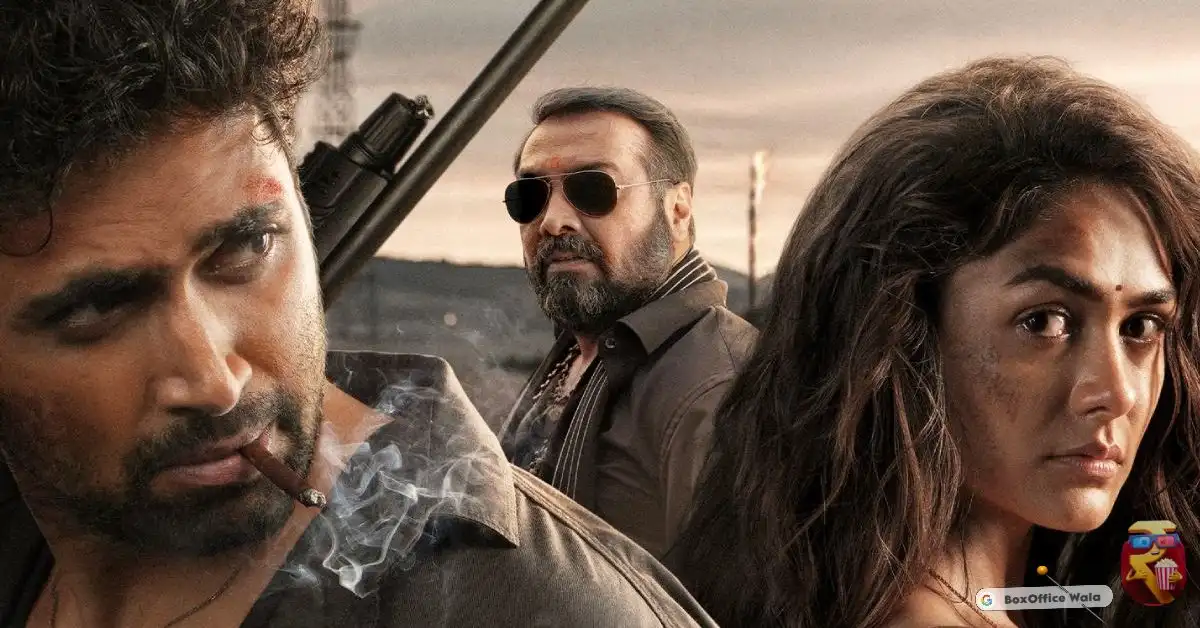
Adivi Sesh’s Dacoit Movie Ending Explained: What Happens to Hari and Saraswati in the 2021 Climax?
What is up, movie buffs! Gulshan Mishra here from BoxOfficeWala, and let me tell you, the air is thick with the scent of popcorn and “Sesh-ism” this weekend. If you have just walked out of the theatre after watching Dacoit, your head is probably spinning faster than a getaway car in a Madanapalle chase.
Adivi Sesh has finally taken that massive genre shift he’s been teasing for years, and man, it’s not your typical slick spy thriller.
This movie is a wild, neon-drenched, dusty mix of a tragic love story and a high-stakes heist, all wrapped in a COVID-era blanket. But let’s get straight to the point—that ending!
It’s the kind of climax that makes you question everything you saw in the first two hours. Was Hari a villain? Was Saraswati a traitor?
And what on earth was that final shot trying to tell us? Buckle up, because we are diving deep into the dusty mountains of Dacoit to decode every single layer of that finale.

The 2040 vs 2005 Timeline: A Love Story Cut Short
To understand the ending, we have to look at the mess that started it all. The movie plays with two distinct timelines. We see the 2005 “pure” love between Haridas (Adivi Sesh) and Saraswati (Mrunal Thakur). He’s a boy from a marginalised background; she’s from an affluent, upper-caste family.
It’s a classic forbidden romance that ends in a bloodbath. Hari is convicted of murdering her brother, and the person who puts the final nail in his coffin? Saraswati herself.
Fast forward to 2021. The world is grappling with COVID, and Hari is grappling with 13 years of prison rage. He escapes during a jail transfer, not to find peace, but to find revenge. He wants to go to Dubai, but he needs 60 lakhs to buy his way out of the country. But fate, as they say in movies, is a bit of a comedian. He finds Saraswati, but she’s not the princess he remembers.
She’s a desperate mother whose husband is dying in a hospital.
The Hospital Heist: Desperation Over Logic
One of the biggest talking points, as noted by Cinema Express, is how the film shifts from a revenge drama to a heist thriller. Hari realises that the chairman of Karuna Hospital, played by a very sinister Prakash Raj, is sitting on piles of illegal, unaccounted cash made during the pandemic.
Instead of killing Saraswati, Hari does something much more twisted—he makes her his partner in crime. He needs a driver, and she needs one crore for her husband’s heart transplant.
It’s a marriage of convenience born in hell. This section of the movie is where the action really peaks, with car chases and gunfights that feel like they belong in a Western. But as the heist unfolds, the emotional baggage starts to leak out.
The Great Betrayal: Why Did Juliet Lie?
The big question throughout the film is: why did Saraswati testify against Hari? The movie drops hints about caste pressure and family honour, but the pre-climax reveal is the real kicker.
According to Telugu360, the film uses the final act to show that Saraswati’s “betrayal” was actually a desperate act of protection.
She didn’t testify because she hated him; she testified because it was the only way to keep him alive. Her family was ready to kill him in an “honour killing” setup, and by sending him to prison, she ironically saved his life.
This realisation flips Hari’s entire world upside down. His 13 years of hatred were fueled by a lie that was actually an act of love.
The Mountain Climax and the Final Choice
Now, let’s talk about that gruelling climax shot on top of a mountain in 45-degree heat. Adivi Sesh himself mentioned in an AskSesh session on X that this was the toughest part of the shoot, and you can see the exhaustion on his face.
In the final standoff, Hari is cornered. He has the money for Dubai, and he has the money for the transplant. But the law, represented by Anurag Kashyap’s quirky, spiritual cop character, is closing in. Hari is forced to choose: does he take the money and run to his dream life in Dubai, or does he give it all up for the woman who “betrayed” him?
The Final Shot: Dacoit vs Hero
The very last scene of the movie is what has everyone debating. After the dust settles, we see Hari standing alone. He has sacrificed his freedom and his money to ensure Saraswati’s husband gets the surgery and her daughter, Chinnu, has a father.
As reported by Telugu Cinema, the movie ends with a character—likely the cop or a bystander—remarking, “Vaadu dacoit anukunna kaani hero” (I thought he was a dacoit, but he’s a hero). But the visual itself is more haunting. The final shot lingers on Hari’s face as he is being led away or perhaps watching from a distance, and we see the “Juliet” tattoo on his hand one last time.
This shot signifies that while the world sees a criminal or a “dacoit,” Hari has finally found his own redemption. The title Dacoit is revealed to be a label given by a judgmental society. By letting go of his revenge and choosing to save the family of the woman he loved, he has shed the skin of a dacoit and regained his humanity. The “Final Shot” is essentially a mirror to the audience—asking us if we see a convict or a man who loved too much.
A Massive Shift in the Sesh Universe
There is a specific, analytical observation I have to share here about the current vibe surrounding this film. For years, we’ve seen Adivi Sesh as the “clean” hero—the spy in Goodachari or the soldier in Major. Dacoit is a total 180-degree turn. He’s rugged, he’s smoking constantly, and he’s morally grey.
Is the movie perfect?
Not by a long shot.
The logic of robbing a hospital during a pandemic is a bit thin, and some of the supporting characters feel underused. But the emotional payoff in the last twenty minutes is where the movie wins. It challenges the “Alpha Male” trend by showing that true strength lies in sacrifice, not just in shooting guns. Do we really need more movies that romanticise toxic revenge, or is this “Redemption over Revenge” theme the breath of fresh air the box office needed?
Look, if you’re expecting a fast-paced thriller like Evaru, you might find the first half a bit slow. But if you stick around for the second half, the emotional weight hits like a truck. Mrunal Thakur is the soul of this film; her eyes do more acting than most people’s entire bodies.
The ending is a bittersweet victory. It’s “bad news” for those who wanted a happy-ever-after where Hari and Saraswati ride off into the sunset, but it’s “good news” for cinema lovers who appreciate a story that stays true to its tragic roots.
It’s a brave move by Sesh and director Shaneil Deo to end on such a somber, reflective note.
Fans should look forward to G2 next, but Dacoit will be remembered as the film where Sesh proved he could play a “mass” character with a “class” heart.
Gulshan Mishra – Journalist
Do you think Saraswati was right to lie to send Hari to jail if it meant saving his life, or should she have stood by him and faced the consequences together? Let me know your thoughts in the comments!
Join BoxOfficeWala
Get Box Office Updates directly on WhatsApp from your personal Box Office Insider.
You May Have Missed



About the Author

Gulshan Mishra
Journalist
BoxOfficeWala News Desk have experienced reporters and analysts focused Team Lead by our Best Journalist Gulshan Mishra.