
Sanjay Dutt & Nora Fatehi Walk Away With Crores: The Financial Truth Behind KD – The Devil

MUMBAI — If there is one thing the Indian film industry loves more than a massive pan-India release, it is the silent math that happens behind closed doors when the opening day numbers roll in.
On April 30, 2026, the much-awaited retro underworld saga, KD – The Devil, hit the theatres. The market chatter has been deafening. The visual scale is massive. The cast is heavily stacked with recognisable faces. But when you look at the economics, the balance sheet tells a completely different story.
As an analyst who stares at profit and loss sheets all day, I find the financial architecture of this film fascinating.
We are talking about heavy investments, calculated risks, and some serious talent payouts. Let us break down the money flow, the box office recovery models, and the exact remuneration the cast took home for this 1970s gangster drama.
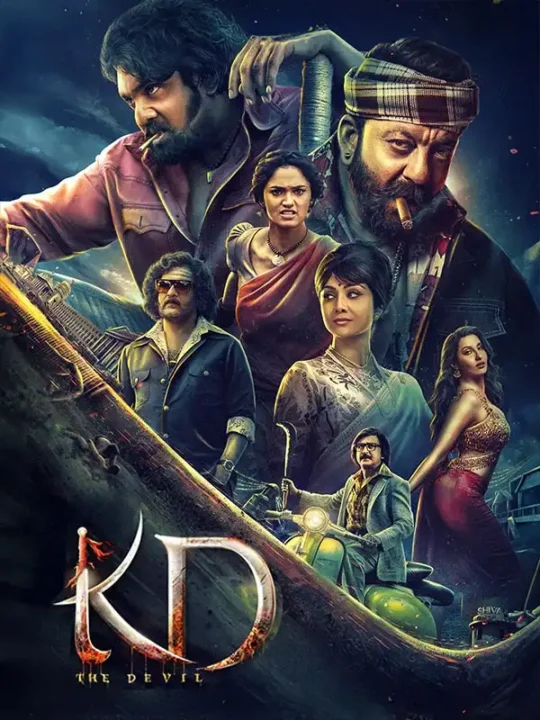
KD – The Devil Massive Production Slate And The Market Context
To understand the salaries, you first have to understand the production house funding the project. KVN Productions is not playing a small game.
They are currently bankrolling three massive projects. They have Yash’s Toxic, Vijay’s Jana Nayagan, and Dhruva Sarja’s KD – The Devil. According to The Indian Express, the combined financial commitment for these three films sits around a staggering 1,500 crore rupees.
That is a heavy burden for any studio to carry.
Zoom TV reported that the budget for KD – The Devil alone is estimated to be between 100 to 150 crore rupees. When you mount a film on that scale, the theatrical window becomes a high-pressure zone.
You are no longer just hoping for a hit. You are praying for a massive opening weekend to leverage satellite rights, digital acquisition deals, and audio network payouts.
This is where the casting comes into play. To justify a 150 crore rupee budget, you need a cast that can pull audiences across multiple territories. But acquiring that talent requires heavy upfront capital.
The BoxOfficeWala Analysis On ROI
Here is an analytical observation for you. The market mood right now is highly volatile. You can spend 150 crore rupees, but if the Day 1 opening does not match the budget ratio, the recovery model shifts entirely to non-theatrical revenues.
On its opening day, KD – The Devil managed a net collection of approximately 3.50 crore rupees and a gross of 4.10 crore rupees across India.
Is this sustainable?
When your Day 1 gross is hovering around the 4 crore mark against a 150 crore budget, the theatrical return on investment is fundamentally stressed. The film clashed with Dhanush’s Kara, which had a much wider screen count.
Even Dhruva Sarja’s previous film, Martin, opened higher at roughly 6.70 crore rupees. If the theatrical window does not explode over the weekend, the producers will have to rely heavily on OTT streaming deals and Hindi dubbing rights to hit the break-even point.
Decoding The Talent Payouts
Let us get down to the exact numbers. Who took what, and does it justify their market value? The numbers reveal exactly how the producers allocated their massive budget.
👇 Receive Box Office Updates, sent directly to your device by your personal Box Office Insider. 👇
👇 Join the inner circle 👇
The Antagonist Premium
When the sequel to KGF blew up the box office, it fundamentally shifted the market value for Bollywood actors playing villains in South Indian cinema.
Sanjay Dutt is riding that wave beautifully.
According to TV9 Bharatvarsh, Sanjay Dutt charged a solid 8 crore rupees to play the menacing antagonist, Dhak Deva. He reportedly signed this film back in 2023. Today, his market rate has inflated to 10 to 15 crore rupees per project. That makes his payout for KD – The Devil a relatively negotiated backend deal for the producers.
The Item Number Economics
Then comes the marketing hook. A specialised dance number is designed to pump up YouTube views, boost audio rights, and drive initial hype.
Nora Fatehi made her Kannada debut with the controversial retro track initially titled Sarke Chunar. TV9 Bharatvarsh reported that she took home an estimated fee of 2 to 3 crore rupees for her sizzling appearance.
Even though the song faced massive backlash over its lyrics and had to be pulled down and sanitised by KVN Productions, her paycheck was already locked in.
The Missing Variables
Now, what about the core pillars of the movie? What did Action Prince Dhruva Sarja charge for the titular role?
How much did Shilpa Shetty take for her grand return to Kannada cinema as Satyavati?
Despite the intense market speculation, exact official figures for Dhruva Sarja, Shilpa Shetty, and cameo star Kiccha Sudeep are strictly not available. No credible trade source has leaked their final backend or upfront compensation.
In this business, when the lead actor’s salary is kept under wraps, it usually means there is a profit-sharing mechanism tied to the theatrical or digital rights.
The Windowing Strategy
When a studio drops 150 crore rupees on a period action film, they engineer a safety net. The theatrical run is just the first phase of the cash flow. The real money lies in digital acquisition.
Streaming platforms pay a premium for multi-language action films featuring names like Sanjay Dutt and Shilpa Shetty. Their presence acts as an insurance policy for the Hindi belt viewership. Even if the box office collections remain sluggish, the pan-India cast guarantees a lucrative satellite and streaming package.
BoxOfficeWala Verdict
As it stands, KD – The Devil is a classic case of high risk with a delayed reward structure. The 150 crore rupee budget is hefty.
The 8 crore rupee payout for Sanjay Dutt is market-standard for his current villainous streak. But with a sluggish opening day gross of just over 4 crore rupees, the theatrical recovery is going to be an uphill battle.
If the digital acquisition deals were not pre-sold at a premium, the profit margins for KVN Productions will be incredibly thin.
Nitesh Mishra – Box Office Analyst
Here is a question for you. Do you think spending 2 to 3 crore rupees on a single item song is a logical marketing expense when the opening day box office collection is roughly the same amount? Drop your financial logic in the comments below.
Join BoxOfficeWala
Get Box Office Updates directly on WhatsApp from your personal Box Office Insider.
You May Have Missed





About the Author

Nitesh Mishra
— Business Analyst (Since 2017)
As a Movie buff with years of experience in film blogging, writing and box office analysis, I specialise in delivering accurate box office insights, movie updates OTT deals and Business Insights. [X, Instagram, Reddit, Threds]