

Detailed Box Office Report Card for Akshay Kumar: Evaluating 36 Years of Stardom
MUMBAI — April 24, 2026. Listen to me very carefully because the numbers we are seeing this morning aren’t just digits on a ledger; they are a loud, clear statement about the resurrection of a superstar.
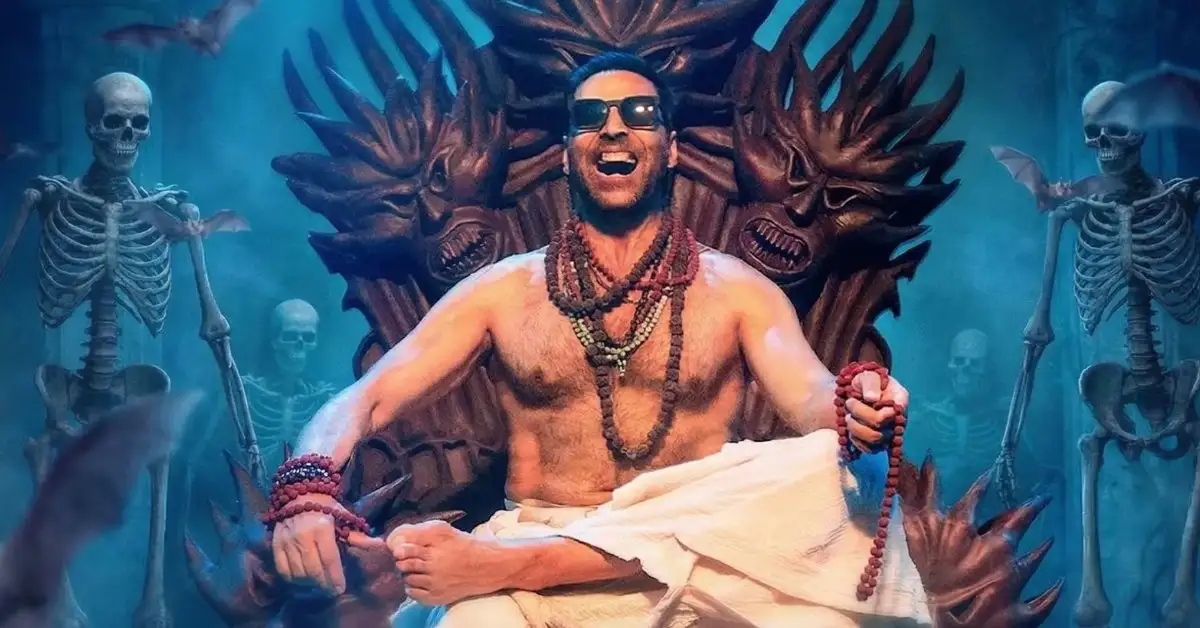
We are sitting in the final week of April, and the trade is buzzing about one man: the original Khiladi. Akshay Kumar’s latest horror-comedy Bhooth Bangla has just finished its first full week in the theatres, and the math is incredibly interesting.
After a strong opening weekend of ₹54.25 crore net, the film saw a typical Monday dip but has maintained a steady hold through the weekdays.
Early trade estimates suggest the first-week India net stands at a solid ₹88.40 crore, with a worldwide gross already breaching the ₹140 crore mark. In a year dominated by high-octane action, this Priyadarshan-directed caper has brought the family audience back to the multiplexes with a vengeance.
Three Decades of the Khiladi Gamble
If you understand the psychology of the Indian moviegoer, you know that Akshay Kumar is less an actor and more a high-frequency trading algorithm.
Since his debut with Saugandh in 1991, he has operated on a high-volume, high-risk strategy that no other superstar in the history of Indian cinema has dared to replicate. We are talking about a career spanning over 150 films.
Most actors wait for a perfect script; Akshay builds a factory.
This report card from 1990 to 2026 is a masterclass in theatrical survival. He’s seen it all: the raw action dominance of the 90s, the comedy monopoly of the 2000s, the socially relevant blockbuster phase of the 2010s, and the brutal post-pandemic slump of 2022-2024. But as of 2026, the trend line is pointing upwards again.
The success of Housefull 5 last June, which netted ₹242.80 crore despite mixed reviews, and the recent surge of Bhooth Bangla prove that his “brand value” is bulletproof. The audience might reject a bad film, but they never truly stay away from Akshay Kumar for long.
There is a hard reality check we need to discuss here. Is the volume game finally hurting his “event” status?
For years, the trade has argued that doing four films a year dilutes his stardom.
In 2024, when Bade Miyan Chote Miyan ended as a disaster, and Khel Khel Mein struggled as a flop, that argument seemed final. But look at the 2026 mood.
The audience is rewarding collaboration and nostalgia. By reuniting with Priyadarshan, he has tapped into a specific “comfort cinema” demographic that was starving for a clean laugh. The question is no longer how many films he does, but who he does them with.
Breaking Down the Eras of Dominance

The Action Foundation (1991–1999)
The 90s were built on blood, sweat, and kicks. After the average performance of Saugandh, Akshay struck gold with Khiladi in 1992, which earned a hit verdict and gave him his lifelong moniker.
According to distributor data, 1994 was his first “peak” year. He delivered a massive blockbuster in Mohra, which netted over ₹12 crore in an era where that was a mammoth figure.
Films like Main Khiladi Tu Anari and Sabse Bada Khiladi established him as the king of the mass circuits.
However, the late 90s were erratic. For every Khiladiyon Ka Khiladi (Super Hit), there was an International Khiladi (Below Average). He was a single-screen darling, but the urban multiplex crowd hadn’t fully embraced him yet.
👇 Receive Box Office Updates, sent directly to your device by your personal Box Office Insider. 👇
👇 Join the inner circle 👇
The Comedy Monopoly (2000–2011)
The year 2000 changed the grammar of his career with Hera Pheri. Though it was only an average performer initially, its cult status paved the way for a decade of slapstick dominance.
This is where the math becomes staggering. Between 2004 and 2008, he was practically untouchable. Mujhse Shaadi Karogi, Phir Hera Pheri, Welcome, and Singh Is Kinng were all super hits or hits.
BoxOfficeWala tracking shows that during this era, his films had an incredible “opening day to lifetime” multiplier. The audience trusted the “Akshay-comedy” brand blindly.
Even disasters like Chandni Chowk To China couldn’t break the momentum for long because he had a new film releasing every three months to reset the ledger.
The Socio-Patriotic Peak (2012–2021)
This era saw a shift from slapstick to “meaningful” stardom. Rowdy Rathore in 2012 was his first ₹100 crore blockbuster, followed by a string of high-ROI films like Holiday, Airlift, and Toilet: Ek Prem Katha. He became the face of the “New India” narrative. The peak of this phase was 2019, when he delivered four back-to-back hits, including Mission Mangal and Housefull 4, which crossed the ₹200 crore net milestone in India.
Even the pandemic couldn’t stop the initial wave, with Sooryavanshi (2021) securing a super hit status. But then, the bubble burst.
The Slump and the Resurgence (2022–2026)
The period from 2022 to mid-2024 was the darkest in his trade history. A string of massive disasters like Samrat Prithviraj, Raksha Bandhan, and Selfiee led many to believe the “Akshay era” was over. The occupancy rates for his films dropped into single digits by the first Monday.
However, 2025 saw a surgical recovery. Sky Force in January 2025 brought in the masses again, and Housefull 5 in June 2025 proved the franchise’s power by netting ₹242.80 crore.
Now, in April 2026, Bhooth Bangla is holding firm. Despite a 70% drop on its first Monday—which sounds alarming—the low costs of Priyadarshan’s production mean the film is already in the “plus” zone.
On its first Tuesday and Wednesday, the film showed a steady hold with ₹5-6 crore daily net, indicating strong word-of-mouth in the B-centres.
The Khiladi’s New Lease of Life
My verdict is simple: Akshay Kumar is a theatrical survivor who has finally learned to stop competing with his own volume. As of 2026, he is leaning back into the genres that built his legacy—horror-comedy and franchises.
Bhooth Bangla is a clear win for the distributors, and with Welcome To The Jungle set for a massive June 2026 release, his lifetime collection is poised to see another massive jump.
He is no longer chasing the “social hero” tag; he is chasing the “entertainer” tag. For a man who has delivered over 150 films, his success ratio still hovers near 60%, which is statistically incredible.
This is good news for the industry. Akshay Kumar is back to being the “working man’s superstar,” and the 2026 report card is looking healthier than it has in half a decade.
Nitesh Mishra – Box Office Analyst
After the ₹100 crore worldwide surge of Bhooth Bangla, do you think Akshay should strictly stick to Priyadarshan-style comedies for the next two years, or should he risk another high-budget actioner like Sky Force? Drop your trade logic in the comments!
About the Author

Nitesh Mishra
— Business Analyst (Since 2017)
As a Movie buff with years of experience in film blogging, writing and box office analysis, I specialise in delivering accurate box office insights, movie updates OTT deals and Business Insights. [X, Instagram, Reddit, Threds]