
Is The Kerala Story 2 Safe For Kids? Detailed Parental Guide and Censor Board Rating Analysis 2026


Add BoxOfficeWala on Google
Get the most accurate box office data and movie results directly in your search feed.
The Kerala Story 2 Censorship Shock: What They Cut Will Give You Chills!
Listen up, because the heat in Mumbai and Kochi is off the charts today, Sunday, 08 March 2026, and it is not just the weather.
The Kerala Story 2: Goes Beyond has been playing in theaters for a week now, and the chatter around its UA16+ certificate is reaching a boiling point. While the first film was a massive box office disruptor, this sequel directed by Kamakhya Narayan Singh is walking on a razor-thin edge of censorship and public outcry.
Many parents are standing outside cinema halls confused, asking if they should take their teenagers inside to witness what the makers call awareness but critics label as sensory assault. With 16 major cuts ordered by the Censor Board, the version you are seeing on screen is actually a sanitized ghost of the original intended vision.
The industry is currently split right down the middle. One side sees the film as a necessary mirror to reality, while the other sees it as a manufactured rage machine designed to stir the pot before the next election cycle. The first part, which took the world by storm in 2023, earned over 300 crores, but the sequel is struggling to even fill half the seats in major metros.
There is a visible fatigue in the audience, and the legal drama that unfolded on the release day—where the Kerala High Court stayed and then lifted the ban within hours—has only added to the chaos. If you thought the first one was intense, Goes Beyond tries to live up to its title by pushing into territory that even the CBFC found hard to swallow.
The Censor Board’s Surgical Strike on “Goes Beyond”
You might be wondering why a film that claims to be a social awareness project needed 16 modifications to even reach the screen. The reality is that the original cut was so graphic that it almost walked away with an ‘A’ rating. However, producer Vipul Amrutlal Shah pushed for a U/A certificate to ensure young girls and families could watch it for its educational value. To get that precious U/A 16+ stamp, the filmmakers had to agree to some massive trims. We are talking about a 50% reduction in visuals related to sexual assault and intimate scenes.
A lip-lock scene was chopped down by 7 seconds. Rape sequences were shortened by 20 seconds. Even a simple scene of a woman being slapped was reduced by 2 seconds because the impact was deemed too brutal.
These are not just minor nicks; they are deep cuts to the narrative structure. According to Bollywood Hungama, the board was extremely cautious about how violence against women was portrayed, especially in a film that is already under fire for its political stance. They even modified a scene showing a house being demolished with a bulldozer and muted several dialogues to maintain communal harmony.
Parental Guide: Is it Actually Safe for 14-Year-Olds?
Here is where the confusion starts. The CBFC gave it a UA16+ rating, which means children above 14 can technically watch it with parents, but it is primarily intended for those 16 and older. But does UA16+ really mean it is family-friendly? Absolutely not.
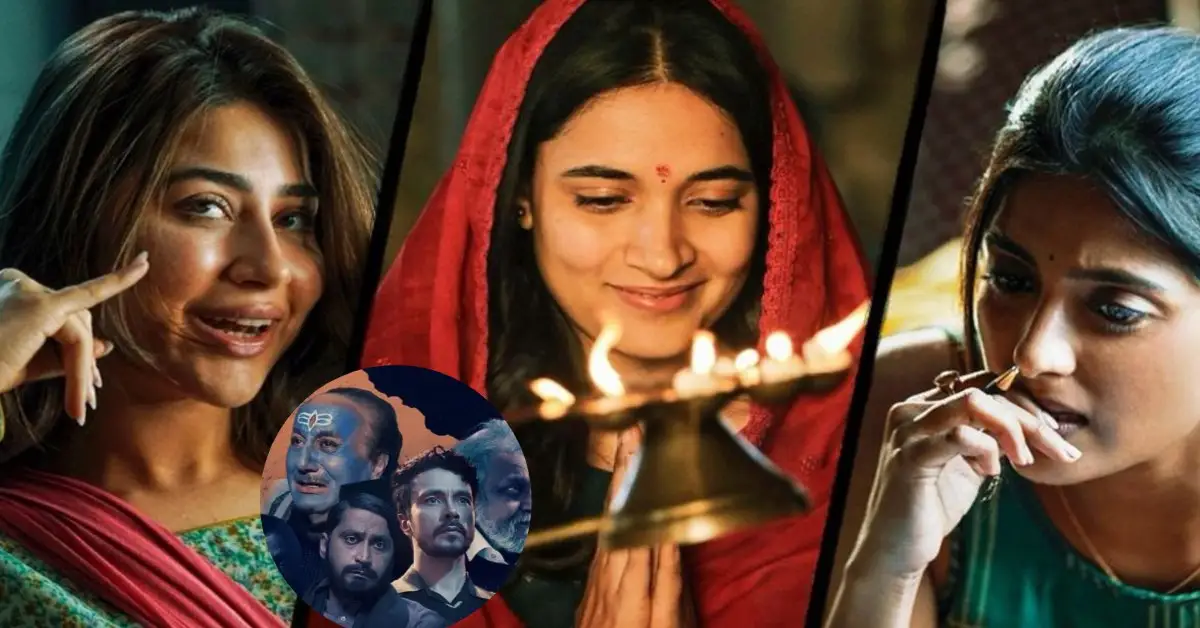
Even with the cuts, the film contains highly disturbing sequences of repeated sexual assault, forced eating of beef, and brutal physical violence. One of the main tracks follows Neha, played by Aishwarya Ojha, who is betrayed by her husband and forced into sex work.
If you are a parent thinking this is a regular drama, stop right there. The background score is described as loud and apocalyptic, designed to keep the viewer in a state of constant anxiety. The film follows three young women—Surekha, Neha, and Divya—whose lives spiral into what critics are calling a dystopian nightmare after they marry outside their religion. Unlike the first film which focused on ISIS camps, this one looks at domestic conversion rackets, making the horror feel uncomfortably close to home.
Industry Reality Check: Are We Selling Awareness or Just Hate?
There is a specific, analytical observation making the rounds in Bollywood trade circles right now. While the makers insist the film is based on true events and legal documentation, the sheer volume of graphic violence suggests a different motive.
Is the audience being empowered, or are they being manipulated through their most basic fears?
The film claims that by 2047, India could turn into a Sharia state—a statement that has triggered massive debates on social media. Is this cinema or is it a political pamphlet disguised as a movie?
The contrast between the two films is also striking. Adah Sharma, the face of the first part, is notably absent, and she recently broke her silence saying she prefers to talk only about projects she is directly involved in. The new cast, including Ulka Gupta and Aditi Bhatia, has delivered sincere performances, but they are often overshadowed by the film’s loud and preachy tone. The lack of Sudipto Sen as director—who won a National Award for the first part—is also visible in the sequel’s weaker box office performance and critical reception.
Behind the Scenes: The Legal Battle and Final Runtime
The road to the screen was a battlefield. On February 26, 2026, just one day before the release, the Kerala High Court passed an interim order staying the film. The court observed that the CBFC might have ignored guidelines intended to prevent films from disrupting social harmony.
However, the producers moved faster than a bullet, filing an appeal that same day. A special sitting was convened, and on the morning of February 27, the stay was lifted, allowing the film to hit theaters.
The final version of the film that you see today has a runtime of 131 minutes and 24 seconds. It includes a mandatory disclaimer that is now shown for 2-3 minutes longer than usual, accompanied by a voice-over emphasizing that the story is inspired by true incidents. The board even required the makers to submit documentation for every claim made in the script before they would sign off on the certificate.
Alright, here is my honest take. The Kerala Story 2: Goes Beyond is not a movie in the traditional sense; it is a high-stakes social experiment. If you are looking for a weekend entertainer, this is definitely not it. The 16 cuts by the CBFC show that even the government regulators were worried about the toxic potential of some scenes.
While the makers say they want to reach young girls for awareness, the UA16+ rating is a warning sign. It is a tough watch, and honestly, the weak box office numbers suggest that the Indian audience might be moving away from this specific brand of manufactured rage.
My advice? If you have young kids, keep them far away from this one. Even for adults, it is a sensory assault that will leave you exhausted rather than informed.
Question For You: Do you think a UA16+ rating is enough for a film with such graphic content, or should it have been strictly ‘Adults Only’? Let me know in the comments!