
LIK Box Office: Can Pradeep Ranganathan Recover a ₹70 Crore Budget After Weekend 1?

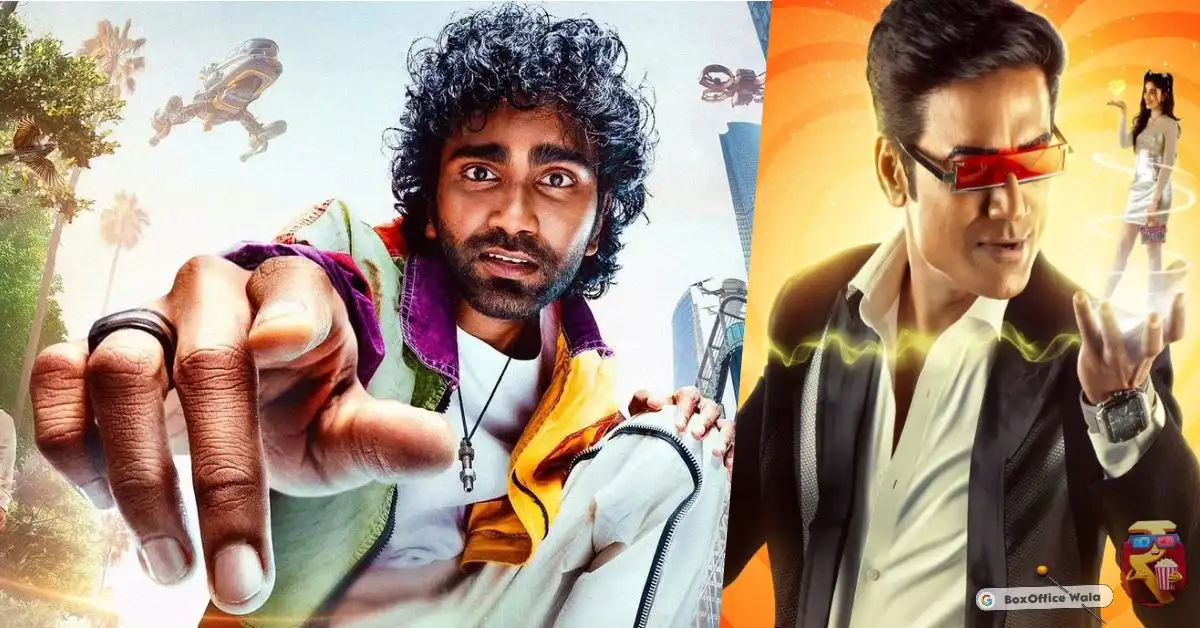
Break-even Analysis: Exactly How Many Tickets Must Love Insurance Kompany Sell to Be a Hit / Average / Flop?
CHENNAI — The futuristic world of Pradeep Ranganathan and Vignesh Shivan has officially landed at the box office, but the financial math behind Love Insurance Kompany (LIK) is proving to be as complex as its time-travelling plot.
After a four-day opening run that saw the film grossing nearly 35 crore worldwide, the industry is now pulling out its calculators to see if this sci-fi rom-com can actually recover its massive investment.
We are looking at a high-stakes gamble where the production cost has reportedly touched the 70 crore mark, a significant jump for a leading man who is still establishing his superstardom.
The strategic importance of Love Insurance Kompany cannot be overstated for Seven Screen Studio and Rowdy Pictures.
Coming off the back of a string of experimental hits, Pradeep Ranganathan’s market value is being tested against a big-budget canvas for the first time. The film isn’t just a test for him; it’s a litmus test for the sci-fi rom-com genre in the South.
If this clicks, it opens doors for more high-concept storytelling. If it falters, the industry might retreat into the safety of formulaic actioners. There is a palpable curiosity in the trade circles about whether the youth-centric appeal of the Dragon star can overcome the polarising reviews that have dominated the conversation since Friday.
Is the film actually a winner just because it crossed the 20 crore mark in the first weekend? Not quite. In the current market, gross numbers are often a vanity metric that hides the harsh reality of distributor shares and high P&A (Prints and Advertising) costs. The real question is whether the film has enough legs to survive the Monday test and beyond.
With mixed critical reception, can Love Insurance Kompany sustain the momentum required to reach its lofty break-even target, or will it be another case of a promising start that fizzled out too early?
To understand the reality of LIK, we have to break down the numbers.
The film opened with a decent 7.05 crore net in India, followed by a slight jump on Saturday and a stronger Sunday. According to Bollywood Life, the movie reached an Indian net total of 23.06 crore by the end of its first Monday.
When we look at the global picture, the worldwide gross is hovering around 34.59 crore. While these numbers look healthy for a mid-tier film, Love Insurance Kompany isn’t priced like one.
The budget is the elephant in the room. Older reports from Wikipedia suggested that Lyca Productions had initially backed out of this project when the budget was proposed at 70 crore, fearing the recovery would be difficult. While the final production house shifted, the scale remained ambitious.
For a film made at this cost, the non-theatrical recoveries (Digital rights sold to Netflix, Satellite rights, and the chartbuster audio by Anirudh) likely covered about 35 to 40 crore. This leaves a theatrical recovery target of approximately 30 to 35 crore from the distributors’ share alone.
Now, let’s talk ticket math. Track Tollywood reported that the film sold approximately 16 lakh tickets in India to reach a gross of 26.21 crore by its fourth day. This brings the average ticket price (ATP) to roughly 163 rupees. To recover a theatrical share of 35 crore, the film needs to gross at least 75 to 80 crore in India (assuming a 45-50% share for distributors in the Tamil and Telugu markets).
If we apply our ATP of 163 rupees to that 80 crore target, the film needs to sell a total of 4.9 million tickets.
However, being a “Hit” requires more than just breaking even; it requires a 20% profit for the buyers. This pushes the gross requirement to nearly 95-100 crore worldwide.
The Breakdown: Hit vs Flop Scenarios
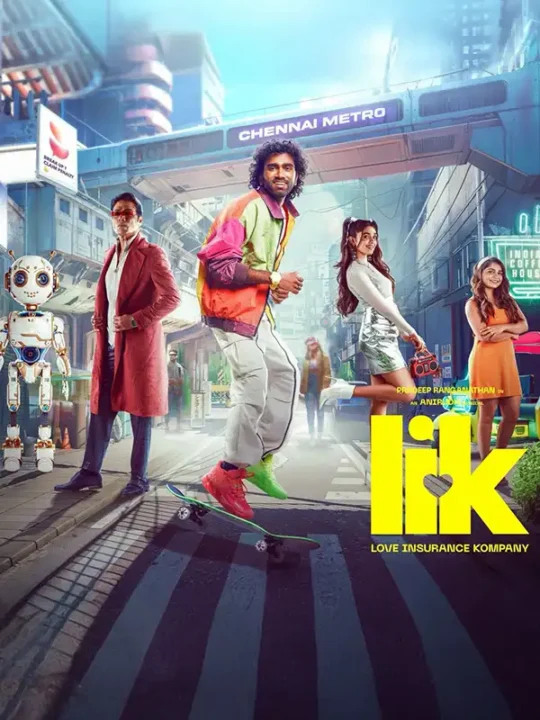
LIK: Love Insurance KompanyDay 159
1. The Flop Zone
If Love Insurance Kompany fails to sustain its weekday hold and ends its lifetime run below 50 crore worldwide gross, it will be classified as a commercial failure. At this level, it would only sell about 2.5 to 3 million tickets in India, leaving the theatrical distributors with a massive hole in their pockets.
2. The Average / Below Average Zone
If the film reaches a worldwide gross of 65 to 75 crore, it will enter the average category. This would mean selling roughly 4 million tickets. While it might recover the investment for the producers through non-theatrical deals, the theatrical buyers might still see minor losses or just break even.
3. The Hit Zone
To be a certified hit, LIK needs to cross the 90 crore worldwide gross mark. This translates to selling roughly 5.5 to 6 million tickets globally. Given that it has already sold 1.6 million in four days, it needs to sell another 4 million tickets over the next two weeks.
BoxOfficeWala Verdict
In my view, Love Insurance Kompany is currently in a “wait and watch” position. The opening weekend was fueled by the Gen-Z fan base of Pradeep Ranganathan and the brand of Vignesh Shivan. However, The Hindu noted that the film suffers from “post-intermission blues,” which could hurt its long-term prospects.
For this film to hit the 6 million ticket mark, it desperately needs the family audience to step in during the second weekend.
As of now, I expect it to land in the Average to Above Average territory, unless the weekday drop is sharper than expected.
It is a win for the producers due to the high digital and audio value, but the theatrical distributors still have a mountain to climb.
Nitesh Mishra – Box Office Analyst
Do you think a film with a ₹70 crore budget is too risky for a young star like Pradeep Ranganathan, or is his digital pull enough to justify the spend?
Join BoxOfficeWala
Get Box Office Updates directly on WhatsApp from your personal Box Office Insider.
You May Have Missed




About the Author

Nitesh Mishra
— Business Analyst (Since 2017)
As a Movie buff with years of experience in film blogging, writing and box office analysis, I specialise in delivering accurate box office insights, movie updates OTT deals and Business Insights. [X, Instagram, Reddit, Threds]