
Why Youth 2026’s Success Can’t Hide Its Massive Story Gaps


Add BoxOfficeWala on Google
Get the most accurate box office data and movie results directly in your search feed.
Decoding Plot Holes and Continuity Issues in Youth 2026: How Ken Karunas Can Fix the Narrative for the Sequel
Love Youth 2026, but confused by the ending? We dive deep into the plot holes, character gaps, and continuity errors that almost ruined the movie.
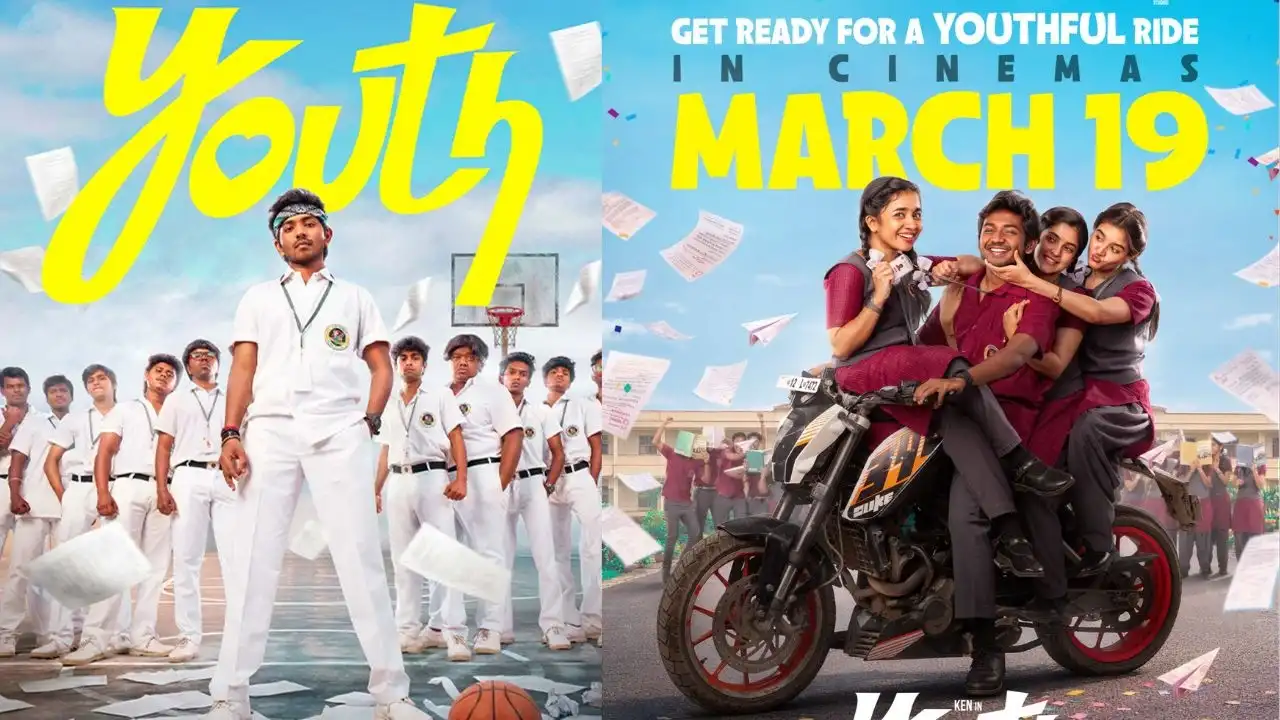
It is Sunday, April 5, 2026, and if you walk into any theatre in Chennai today, the cheers for Ken Karunas are deafening.
Youth 2026 has officially become the underdog story of the year, sprinting past the 50 crore mark and proving that the “coming-of-age” genre still has legs in India.
Everyone is celebrating the success of this debut director-actor, but if you look closely at the social media chatter, a different story is brewing.
While the audience loves the “vibes” and the music by GV Prakash, the “logic” department seems to have taken a long vacation during the second half of the film.
We are seeing a massive hit that is also a massive puzzle, filled with character shifts that don’t make sense and emotional beats that feel like they were imported from a different movie altogether.
The film has turned into a certified blockbuster, but the fan wars on Reddit and X are getting intense over the “writing quality.”
People are asking how a “mini Casanova” who juggles two girls simultaneously can suddenly become the “moral hero” in the final ten minutes without any real transition.
It is confusing. It is messy. It is also the most talked-about movie of the week because we love to see a hero win, even if he doesn’t technically deserve to.
The industry is currently divided. On one side, producers are hailing Ken Karunas as the new voice of Gen-Z cinema.
On the other side, veteran writers are worried that we are sacrificing “good storytelling” for “relatable reels.”
According to Lensmen Reviews, the film follows a structure where a commercially pleasing, fun-filled life is suddenly forced into a self-awakening track that feels unearned. This shift has created a huge gap between the “fun” Praveen we see for 90 minutes and the “responsible” Praveen we are supposed to cry for at the end.
Is our love for the “struggling middle-class student” trope so strong that we are willing to ignore a protagonist who is actually kind of a jerk to everyone around him?
We keep praising movies for being “raw,” but maybe we are just mistaking “lack of character growth” for “realistic portrayal.”
The timeline of Youth 2026 is the first major red flag that fans have pointed out. The movie spans two years—from the end of 10th grade through the entirety of Plus Two—yet the physical and mental state of the characters remains frozen in time until the climax.
In the first half, Praveen is shown as a Casanova, dating two girls at once and giving the excuse that he “can’t say no to anyone.”
This is played for laughs, but the narrative never actually shows him facing the consequences of this behaviour.
Instead, the movie pivots to a family drama where his mother’s sacrifice takes center stage.
The Mystery Of The Mother’s Sacrifice
One of the biggest plot holes that left audiences scratching their heads involves the “unthinkable stuff” the mother does to secure Praveen’s school seat.
The film builds this up as a massive emotional mountain, but it never explicitly explains what happened or how a strict father remained completely oblivious to it in a small middle-class house.
Cinema Express noted in its review that while the family dynamics provide an emotional foundation, the logic behind the school admission feels like a plot device rather than a real event.
If the family is struggling financially, how did a “secret sacrifice” fix a systemic problem without anyone noticing for two years?
To fix this, the director could have easily added a scene showing the mother taking on a secret job or selling a specific heirloom, creating a “trail” for the father to discover.
Instead, it is used as a “shock reveal” to force the hero to change his ways instantly.
Character growth doesn’t happen in a vacuum. It needs a trigger, and while a mother’s love is a great trigger, the “how” matters just as much as the “why” in a 140-minute movie.
The Casanova To Saint Pipeline
Then we have the “relationship logic” gap. Praveen’s transition from a guy who manipulates feelings to a guy who understands the value of family is too fast.
One minute, he is making locker-room jokes about girls being “all the same,” and the next minute he is delivering a mature monologue about respect and the future. The fix here was simple: let him lose.
If the film had shown him getting caught and facing the actual social isolation that comes with being a “two-timer,” his eventual realisation would have felt earned.
Even the jokes—like the much-criticised “bald dad” gag—felt like they belonged to a different movie’s continuity. These “fillers” often broke the immersion of the serious exam-pressure storyline that was supposed to be the film’s core.
Despite these gaps, the movie is a hit because Ken Karunas has captured the “energy” of being young and confused, even if he missed the “logic” of growing up.
As we look forward, the success of Youth 2026 means a sequel or a similar project is almost guaranteed.
If the team takes the feedback about these “script leaks” seriously, the next instalment could be more than just a “vibe”—it could be a masterpiece.
The box office is already rewarding the effort, but the legacy of the film will depend on whether it can survive a “second watch”, where the plot holes become even more obvious.
A Hit With A Leak
I’ll be honest with you—I loved the energy of Youth 2026, but as a news analyst, I can’t ignore that the script had more holes than a piece of Swiss cheese.
It is “good news” that a small-budget film made for 6 crore can touch 50 crore, but it is “bad news” if directors think they can skip character development just by adding a sad song at the end.
Ken Karunas has the “it” factor, no doubt.
However, for his next one, he needs to hire a script doctor who isn’t afraid to tell him when a scene makes zero sense.
Look forward to seeing how he handles the criticism for his next project!
Gulshan Mishra – Journalist
Do you think a “good vibe” in a movie is enough to forgive major plot holes, or do you need the logic to be perfect? Let’s talk in the comments!