
Youth 2026 Ending: The Emotional Twist That Made It A Blockbuster!


Add BoxOfficeWala on Google
Get the most accurate box office data and movie results directly in your search feed.
Youth 2026 Ending Explained: Decoding The Sonal Twist, The 2014 Timeline, And Praveen’s Final Emotional Choice
Forget the teen romance! We decode the shocking Youth 2026 ending, that Sonal’s revenge twist, and why the 2014 setting actually matters.
Chennai is waking up this Monday morning, March 30, 2026, with a massive “hangover” from the weekend, and I’m not talking about party drinks. I’m talking about the emotional punch to the gut that Youth 2026 just delivered to theatres across the country. It is official: Shaji Pappan has some competition in the “heart-winning” department.
While everyone expected Ken Karunaas to deliver a silly school comedy, what we actually got was a mirror held up to our own messy teenage lives. The movie has already raked in over ₹30.59 crore worldwide as of last night, and the discussion isn’t about the jokes anymore.
It is all about that ending. Specifically, how a movie about a kid trying to be a “Casanova” turned into a story that has grown men crying in the back row of Sathyam Cinemas.
The hype is real. Youth 2026 takes us back to the 2014-2016 era—a time of Facebook pokes, WWE cards, and “rizz” before it was even called rizz.
Our hero, Praveen, starts as a bratty 10th grader who thinks finding a girlfriend is a bigger achievement than passing his board exams. But by the time the credits roll, he isn’t the same kid. The film doesn’t just end; it evolves. It forces the audience to look past the “cringe” of puppy love and face the harsh reality of middle-class Indian parenthood.
This shift from a “locker room talk” comedy to a serious family epic is exactly why the film is trending on every social media platform today.
You might think you’ve seen this before. A boy, a girl, a strict dad, and a supportive mom. But Youth 2026 flips the script by making the romance the “distraction” and the family the “main event.” The industry is currently obsessed with “mass” action, but Ken Karunaas chose “mass” emotion instead.
According to The Hindu, as per their latest analysis, the film uses its elementary template to sneak in a moral lesson like a doctor hiding a needle to distract a child.
This “subversive” storytelling is what has sparked a massive debate among fans: Was Praveen ever really in love, or was he just in love with the idea of being loved?
The Sonal Revenge Twist: The Moment Everything Shattered
The biggest talking point in the movie right now is the “Sonal Twist.” For the first half of the film, we see Praveen juggling his feelings for Preshika and then suddenly getting a Facebook text from Sonal.
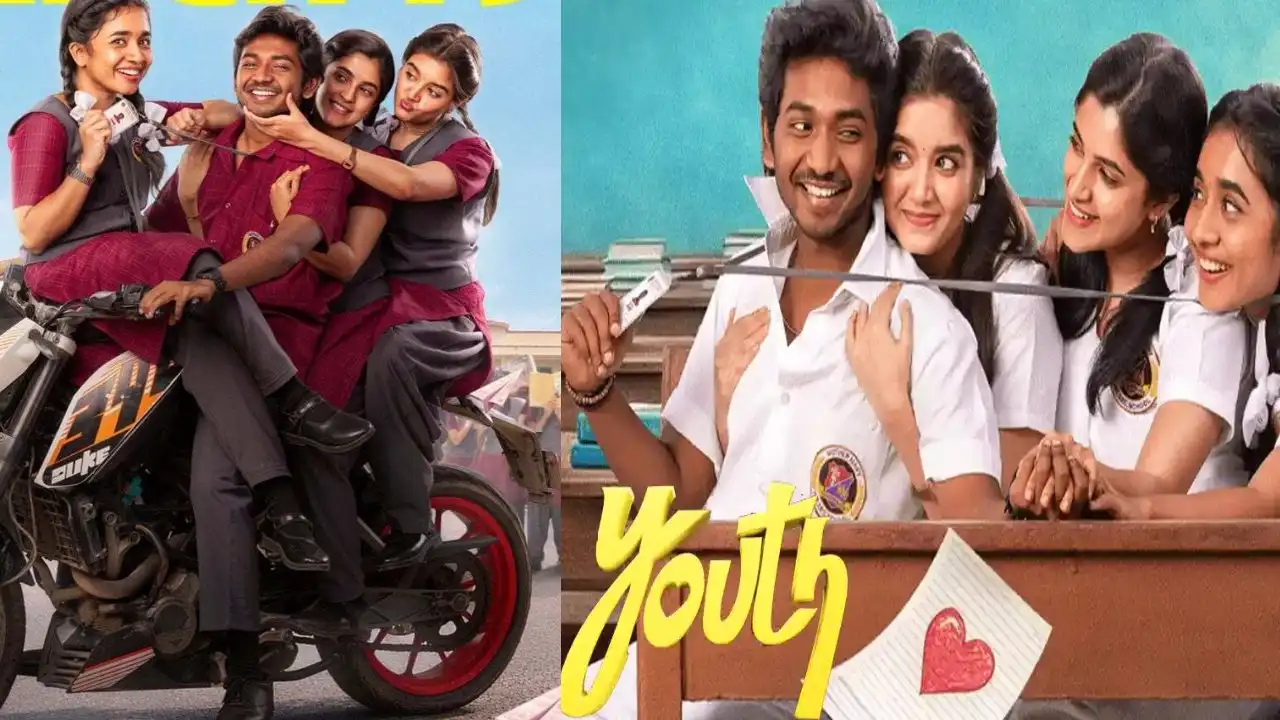
YouthDay 11
In the world of 2014 high schoolers, a girl sending a friend request first was like winning the lottery.
Praveen thinks he is the “Big Show” of his school. He feels untouchable. But the movie takes a dark, sharp turn when it is revealed that Sonal’s “love” was actually a calculated revenge scheme. She and her friends orchestrated the whole thing to sabotage Praveen’s actual relationship.
This isn’t just a plot point; it’s a reality check. It strips away Praveen’s “Casanova” mask and leaves him humiliated. In a sea of movies that celebrate the “hero” always getting the girl, Youth 2026 chooses to show the hero being played.
This humiliation leads to a school scuffle that changes the entire trajectory of the film. It leads to Praveen and his friends being handed their TCs (Transfer Certificates).
This is where the comedy dies, and the real movie begins. The moment the principal calls the parents, the vibe in the theatre shifts from laughter to dead silence.
The Hospital Scene: Why The Ending Is About Redemption
The true “Big Twist” isn’t a secret identity or a time-travel jump—it is the heart attack.
When Praveen’s mother, Saroja (played beautifully by Devadarshini), collapses due to the public humiliation of her son’s actions, the “Youth” in the title takes on a new meaning. It stops being about “youthful fun” and starts being about the “burden of youth.”
The second half of the movie focuses heavily on the equation between Praveen and his parents. His father, Unnikrishnan (Suraj Venjaramoodu), who was played for laughs with his drinking and broken English, suddenly becomes the most grounded person in the story.
The climax doesn’t give you a typical “hero wins the girl” moment.
Instead, we see a mature Praveen standing in a hospital corridor, realising that true love isn’t a Facebook text or a canteen proposal. It is the unconditional bond of a parent who won’t give up on a child, even when that child is “undeserving.”
The final act of the movie sees Praveen walking away from his romantic flings to focus on his education and his family’s dignity. It’s a “mature conclusion” that most teen dramas are too scared to attempt.
According to a distribution list accessed by BoxOfficeWala, the film’s success in B and C centres across Tamil Nadu is directly linked to this emotional second half.
Parents are taking their kids to watch it, not for the romance, but for the “Reality Check” it provides. The movie has managed to bridge the gap between “Gen Z” nostalgia and “Parental” anxiety.
Is the “Casanova” trope finally dead in Indian cinema? For years, we’ve cheered for heroes who harass girls until they say yes or who treat relationships like trophies.
Youth 2026 asks a very uncomfortable question: If your mother was standing right behind you, would you still be proud of your rizz?
It’s a bold move for a debut director. By setting the film in 2014, Ken Karunaas allows the audience to look back at their own past mistakes with a sense of “it’s okay, we grew up.”
The evidence of the film’s impact is in the numbers.
The film earned ₹1.96 crore on its first Tuesday alone, showing incredible “hold” despite a drop in ticket prices.
People aren’t just watching it once; they are going back with their families. The soundtrack by G.V. Prakash also plays a huge role here. The score in the first half is poppy and upbeat, but it turns soulful and melancholic as the family drama peaks. It’s a masterclass in using audio to guide the audience’s heart.
Looking forward, this movie has set a new standard for “Coming-of-Age” films in India. We are moving away from the American Pie style of school comedies and heading toward something much more “Desi” and deeply emotional. The “Youth” of 2026 doesn’t want to just see people falling in love; they want to see people growing up.
Gulshan’s Take: The Ken Karunaas Era Begins
I’ll be honest with you—I went into the theatre expecting to laugh at some cringy school jokes. And I did! But I didn’t expect to leave the theater calling my mom.
Ken Karunaas has pulled off a “Suryavamsam” level emotional move disguised as a “Don” style comedy.
Is this good news? Absolutely.
It’s proof that the Indian audience is tired of plastic romance.
We want stories that feel like our own homes. The Sonal twist was the perfect “slap” the protagonist needed, and honestly, the “slap” we all needed too.
What’s next?
I expect Ken Karunaas to become the go-to director for “Realistic Mass” movies.
If you haven’t seen the ending yet, bring a handkerchief.
You’re going to need it.
Gulshan Mishra – Journalist
Do you think the “Sonal Revenge Twist” was too harsh on Praveen, or did he deserve that reality check?