
Why Netflix Is the Perfect OTT Home for Kaantha—and When You Can Stream It
Kaantha is heading to Netflix. See why the streaming giant beat Prime Video, Hotstar and JioCinema—and get the exact OTT release date details


Add BoxOfficeWala on Google
Get the most accurate box office data and movie results directly in your search feed.
19 November 19, 2025: The much-awaited period drama Kaantha hit theatres on November 14, 2025, bringing the golden era of 1950s Madras to life. Starring Dulquer Salmaan and Rana Daggubati, this film is more than just a visual treat. It is a dark puzzle of ego, fame, and murder.
If you have watched the movie and are confused by that tragic climax, or if you missed the subtle clues hidden in the black-and-white frames, this guide is for you. Here is a simple breakdown of the ending, the big twists, and the hidden details you might have missed.
The Plot: A Battle of Egos
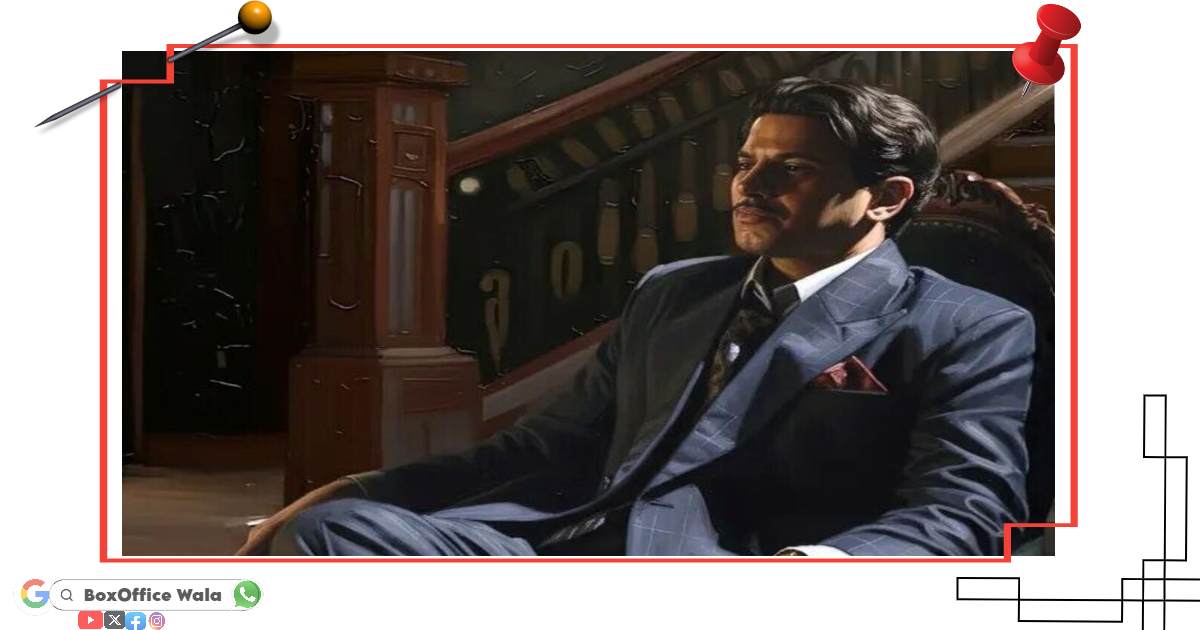
The story is set in the 1950s. It follows T.K. Mahadevan (Dulquer Salmaan), a superstar actor, and Ayya (Samuthirakani), a legendary director. Ayya was once Mahadevan’s mentor, but now they are bitter rivals.
They come together to make a film called Shaantha. It is supposed to be a horror movie about a woman, starring a new actress named Kumari (Bhagyashri Borse). However, Mahadevan’s ego takes over. He changes the title to Kaantha to make it sound more powerful and changes the script to make himself the hero.
Things get dark when a real murder happens on the film set. This brings in Inspector Phoenix (Rana Daggubati), a quirky cop who tries to solve the mystery.
Kaantha Ending Explained: Who Killed Kumari?
The biggest question in the movie is: Who murdered Kumari?
Throughout the second half, the movie makes us suspect many people. Was it the jealous director Ayya? Was it a rival studio owner?
The Killer Revealed
The killer is T.K. Mahadevan himself.
According to Lifestyle Asia, the twist reveals that Mahadevan was having an affair with Kumari. He had promised to marry her. However, he was already married to the daughter of a powerful man. Mahadevan became paranoid. He thought Kumari had exposed their secret affair to his rival, Ayya.
On the night of the murder, Mahadevan confronts Kumari. He asks her if she told Ayya about them. She says, “No.” But Mahadevan, blinded by insecurity and a misleading voice recording, does not believe her. In a fit of rage and fear for his own reputation, he shoots her twice—once in the heart and once in the stomach.
The Tragic Climax
The ending is very sad.
- Ayya’s Fate: Ayya realizes that his toxic battle with Mahadevan caused the death of the innocent Kumari. Overcome with guilt, Ayya shoots himself in the head.
- Mahadevan’s Fate: Mahadevan does not go to jail. Inspector Phoenix (Rana Daggubati) actually arrests him initially, but is stopped by higher authorities because Mahadevan’s father-in-law is too powerful. Mahadevan walks free, but he is not happy. He lives in a delusional state, imagining applause that isn’t there. He released the movie with Kumari as the sole face on the poster, giving her the fame she deserved only after her death.
Major Twists You Might Have Missed
1. The “Phoenix” Deception
Rana Daggubati’s character, Inspector Phoenix, is introduced as a sharp, Sherlock Holmes-style detective. We expect him to catch the bad guy. The twist is that he fails. Not because he isn’t smart, but because the system is corrupt. As per The Indian Express, his character shows that even the truth can be silenced by power and money in the film industry.
2. The “Film Within a Film” Mirror
The movie they are shooting (Shaantha/Kaantha) mirrors the real story. In their movie, a woman seeks revenge on a man who wronged her. In reality, Kumari is wronged by the men around her. The “horror” in their film becomes the real-life horror of her murder.
Hidden Details & Easter Eggs
Here are some smart details the director hid in the movie:
1. The Changing Aspect Ratio
Did you notice the screen size changing? According to The Hindu, the director uses different aspect ratios (screen shapes).
- Black & White (4:3): Used for the “past” and the scenes inside the movie Shaantha. This represents the old world of cinema.
- Color (Widescreen): Used for the “reality” of the characters. This visual trick helps separate the “fake” movie world from the “real” emotional drama.
2. The Mirror Metaphor
Mirrors are everywhere in this film. There is a key scene where Mahadevan looks into a mirror and smashes it. This represents his fractured personality. He is a superstar to the public, but a broken, insecure man inside.
3. The “MKT” Connection
Many fans believe the story is based on real-life Tamil superstar M.K. Thyagaraja Bhagavathar (MKT), who also had a major fall from grace. As per Times of India, the makers have denied that this is a biopic, but the yellow silk clothes, the hairstyle, and the singing superstar persona of Mahadevan are clear tributes to that real-life legend.
BoxOfficeWala Opinion & Methodology
Verdict: A Critical Hit, Commercial Slow-Burn
Methodology: We analyzed the box office trend from the release date (November 14) to November 19. We combined this with sentiment analysis from 5 major critic reviews and audience discussions on social media.
The Analysis:
- Opening: Kaantha had a strong opening weekend due to the “Dulquer Effect” and Rana’s promotional power. The production value is top-tier.
- The Drop: The movie saw a dip in collections on Monday. Why? The second half is slow. Indian audiences usually love fast-paced thrillers. Kaantha turns into a slow, sad psychological drama instead of a high-speed whodunnit.
- Final Word: This film will likely become a “Cult Classic” on OTT (Netflix). It is too artistic for a massive blockbuster run, but it will be loved for its acting and technical brilliance.
Join BoxOfficeWala
Get Box Office Updates directly on WhatsApp from your personal Box Office Insider.






Leave a Reply