
Love Insurance Kompany Spin-Off Budget, Cast, and Earning Potential

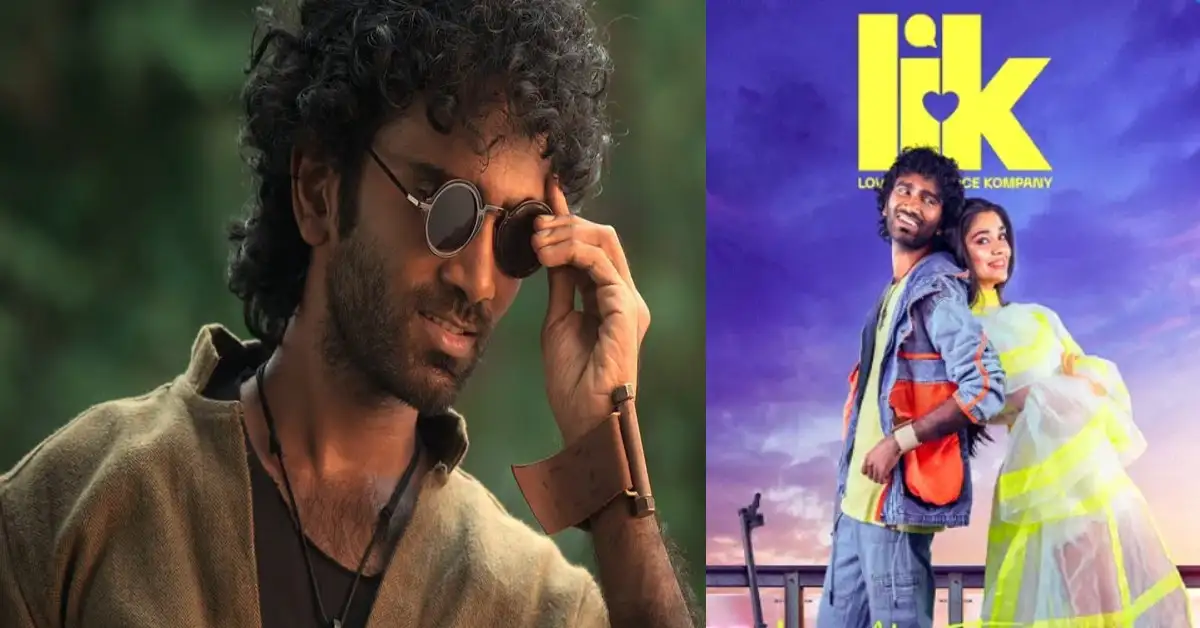
Love Insurance Kompany just hit theaters! Nitesh Mishra breaks down the 95cr budget and explores how a 40cr spin-off could become a massive ROI hit.
MUMBAI — Just 48 hours after Love Insurance Kompany (LIK) made its futuristic debut on 10 April 2026, the trade is already vibrating with one question: what’s next for this universe?
As of today, 12 April 2026, the Vignesh Shivan directorial has wrapped up its first weekend with a worldwide gross of approximately 22 crore. With a massive 95 crore budget riding on its shoulders, the production houses—Rowdy Pictures and Seven Screen Studio—are looking at every possible avenue to maximise the ROI.
While the main film explores the year 2040, a spin-off focusing on the “Origin of the Kompany” or a deep-dive into SJ Suryah’s character, Suriyan, is already being discussed as a viable business expansion.
The broader market context here is the “franchise-first” mindset that has gripped Indian cinema in 2026.
Pradeep Ranganathan has evolved from a debut director-actor into a 100-crore club mainstay with films like Love Today, Dragon, and Dude. His market value is currently at an all-time high, allowing producers to justify high-stakes investments in sci-fi rom-coms that would have been laughed out of rooms five years ago.
However, the success of LIK isn’t just about the hero. It is about the “Kompany” concept—a system that monitors, insures, and monetises human emotions.
Is a 95 crore budget for a rom-com actually sustainable? That is the question keeping trade analysts awake. While the film managed a decent 9.93 crore worldwide opening, it needs a massive surge in the coming weeks to reach the break-even point. The current market mood is shifting towards scepticism regarding “high-concept fatigue.”
We have to wonder if the audience is ready for a spin-off when the parent film is still fighting to clear its theatrical landing cost. The digital safety net is strong, but a spin-off needs to offer something more than just “futuristic Chennai visuals” to be a profitable venture.

The Financial Anatomy of the LIK Universe
To understand a spin-off’s cost, we must look at where the 95 crore went in the parent film. According to reports from Times Now and NDTV Profit, the cast fees took a significant chunk of the budget. Pradeep Ranganathan reportedly charged upwards of 15-18 crore, while SJ Suryah’s remuneration sat around the 10 crore mark.
When you add Krithi Shetty’s fees and the technical muscle of Anirudh Ravichander’s music—which is a huge marketing expense in itself—the fixed costs alone touch the 45-50 crore range.
Projecting the Love Insurance Kompany Spin-Off Production Cost
A spin-off doesn’t necessarily need the same 95 crore price tag. If the makers decide to go with a “Suriyan Origins” prequel—exploring how the Love Insurance Kompany was founded in 2025—the VFX costs for a futuristic Chennai would vanish. This would bring the production cost down to a leaner 35-40 crore. By stripping away the 2040 setting, the producers can focus on the “toxic love” themes and psychological drama that Vignesh Shivan handles so well.
Industry reports suggest that SJ Suryah’s character is the most “spin-off ready” asset in the film. As the antagonist founder who despises humans, his backstory is a goldmine for a gritty business thriller.
A controlled budget of 40 crore would allow the film to be “table-profit” ready through a direct-to-digital deal with a major streaming giant like Netflix or Prime Video, even before it hits a single theatre.
Love Insurance Kompany Earnings Potential: The Power of Digital Acquisition
The real money for an LIK spin-off isn’t in the theatrical window; it is in the “Windowing Strategy.”
For a high-concept sci-fi brand, digital and satellite rights can often cover 70% of the budget. In 2026, streaming platforms are paying a premium for “IP-driven” content that caters to Gen Z. If the parent film crosses the 100 crore mark globally—as Pradeep’s previous films have consistently done—the brand equity of Love Insurance Kompany will soar.
Breaking Down the ROI Math
If a spin-off is produced for 40 crore:
- Digital Rights: Estimated at 25 crore (based on current 2026 market trends for SJ Suryah-led projects).
- Satellite Rights: Estimated at 10 crore.
- Audio Rights: 5 crore (if Anirudh remains on board).
- Total Pre-Release Recovery: 40 crore.
This means the theatrical gross—whether it’s 20 crore or 50 crore—would be pure profit. According to The Economic Times, the parent film’s unique premise of “insuring love” has already attracted immense curiosity, which helps in negotiating these non-theatrical deals. The overseas market, particularly in Singapore and Malaysia where LIK was shot, provides an additional 15-20% revenue buffer.
My take on this?
A spin-off is a smart business move, but only as a prequel. The 2040 futuristic setting is expensive and, based on the mixed reviews, can sometimes feel “unrealistic” to the common audience. If Vignesh Shivan takes the SJ Suryah character and builds a grounded, present-day origin story, it could be a massive ROI winner. It de-risks the production while keeping the brand alive.
However, if the producers try to replicate the 95 crore scale for a secondary character, they are walking into a financial trap.
The industry needs to see LIK hit at least 120 crore worldwide before any spin-off is officially greenlit.
Nitesh Mishra – Box Office Analyst
Join BoxOfficeWala
Get Box Office Updates directly on WhatsApp from your personal Box Office Insider.
You May Have Missed




About the Author

Nitesh Mishra
— Business Analyst (Since 2017)
As a Movie buff with years of experience in film blogging, writing and box office analysis, I specialise in delivering accurate box office insights, movie updates OTT deals and Business Insights. [X, Instagram, Reddit, Threds]