
Love Insurance Kompany Plot Holes: 4 Massive Issues That Nearly Ruined the Movie

Why Love Insurance Kompany’s 2040 World-Building Fails (And How the Sequel Can Fix It)
It is Tuesday, April 14, and if you have stepped into a theatre this past weekend, you know exactly what the talk of the town is.
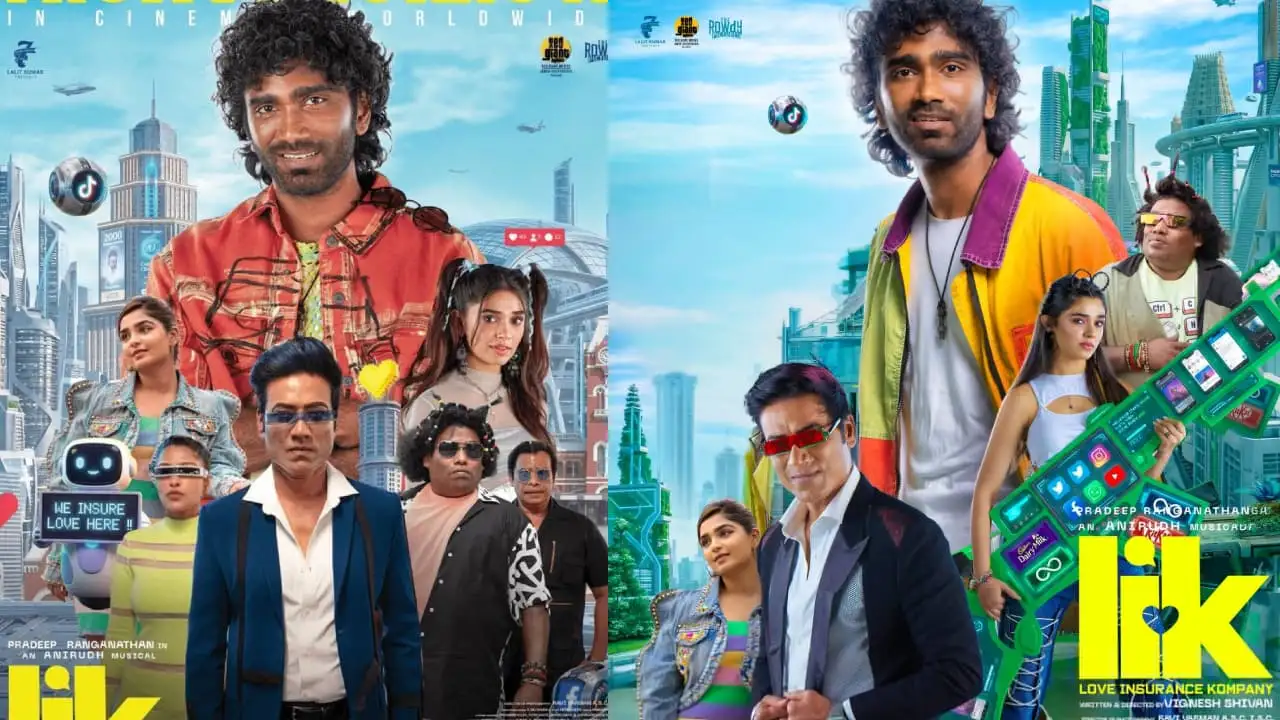
I am talking about the neon-drenched, high-energy, and slightly chaotic world of Love Insurance Kompany.
After years of waiting and title changes, Vignesh Shivan finally dropped his futuristic vision on us, and man, the vibes are off the charts. Pradeep Ranganathan is doing his “Vibe Vassey” thing, Anirudh is blasting our ears with bangers, and S.J. Suryah is being, well, S.J. Suryah.
But here is the thing about high-concept sci-fi rom-coms. They are like a beautiful glass building; they look amazing until you start looking for the cracks.
While I had a blast watching the colourful 2040 version of Chennai, my analyst brain was screaming at the screen. The movie is a hit, no doubt about that, but it is also a giant bucket of “wait, how does that work?” moments. We are seeing a massive opening at the box office, but the “logic police” on social media are already out in full force.
If we are going to celebrate the win, we also have to talk about the messy bits. Love Insurance Kompany tries to be a Black Mirror episode with a Kollywood soul, but it often trips over its own shoelaces. Let’s dive into the logic gaps that left me scratching my head and, more importantly, how a few small tweaks could have turned this “good” film into a “legendary” masterpiece.
The App That Thinks It Is God But Acts Like a Filter
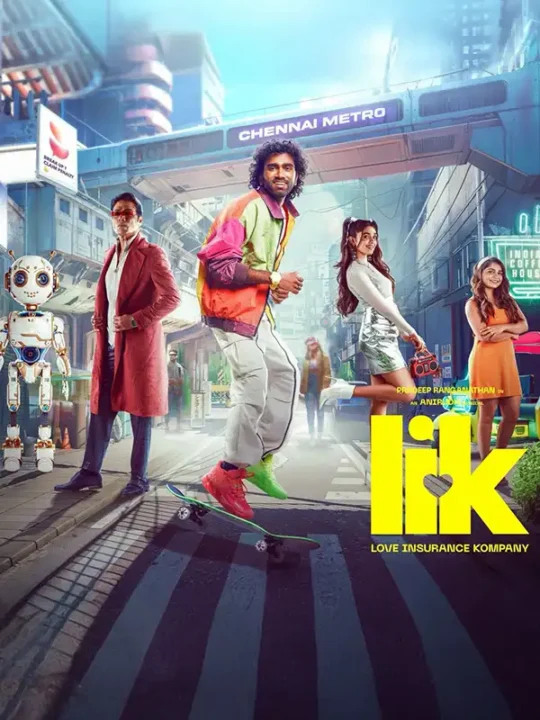
The biggest selling point of the movie is the LIK app. Suriyan, played with his usual eccentric brilliance by S.J. Suryah, claims he hasn’t built an app; he has built God. In the year 2040, people trust this algorithm more than their own parents when it comes to picking a partner.
It scans your likes, dislikes, and compatibility to give you a percentage. If it’s high, you’re golden. If it’s low, you’re single.
The problem?
The movie never actually explains the “how.” In a world where we are talking about 2040 technology, the app feels incredibly basic. According to Cinema Express, the film struggles to define the rules of the game.
We see the love meter spike and drop, but why?
Is it tracking heart rates?
Is it reading brain waves? Is it just checking your search history? Without clear rules, the stakes feel fake. When Dheema, played by Krithi Shetty, decides to dump Vassey because the app says so, it feels like she’s reacting to a bad horoscope rather than a futuristic AI.
To fix this, the script needed a “rules of engagement” scene. Imagine if the app used biometric feedback—real-time dopamine levels or pheromone tracking.
If the audience knew that the app was reading the chemistry in their blood, the conflict between “feeling” and “data” would have been way more intense. Instead, we are just told to believe it’s God because S.J. Suryah says so.
The Organic World Irony
One of the most interesting ideas in the film is the “Organic World.” This is a rehabilitation centre run by Vassey’s father, played by Seeman. It is supposed to be a sanctuary for people addicted to social media and technology. The concept is pure gold: a phone-free zone in a world obsessed with screens.
However, the continuity here is wild. Lensmen Reviews pointed out that for a place that claims to be a phone-free zone, it sure has a lot of technology floating around. We see characters smashing phones one minute and then seemingly using gadgets the next. The “rehab” process consists mostly of people looking sad and breaking things.
If they had leaned into the “cult” aspect of the Organic World, it would have been a great parallel to the “cult” of the LIK app.
One side worships the machine, the other side hates it. Instead, it just feels like a convenient place for the characters to hang out when the plot needs a break. A tighter focus on the psychological toll of leaving the grid would have added some much-needed weight to the second half.
S.J. Suryah’s Missing Backstory
Let’s talk about Suriyan. He is a billionaire who hates human unpredictability. He wants to automate love because he thinks humans are messy. It’s a classic villain motivation, but we never learn why he feels this way. Did someone break his heart? Was he a victim of a bad “human” relationship?
According to The Hindu, the film misses a cue to offer Suriyan a credible backstory. Without it, he is just a loud, colourful antagonist who exists to be defeated.
In a movie about love insurance, the creator of the company should have the most tragic love story of all. Imagine if he had created the app because he lost a partner to someone the “data” would have warned him about. That would have made his face-off with Pradeep’s character personal. Instead, it’s just a clash of ideologies that ends in a trite pre-climax fight sequence.
The 2026 and 2040 Timeline Confusion
The movie jumps between a recognisable 2026 and a neon-soaked 2040. While the visual contrast is stunning—shoutout to Ravi Varman for those visuals—the logic of how society shifted so drastically in just 14 years is never addressed.
We see high-tech air ambulances and holographic skyscrapers, but the social dynamics feel exactly like a present-day Instagram comment section.
The “fix” here was simple: a montage or a few lines of dialogue explaining the “Great Tech Leap.” If you are going to show Chennai as a utopian megalopolis, you have to show us the bridge that got us there. Without it, the world-building feels like “specious futurism,” as some critics have noted. It looks like a sci-fi movie, but it thinks like a 2024 rom-com.
The reality of the situation is that Vignesh Shivan is a filmmaker of “vibes.” He cares more about the “meet-cute” and the music than he does about the technical specs of a time-jumping app. And for 70 per cent of the audience, that is totally fine!
The film is entertaining, the songs are infectious, and the chemistry is there. But for those of us who want our sci-fi to have some meat on its bones, Love Insurance Kompany feels like a missed opportunity to do something truly groundbreaking.
Here is my take: Love Insurance Kompany is a win for Pradeep Ranganathan’s stardom, but a mixed bag for high-concept cinema.
The movie is doing great numbers—collecting nearly 25 crore in its first four days—because it is fun. But as we move into an era where Indian audiences are watching Black Mirror and Interstellar, the “just enjoy the songs and don’t ask questions” excuse is wearing thin.
It is good news that directors are taking risks with sci-fi in Tamil cinema. But the next time we do a “future” movie, let’s hire a “logic consultant” to make sure the app actually makes sense.
Fans should look forward to the OTT release on Netflix later this summer, where you can pause and really see the incredible detail Ravi Varman put into the frames, even if the script has a few holes.
Gulshan Mishra – Journalist
Join BoxOfficeWala
Get Box Office Updates directly on WhatsApp from your personal Box Office Insider.
You May Have Missed



About the Author

Gulshan Mishra
Journalist
BoxOfficeWala News Desk have experienced reporters and analysts focused Team Lead by our Best Journalist Gulshan Mishra.