
How Much a Spin-Off of Raakaasa Could Cost — And How Much Could it Earn?

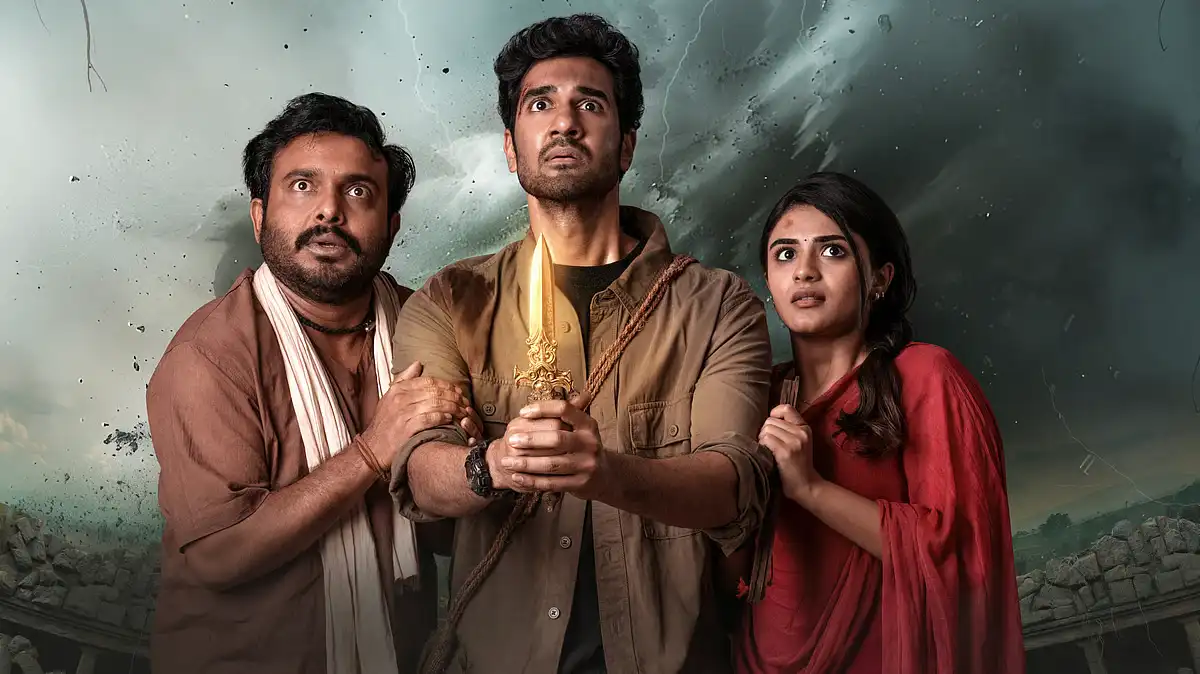
Raakaasa Spin-Off Budget vs ROI: Why Niharika Konidela is Sitting on a Goldmine
MUMBAI — The Telugu box office has a new fantasy-comedy king, and his name is Raakaasa. Just ten days into its theatrical run, the Sangeeth Shobhan starrer has already hit the 150 crore global gross milestone, proving that the combination of high-concept mythology and clean humour is a goldmine for producers Niharika Konidela and Umesh Kumar Bansal. But as the film continues its steady run with a strategic ₹100 ticket price offer in single screens, the trade conversation has already shifted to the inevitable: a spin-off.
We are looking at a scenario where a mid-budget gamble has turned into a massive franchise asset, and the math for its expansion is nothing short of fascinating.
The strategic impact of Raakaasa on the Telugu industry cannot be overstated. It has effectively established Sangeeth Shobhan as a bankable lead for the youth and family demographics, moving him past the “boy-next-door” image into a space where he can anchor a mythological thriller. For Pink Elephant Pictures and Z Studios, this success validates a shift toward “concept-heavy” cinema that doesn’t rely solely on Tier-1 superstars.
The market is now hungry for more “ancient darkness” lore, and the production house is sitting on an IP that could potentially become a multi-film universe. This isn’t just a movie hit; it is a brand-building exercise that has significantly hiked the market value of every creative involved.
Is the “universe” craze sustainable, or are we witnessing a bubble? While everyone is eager to jump on the spin-off bandwagon, the reality is that the fantasy-comedy genre is notoriously difficult to replicate without the “surprise element.”
A spin-off focusing on the ancient darkness or a prequel featuring the supporting cast, like Getup Srinu or Vennela Kishore, might sound like a safe bet, but the costs of scaling up mythological VFX can quickly eat into the ROI.
The trade is asking: can a spin-off maintain the same lean, profitable structure as the original, or will the “franchise tax” bloat the budget beyond recovery?
The Cost of Expansion: Breaking Down a ₹40 Crore Budget
To understand the financial scale of a Raakaasa spin-off, we first have to look at where the original stood. The first film was mounted on an estimated budget of ₹22 crore, a sensible figure for a fantasy-comedy featuring a rising star.
However, a spin-off usually demands a “bigger and better” approach. For a project likely titled something like Raakaasa: The Awakening or a prequel focusing on the origins of the curse, the production cost would easily touch the ₹35 to ₹40 crore mark.
Why the jump? First, the star equity. Sangeeth Shobhan’s remuneration will likely see a 100% hike after anchoring a 150 crore hit. Second, the VFX and production design.
The original relied on “eerie undertones” and sharp editing, but a spin-off exploring the mythological roots would require more extensive digital assets and intricate period sets.
Finally, the marketing and P&A (Prints and Advertising). A franchise film requires a Pan-India push, potentially adding ₹8 to ₹10 crore to the total spend just to ensure a wide release across the South and the North.
Recovery Logic: Digital Deals and Theatrical Windows
The beauty of a hit franchise is the pre-release cushion. According to reports from TeluguCinema and Gadgets 360, Netflix has already secured the digital rights for the first Raakaasa as part of its 2026 South Indian slate. For a spin-off, the negotiation power shifts entirely to the producers.
A digital acquisition deal for a Raakaasa spin-off would likely fetch between ₹18 crore and ₹22 crore from a top-tier streamer.
When you add the satellite rights (likely staying with Zee due to Z Studios’ involvement) and the audio rights (Saregama), the non-theatrical recovery could easily cover 60% to 70% of the total production cost before a single ticket is sold. This leaves the theatrical distributors with a manageable “break-even” target of roughly ₹15 crore in share, which translates to a gross of ₹35 crore.
The Earning Potential: Target ₹200 Crore?
If the original film grossed ₹150 crore without any significant franchise backing, a well-timed spin-off could realistically eye the ₹200 crore global club.
The theatrical share for a ₹200 crore grosser would be approximately ₹90 to ₹95 crore. After deducting the ₹40 crore budget and the ₹20 crore non-theatrical recovery, the net profit for the producers would sit in the sweet spot of ₹70 to ₹80 crore.
This earning potential is heavily dependent on the theatrical window strategy. The team’s current move to drop ticket prices to ₹100 for single screens on April 10 is a masterclass in “long-tail” earnings. By making the film accessible to families in B and C centres, they are ensuring that the Raakaasa brand penetrates the rural market, creating a massive audience base for the spin-off.
BoxOfficeWala Verdict
Listen, the Raakaasa success isn’t a fluke; it is a calculated win for Niharika Konidela and Manasa Sharma. A spin-off is not just a possibility; it is a business necessity.
My take?
If they can keep the production budget under ₹45 crore and lean into the “clean humour” that worked for the original, they have a blockbuster franchise on their hands.
The risk lies in getting too bogged down in “dark mythology” and losing the family audience that is currently driving the ₹100 ticket rush. If they play their cards right, the Raakaasa universe could be the most profitable mid-tier IP in Tollywood by 2027.
Nitesh Mishra – Box Office Analyst
Join BoxOfficeWala
Get Box Office Updates directly on WhatsApp from your personal Box Office Insider.
You May Have Missed




About the Author

Nitesh Mishra
— Business Analyst (Since 2017)
As a Movie buff with years of experience in film blogging, writing and box office analysis, I specialise in delivering accurate box office insights, movie updates OTT deals and Business Insights. [X, Instagram, Reddit, Threds]