Aadu 3 Ending Decoded: Shaji Pappan’s Future Twist Changes Everything


Add BoxOfficeWala on Google
Get the most accurate box office data and movie results directly in your search feed.
Aadu 3: One Last Ride Part 1 Ending Explained, Timelines, Big Twists and 2026 Malayalam Box Office Update
It is Sunday, April 5, 2026, and the talk of the town in Kochi is still centered on the absolute madness that is Aadu 3: One Last Ride – Part 1.
If you went into the theatre expecting a simple goat-chase like the first two films, you probably walked out scratching your head because Midhun Manuel Thomas just turned the franchise into a full-blown sci-fi fantasy epic.
Shaji Pappan is no longer just fighting local goons; he is now leading rebellions in the 18th century and dodging corporate overlords in the year 2300.
The film has officially entered its third week, and while the box office is on fire, the audience is split down the middle about that wild ending.
People are searching for answers about how the different eras collided, why the goat was replaced by a donkey, and what that final cliffhanger means for the future of the series.
The momentum is undeniable.
After a massive opening weekend coinciding with Eid al-Fitr, the film has managed to maintain a steady grip on the Malayalam market even with competition from other big releases.
It is a cinematic experiment that shouldn’t work on paper, yet here we are, watching a man in a mundu fight a futuristic robot. The scale has shifted from a small village comedy to a ₹65 crore production that spans centuries.
The industry is currently analysing this shift because it signals a new era for Malayalam sequels where “more of the same” is no longer enough to satisfy the 2026 audience.
According to The Indian Express, the film has already grossed over 111 crore worldwide, even managing to surpass the records set by other recent heavy-hitters like Marco and Ajayante Randam Moshanam. This financial success is a massive win for Jayasurya and producer Vijay Babu, but it also creates a unique problem. Fans are now demanding logic in a franchise that was built on being intentionally illogical.
Is the time-travel gimmick just a clever way to sell more character theme songs, or is there a genuine narrative reason for Shaji Pappan to exist in the 18th century? We keep asking for “grand scale” in our movies, but maybe we are losing the simple, grounded charm that made the original Aadu a cult classic in the first place.
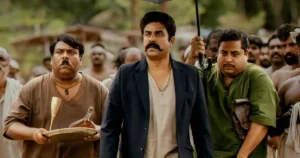
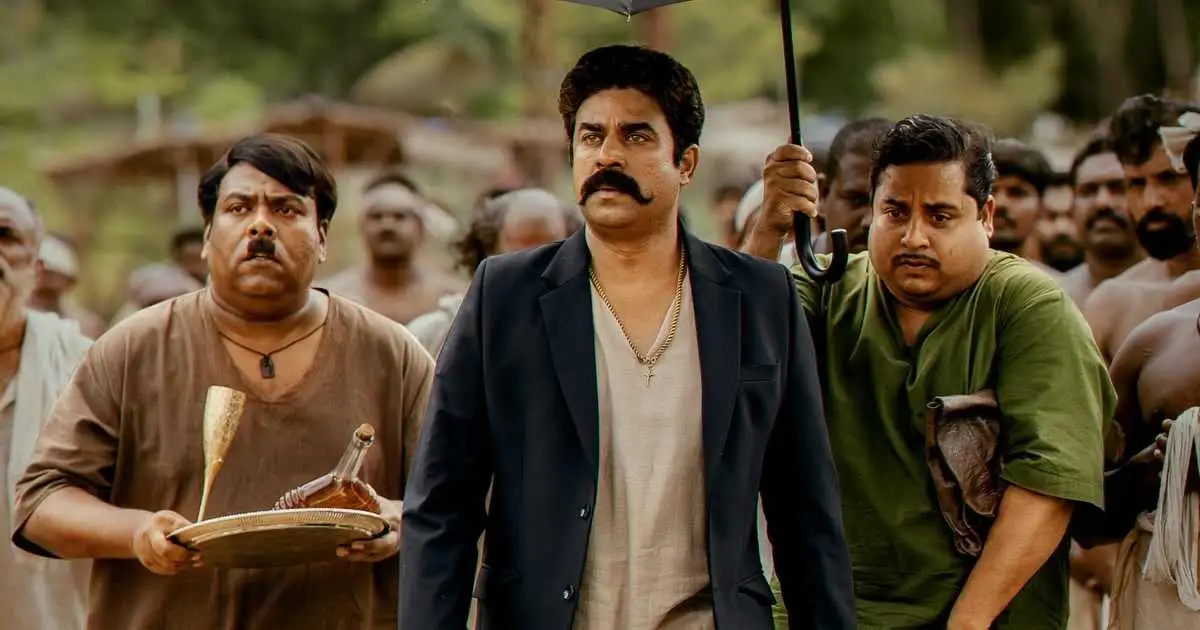
The timeline of Aadu 3 is divided into three distinct segments that eventually bleed into each other during the chaotic climax. In the first timeline, set in the late 1700s, Shaji Pappan is a local chieftain who is standing his ground against the advancing forces of Tipu Sultan.
This era provides some of the film’s biggest laughs, especially since the “Dude” character—played by Vinayakan—appears as a high-ranking general in the invading army who is just as prone to goofy errors as his modern-day descendant.
The present-day timeline follows the gang we already know, while the third segment jumps to the year 2300, where a dark corporate entity rules a dystopian world.

Decoding The Ending And The Donkey Twist
One of the biggest talking points is the “Ending Explained” guide that everyone seems to need after the credits roll.
As reported by The Hindu in their detailed review, the film ends without a definitive resolution, leaving Shaji Pappan and his crew stranded in a state of timeline-crossing limbo. The “big twist” that left theatres stunned wasn’t a hero’s victory, but the revelation that the iconic goat—the very namesake of the film—doesn’t actually appear in this instalment. Instead, the gang is chasing a mysterious donkey that seems to be the key to opening portals between the past, present, and future.
This “Donkey Twist” is more than just a joke. It represents a shift in the “Aadu” lore where the characters are no longer masters of their own fate but are being moved like chess pieces by a higher, potentially supernatural power. The film ends right as the 18th-century Pappan and the 2026 Pappan finally see each other through a rift in time, setting up a “Part 2” that promises a direct confrontation between the different versions of the gang.
The 2300s timeline remains the most mysterious part of the “Full Guide” for this movie.
We see a futuristic version of Arakkal Abu, but the film doesn’t explain how he survived or if he is a clone created by the corporate villains.
This lack of explanation is exactly why some fans are calling the writing “flogged,” while others find the mystery addictive.
The movie runs for nearly 170 minutes, and most of that time is spent introducing these wild new worlds rather than solving the problems they create.
Looking forward, the production team at Friday Film House has already confirmed that work on Aadu 3: Part 2 is in full swing. The goal is likely to release the conclusion by early 2027 to capitalise on this current “Pappan-mania.” The box office trajectory suggests that the film will easily cross the 130 crore mark before it exits theaters, potentially making it one of the most profitable Malayalam films of 2026.
A Risky Bet That Paid Off
I’ve been watching the Shaji Pappan character evolve since 2015, and honestly, the shift to time travel is the boldest move I’ve seen in a Malayalam franchise.
It is “good news” that the makers are taking risks, but it is “bad news” for fans who just wanted a simple comedy.
My take is that Aadu 3 is less of a movie and more of an “experience” designed for the big screen and social media memes.
The cliffhanger is annoying, yes, but it ensures that we will all be there on day one for Part 2.
Look forward to more “alternate versions” of your favorite characters when the sequel drops!
Gulshan Mishra – Journalist
Do you think the “Time Travel” twist made the movie better, or should Shaji Pappan have stayed in his local village for one last ride? Let’s hear your theories in the comments!
🔥 Latest Box Office News




About the Author

Join BoxOfficeWala
Get Box Office Updates directly on WhatsApp from your personal Box Office Insider.