
Raja Shivaji Movie Cast Salaries and ₹100 Cr Budget Analysis


Add BoxOfficeWala on Google
Get the most accurate box office data and movie results directly in your search feed.
How Much Did the Cast of Raja Shivaji Earn? Deep Dive into the Paychecks and Backend Deals of the ₹100 Cr Epic
MUMBAI — The theatrical window is back to its glorious best, and regional cinema is leading the charge. Raja Shivaji, directed by and starring Riteish Deshmukh, has officially entered the box office arena with all guns blazing.
Released on May 1, 2026, the historical epic has already crossed the Rs 50 crore mark worldwide within its first five days. But behind the roaring theatrical collections lies a fascinating financial case study.

When you mount a Marathi film on an estimated budget of Rs 100 crore, the traditional mathematics of the industry goes out the window.
How do you manage the cash flow?
How do you afford a pan-India star cast without crippling your production value?
Today, I am decoding the estimated paychecks, the trade leaks, and the fascinating reality of the Raja Shivaji business model.
The Broader Market Context
The Marathi film industry has historically relied on tight budgets, fast theatrical churns, and solid satellite acquisitions. But Raja Shivaji is not playing by those old rules.
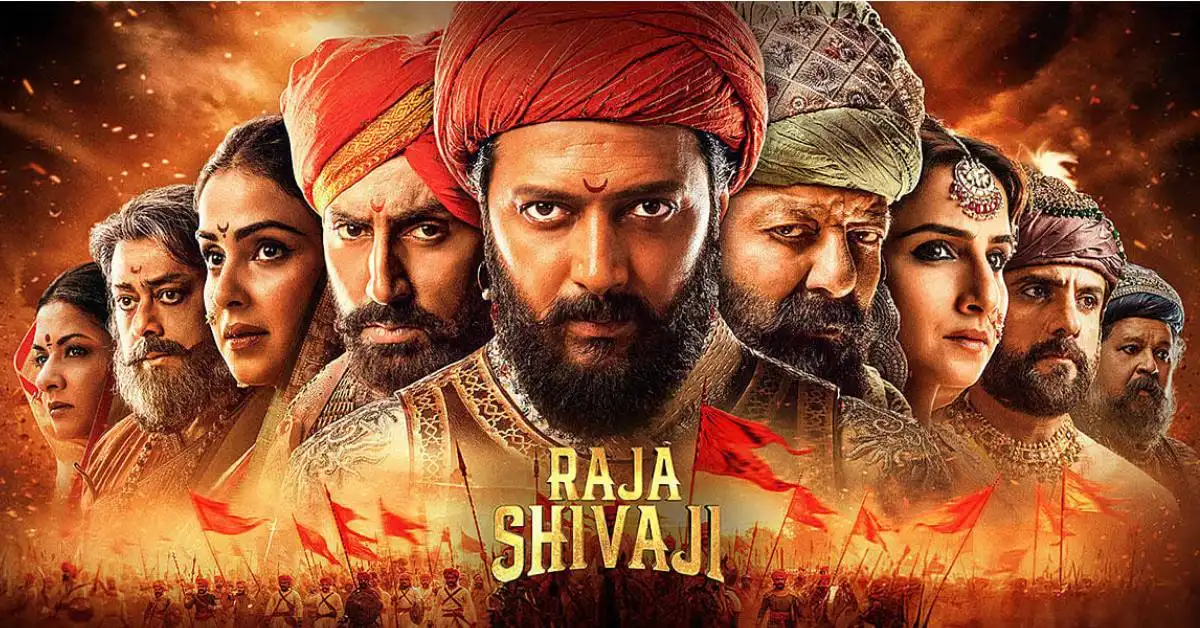
This is a massive swing aimed at expanding the market footprint. By releasing the film in both Marathi and Hindi, the makers are pushing for a pan-India theatrical window and a highly lucrative digital acquisition deal later down the line.
To pull off a Rs 100 crore epic, you need faces that can guarantee opening weekend footfalls across different territories.
That explains the casting of heavyweights like Sanjay Dutt, Abhishek Bachchan, and Vidya Balan. But this strategy immediately raises a red flag in trade circles: how much of that Rs 100 crore budget was eaten up by upfront actor salaries?
Raja Shivaji Initial Trade Leaks & Salary Estimates
Weeks before the release, the trade circuits were buzzing with “leaked” salary estimates. These numbers reflected the standard market rates these actors command for mainstream Bollywood projects. Let us look at what the initial reports claimed:
- Riteish Deshmukh, carrying the monumental role of Chhatrapati Shivaji Maharaj, was heavily rumoured to be charging a premium fee of Rs 15 crore to Rs 18 crore.
- Sanjay Dutt, bringing his massive screen presence to the role of Afzal Khan, was estimated to have taken home a paycheck of Rs 8 crore to Rs 10 crore.
- Abhishek Bachchan, making his Marathi cinema debut as Sambhaji Shahaji Bhosale, was reportedly paid between Rs 6 crore and Rs 8 crore.
- Veteran actor Mahesh Manjrekar (playing Lakhujirao Jadhav) and Fardeen Khan (playing Shah Jahan) were both tagged with estimated fees ranging from Rs 2 crore to Rs 3 crore each.
- Genelia Deshmukh, playing Saibai Bhosale, and Bhagyashree, playing Jijabai, were reported to have earned around Rs 1 crore to Rs 2 crore for their respective roles.
- Vidya Balan, portraying Tajul Mukkhidarat, reportedly charged around Rs 1.5 crore.
If you add up these initial estimates, the talent cost alone would cross Rs 40 crore. That leaves very little room to deliver the grand VFX, massive set designs, and war sequences an epic of this scale demands.
Reality Check: The Backend Magic
Here is where the business logic gets incredibly interesting.
As an analyst, I always tell you to look beyond the upfront numbers. Just a few days ago, Riteish Deshmukh shattered these trade rumours with a massive revelation.
According to a mid-day report, Deshmukh confirmed that all the big actors in the film actually worked for free. He stated that because of the immense respect for Chhatrapati Shivaji Maharaj, none of the major stars charged their standard fees.
He specifically mentioned that Salman Khan, who makes a powerful cameo as Jeeva Mahala, also worked completely free of charge out of brotherhood and respect for the project. +1
So, what does “free” actually mean in the movie business?
It means the Rs 100 crore budget was almost entirely pumped onto the screen.
Riteish, who spent three and a half years writing this project, essentially restructured the financial risk. When actors defer their upfront fees for passion projects, they usually enter into backend profit-sharing agreements.
Once the film recovers its investment through theatrical revenues, satellite rights, and upcoming OTT deals, the profits are distributed among the stakeholders. This Hollywood-style backend model is the only mathematically sound way to mount regional epics.
BoxOfficeWala Verdict
This is a masterclass in risk management.
By convincing top-tier talent to forego upfront cash, Riteish Deshmukh mitigated the financial pressure of the Rs 100 crore price tag.
The Rs 50 crore global gross in five days proves that the audience is hungry for well-mounted historical dramas.
As the summer holidays kick in, this theatrical run is going to be incredibly long and profitable. This model proves that passion combined with smart backend structuring can elevate regional cinema to global standards.
Nitesh Mishra – Box Office Analyst
Now, I have a question for you all.
Do you think more regional filmmakers should adopt this zero-upfront, backend-profit model to attract Pan-India stars, or is this a one-time exception driven purely by emotion?
Drop your financial takes below!
🔥 Latest Box Office News




Join BoxOfficeWala
Get Box Office Updates directly on WhatsApp from your personal Box Office Insider.
You May Have Missed





About the Author