Sony vs T-Series: Did Overpaying for Ustaad Bhagat Singh Music Backfire?


Add BoxOfficeWala on Google
Get the most accurate box office data and movie results directly in your search feed.
Ustaad Bhagat Singh Audio Rights Deal: The Secret Bidding War Between T-Series and Sony Music for Pawan Kalyan’s 2026 Blockbuster
Sony Music and T-Series went head-to-head for Pawan Kalyan’s Ustaad Bhagat Singh music rights. Discover the shocking numbers and why one giant walked away!
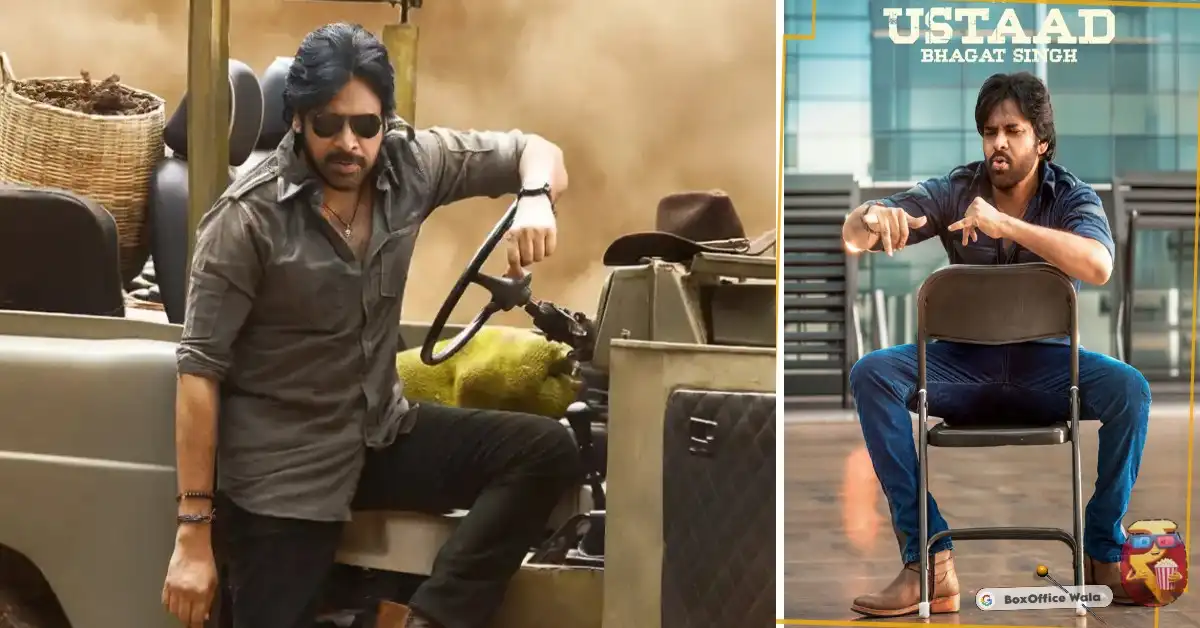
The dust is finally settling in Hyderabad this Sunday morning, March 22, 2026, but the tremors from the Ustaad Bhagat Singh (UBS) release are still being felt across the boardrooms of Mumbai and Chennai.
While fans are busy debating the film’s “routine” storyline and Pawan Kalyan’s explosive screen presence, the real war was fought months ago behind closed doors.
We are talking about the mother of all bidding wars for the audio rights, where Sony Music India eventually outmuscled the aggressive T-Series to clinch what is now being called one of the most expensive music deals in Telugu cinema history.
The numbers floating around trade circles are nothing short of legendary. Sony Music reportedly shelled out nearly ₹25 to ₹30 crore to own the sounds of this Harish Shankar directorial.
This isn’t just about a few songs; it is about the “Power Star” brand. The film, which hit theatres on March 19 to coincide with Ugadi, has already crossed the ₹50 crore gross mark in just two days, proving that no matter the reviews, the combination of Pawan Kalyan and music director Devi Sri Prasad (DSP) is pure gold.
The Corporate Face-Off: Bhushan Kumar vs. Sony’s South Stronghold
For the last two years, T-Series has been on a relentless hunt to capture the South Indian market.
Bhushan Kumar has been signing every big-ticket project from Pushpa 2 to the latest Prabhas movies.
Naturally, Ustaad Bhagat Singh was the next big target on their radar. T-Series wanted UBS to solidify their dominance in the Telugu market, especially with the movie being a high-voltage commercial entertainer.
However, Sony Music India had a home-ground advantage. They have a deep-rooted history with Rockstar DSP and have handled almost all of Harish Shankar’s previous musical hits.
As per early industry estimates during the bidding phase, T-Series made a massive opening offer that nearly tilted the scales. But Sony didn’t just match the price; they offered a marketing blitz that focused heavily on the global diaspora.
They knew that the overseas market for Pawan Kalyan is massive—a fact later confirmed when the film’s overseas theatrical rights were locked at a solid ₹12 crore.
The Two-Composer Strategy: A Deal Maker or Breaker?
The most fascinating part of this deal was the late-stage entry of Thaman S. In a move that shocked many, the makers brought Thaman on board for the background score because DSP was tied up with prior commitments and couldn’t meet the tight post-production timelines.
Usually, having two musical giants on one project complicates rights negotiations. Who gets the credit for the BGM tracks?
How do you split the streaming royalties?
According to a report by IANS, the production house Mythri Movie Makers clarified that this was a “mutual consent” decision to ensure the film met its March 19 release date.
Sony Music, having already secured the rights for DSP’s songs like Aura of Ustaad and Dekhlenge Saala, had to quickly pivot their strategy to include Thaman’s score. This “powerful musical combination” actually added more value to the album, making it a “must-have” for Sony despite the logistical headache.
The industry reality check here is simple: are these astronomical sums actually sustainable? We are seeing music labels pay ₹30 crore for films that might struggle with a “mixed” talk on day two.
The digital rights for UBS were already sold to Netflix for a whopping ₹80 crore, but music rights are a different beast. They rely on “long-tail” revenue—meaning the songs must stay in the charts for months, not just weeks, to break even. With reviews calling the narrative “outdated,” the pressure on DSP’s tunes to keep the brand alive is immense.
Breaking Down the Timeline: From May 2023 to the Ugadi Crash
The journey of this deal was as long as the movie’s production. Music sessions began way back in May 2023.
At that time, the film was titled Bhavadeeyudu Bhagat Singh. Then came the political shifts, the title change to Ustaad Bhagat Singh, and the long delays as Pawan Kalyan focused on his duties as Deputy CM. Throughout 2025, while the movie was in limbo, the music rights value actually increased. Why? Because the scarcity of a PK release made the anticipation reach a fever pitch.
By the time the Aura of Ustaad lyric video dropped in late February 2026, Sony Music was already seeing the ROI. The song became an instant “mass” anthem. Then, just 16 days ago, the makers advanced the release date to March 19. This sent the music label into a frenzy to release the remaining singles, including the third single that dropped on March 6.
Despite the “John Doe” court injunctions against piracy and trolls, the film faced a massive leak within hours of its release. But even piracy couldn’t stop the YouTube views from skyrocketing, which is where Sony Music is currently clawing back its investment.
The battle between T-Series and Sony for UBS has set a template for 2026. Labels are no longer just buying “audio”; they are buying a stake in the “fan-war” economy. Every time a fan plays a song to celebrate a box office milestone, a label gets a micro-payment.
Let’s be honest—Sony Music played a very risky game here.
They bet ₹30 crore on a film that had a troubled production history and a director coming off some criticism. But here is why I think they won: The DSP Factor. Even when a movie is “average,” DSP’s songs have a way of surviving at weddings, parties, and political rallies for years.
T-Series losing this deal might actually be a blessing in disguise for them, as it allows them to keep their “powder dry” for the upcoming OG or Hari Hara Veera Mallu updates.
This is good news for producers because it proves the “South Market” is still the highest-paying territory for music.
What’s next? Keep an eye on the BGM release of Thaman; that’s where the real “elevation” junkies are heading!
Do you think music rights costing ₹30 Crore is justified when the movie gets mixed reviews, or should labels start linking their payments to the Box Office performance? Let me know in the comments!
🔥 Latest Box Office News




About the Author

Join BoxOfficeWala
Get Box Office Updates directly on WhatsApp from your personal Box Office Insider.