

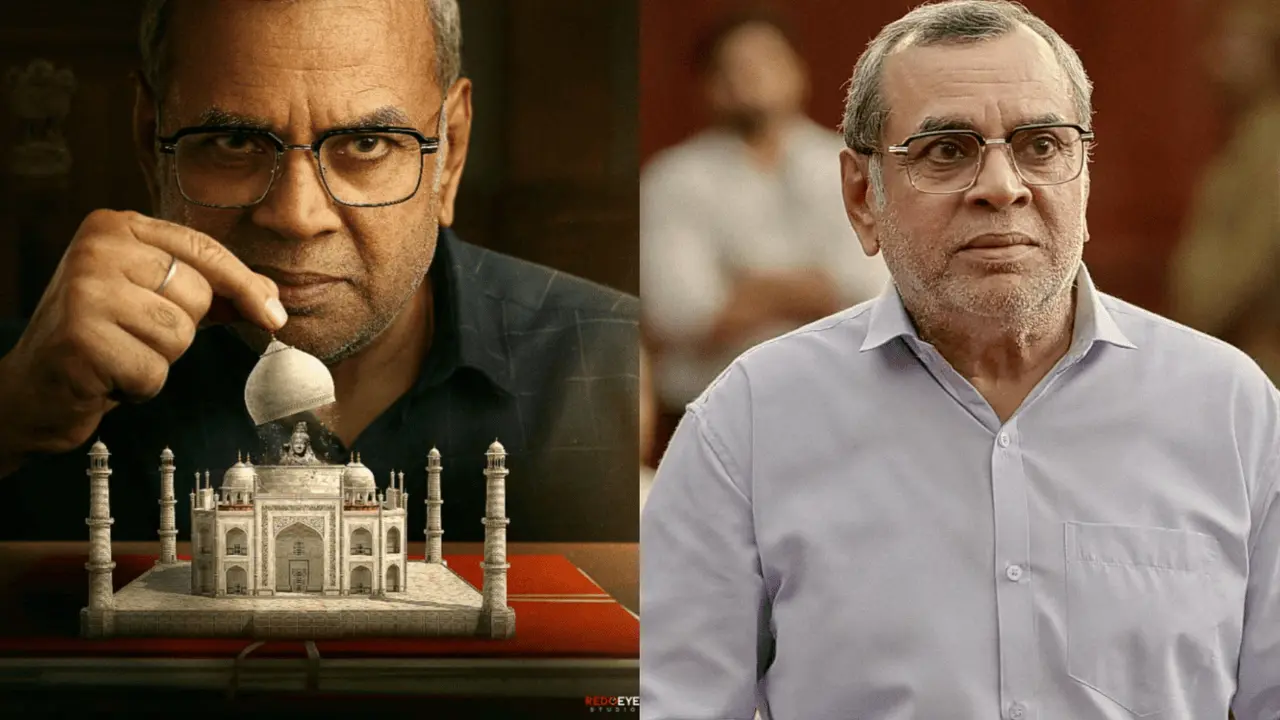
Paresh Rawal’s film, The Taj Story, has become the biggest low-budget success of the year. The film, released on October 31, 2025, has earned over ₹16.82 Crores at the box office so far. The film’s success is a huge surprise for the entire industry.
But the biggest shock is the movie’s budget. According to Paresh Rawal himself, the film was made on a small budget of only ₹7 to ₹8 Crores. This figure was shared by the veteran actor on social media, as also reported by The Times of India.
In an era where Bollywood stars charge ₹50 to ₹100 Crores, how did a film with big names like Zakir Hussain and Namit Das manage such a low cost? The answer lies in the actors’ paychecks.
The Budget Puzzle: ₹7 Crores for a Bollywood Film
The typical cost of a Bollywood film is ₹50 Crores or more. The Taj Story is a serious drama. It has a big cast of respected character actors. For the film to cost only ₹7 Crores, the stars must have taken a massive pay cut.
Paresh Rawal’s Remuneration: The Biggest Sacrifice
Paresh Rawal is the main hero of the film. He is a huge name in Indian cinema. He usually charges a high fee, especially for comedy or main roles.
- His Usual Fee: For his bigger films, Paresh Rawal’s fee is generally in the range of ₹8 to ₹12 Crores.
- The ‘Taj Story’ Fee (Estimated): Since the entire film budget is only ₹7-8 Crores, Paresh Rawal could not have charged his usual fee. He likely took a huge reduction.
- The Partnership Model: It is highly probable that Paresh Rawal worked on a Profit-Sharing model. Instead of taking a fixed, large fee upfront, he might have charged a small fee (e.g., ₹2 to ₹3 Crores) and taken a percentage of the film’s profits.
- The Reason: Paresh Rawal likely believed strongly in the film’s subject. By taking a lower fee, he helped the producers keep the budget down, ensuring the film would be a hit faster. This shows his commitment to the content over his salary.
This low upfront fee is the single biggest reason why the film was made so cheaply.
The Supporting Cast: Value Over Price
The film is a courtroom drama. It relies heavily on great supporting actors. The Taj Story features brilliant actors like Zakir Hussain and Namit Das.
Zakir Hussain’s Fee (The Opponent)
Zakir Hussain plays the opposing lawyer, a critical role in the film. He is a highly respected character artist.
- Estimated Fee: Actors of his caliber usually charge between ₹50 Lakhs and ₹1 Crore per project.
- The ‘Taj Story’ Fee (Estimated): Given the very tight budget, it is likely that Zakir Hussain was paid on the lower end, probably around ₹50 Lakhs to ₹75 Lakhs. He may have also agreed to a lower rate because the film was a quick shoot or because he supported the film’s message.
Namit Das and Other Key Actors
Namit Das (who plays Paresh Rawal’s son) and Amruta Khanvilkar (who plays Harsha Patel) are crucial supporting roles.
- Estimated Fee: These actors are likely charged between ₹30 Lakhs and ₹50 Lakhs each.
- The Logic: In a budget of ₹7 Crores, the total money spent on all actors (including Paresh Rawal) likely did not exceed ₹4 to ₹5 Crores. The remaining ₹2-3 Crores would have gone into production, shooting, and advertising.
The Real Story: The Genius of the Low Budget
The low cost of the film is the main reason it is a massive success today.
- Low Risk: By keeping the budget at ₹7 Crores, the film only needed to collect about ₹9 to ₹10 Crores to be called a financial hit.
- High Profit: Since the film has already collected over ₹16.82 Crores, the producers have made a clear profit of more than ₹6 Crores. This means the film is already a Super Hit.
- The Alternative Budget: Some media reports had estimated the film’s budget to be ₹25 Crores. If that had been the case, the film would still be struggling to break even at its current collection. The low-salary model saved the project.
This approach shows a shift in Bollywood. Actors are sometimes prioritizing a film’s success over their personal payday. They are ready to risk a fixed fee for a share of the high profit that a low-budget hit can bring.
BoxOfficeWala Opinion
“The salaries of the actors in The Taj Story perfectly reflect the film’s success strategy: Content First, Pay Later. Paresh Rawal deserves praise for reportedly taking a small upfront fee. This was a smart move that made the film almost instantly profitable. Instead of demanding ₹10 Crores, he helped make the project safe. The total cast fee was probably kept below ₹5 Crores. This model is the future for meaningful cinema. It shows that when the script is strong, the stars can afford to take a pay cut for the larger success. The film’s Super Hit verdict is a direct result of the actors’ financial understanding.”
Detailed Methodology Table: Estimating Actor Fees
The fees below are estimated based on the extremely low total budget (₹7 Crores) reported by Paresh Rawal, and the necessity to keep production and promotion costs covered.
| Actor | Role/Status | Standard Fee (Estimate) | Estimated Fee for The Taj Story | Analysis / Justification |
| Paresh Rawal | Lead Star, Veteran | ₹8-12 Crores | ₹2-3 Crores (or profit share) | Massive reduction, likely accepting a profit share to ensure the film’s low budget. |
| Zakir Hussain | Prominent Character Actor | ₹75 Lakhs – ₹1 Crore | ₹50-75 Lakhs | Paid a competitive fee, but within the strict financial limits of the project. |
| Namit Das | Supporting Lead (Son) | ₹50-70 Lakhs | ₹30-40 Lakhs | An affordable and high-quality actor, critical to the story’s emotional core. |
| Other Cast | (Amruta, Brijendra, etc.) | ₹10-30 Lakhs | ₹5-15 Lakhs each | Experienced actors often take lower fees for character-driven, meaningful roles. |
| Total Cast Fees (Approx.) | ₹4-5 Crores | Allows the remaining ₹2-3 Crores to cover all shooting, post-production, and marketing costs. |
