

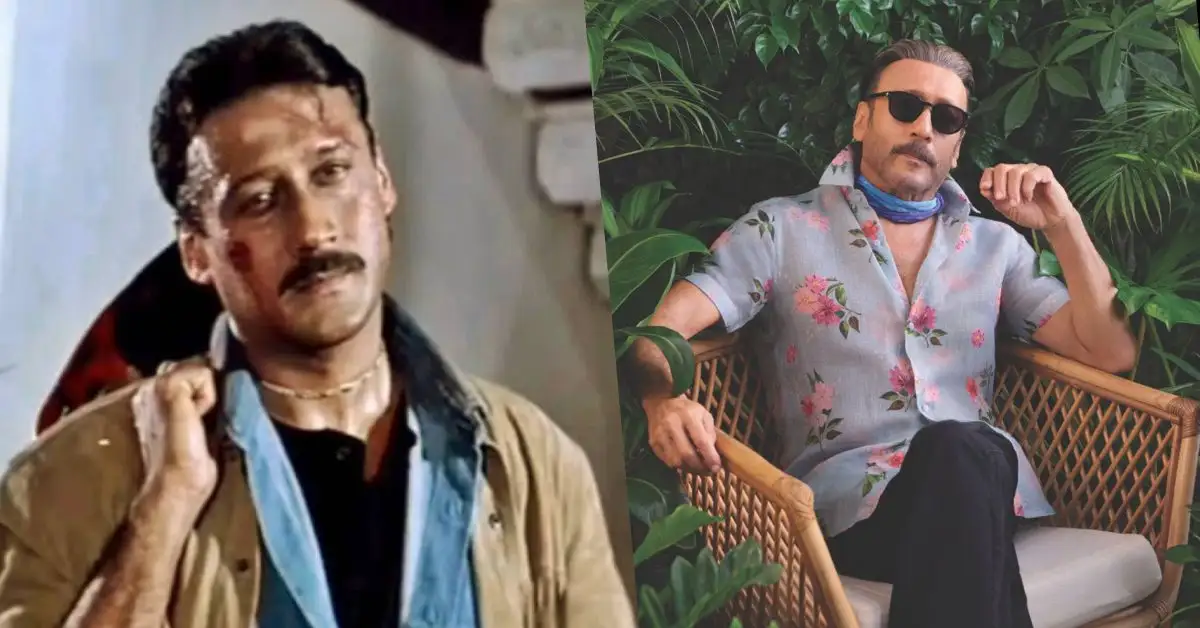
Detailed Box Office Report Card For Jackie Shroff: Analysing 36 Years Of Stardom
MUMBAI — Listen to me very carefully. If you think the “Jaggu Dada” swag is just for the cameras, you need to look at the ticket windows from 1990 to 2026. We are looking at a career that has survived more transitions than a corporate merger.
Jackie Shroff has been part of some of the most historic theatrical runs in Indian cinema history. From the massive All Time Blockbuster success of Border in 1997 to the recent ₹268.35 crore India nett of Singham Again, the man is a theatrical survivor.
While his solo hero days might be in the rearview mirror, his presence in mega-blockbusters like Jailer (which grossed over ₹600 crore worldwide) and Dhoom 3 proves that the trade still views him as a high-value anchor for any big-budget project.
The Context: The Masterclass In Theatrical Pivot
If you understand the psychology of the Indian moviegoer, you know they are ruthless with ageing stars.
Most lead actors from the 80s simply faded away when the Khans took over in the 90s. But not Jackie. He did something brilliant. He realised early on that the trade was shifting toward ensemble casts and high-concept spectacles. Instead of fighting for solo hero billing in B-grade projects, he moved into the “authoritative anchor” space.
In the early 90s, he was still a massive solo draw with films like Baap Numbri Beta Dus Numbri and 100 Days. But look at the pivot. By the mid-90s, he became the backbone of massive hits like Khalnayak and Rangeela. He wasn’t just “the other guy”; he was the gravitas that held the film together.
This transition is why he is still relevant in April 2026. He didn’t just survive the 90s; he conquered them by becoming a versatile theatrical asset. Whether it was the intense soldier in Border or the quirky Chunnilal in Devdas, he kept the footfalls coming for the distributors.
Here is a hard reality check for everyone.
We often talk about “stars” being replaced by “actors” today, but Jackie Shroff is both. The current audience doesn’t just want a face; they want a vibe. His recent turns as the main antagonist in Baby John or the veteran leader in the Rohit Shetty cop universe show that even if the film ends up as a Disaster or a Semi-Hit, his individual “screen-time ROI” remains high.
Why?
Because the mass audience in Tier-2 and Tier-3 cities still connects with the “Jaggu Dada” persona.
They might not show up for a solo Jackie Shroff thriller anymore, but they will definitely buy a ticket if he is facing off against a younger superstar.
Breaking Down The 36-Year Report Card

The Golden 90s: From Solo Power to Blockbuster Ensembles
The decade started with a bang. Baap Numbri Beta Dus Numbri in 1990 was a massive Hit, proving his grip on the North Indian heartland.
Then came 1991 with Saudagar, which was another solid success. But the real trade eruption happened in 1993 with Khalnayak. Distributor data from that era shows that Khalnayak was a Blockbuster, dominating single screens for months.
Jackie followed this up with one of the most aesthetically successful runs in trade history. 1942: A Love Story (1994) and Rangeela (1995) showed his range, but it was 1997 that etched his name in the record books forever.
Border was not just a hit; it was an all-time blockbuster. The footfalls for Border were so high that many single screens in Rajasthan and Delhi-UP reported over 90% occupancy for the first four weeks of the theatrical run.
The 2000s: The Transition to the Anchor Role
As the millennium turned, Jackie moved seamlessly into character-driven roles. Mission Kashmir in 2000 and Lajja in 2001 were major theatrical events.
While Lajja ended up as a Flop due to its high budget, Devdas in 2002 brought him back into the Hit column. He became the “safe” choice for filmmakers like Subhash Ghai and Sanjay Leela Bhansali.
The mid-2000s saw him exploring comedy. Hulchul (2004) was a clean Hit with a long theatrical run, followed by Bhagam Bhag (2006), which also secured a Hit verdict.
Jackie Shroff’s pairing with younger comic stars helped keep his face fresh for the newer multiplex audience. He wasn’t the lead, but he was the “essential ingredient” that made the recipe work for the distributors.
The Franchise Era and the Pan-India Explosion (2010–2026)
In the last decade, Jackie Shroff has become the ultimate “Franchise King.” Dhoom 3 in 2013 was a Blockbuster, and Housefull 3 in 2016 was a Hit with over ₹108 crore India nett. He realised that the new age of cinema is about “spectacle.” His involvement in Sahoo (2019) and Bharat (2019) helped those films secure Hit and Semi-Hit statuses, respectively.
Fast forward to the current decade. The 2023 Blockbuster Jailer saw him in a powerful cameo that drove massive buzz in the North Indian circuits. Then came Singham Again in late 2024.
Despite the clash, it pulled in a massive opening and settled as a Semi-Hit with a ₹268.35 crore India nett. However, it hasn’t all been smooth sailing.
Baby John, released in late 2024, was a brutal Disaster with collections struggling to cross the ₹60 crore mark against a massive ₹180 crore budget. But even in that failure, trade analysts noted that his performance as the antagonist was the only talking point that sustained some weekday occupancy.
The Legend of Longevity
My verdict is simple
Jackie Shroff is the gold standard for “theatrical adaptation.” He is one of the few actors who can boast of having an All Time Blockbuster in 1997 and a ₹600 crore worldwide grosser in 2023.
As of April 2026, the trade still values him for his ability to add “legacy weight” to a project. He is no longer a solo ticket seller, but he is a massive “multiplier” for any franchise.
Looking ahead, his lifetime collection across this 36-year window is practically unquantifiable when you factor in the sheer volume of his work.
While the solo hits are fewer today, his “hit ratio” in big-budget ensembles remains one of the best for a veteran actor.
My verdict?
He will continue to be the go-to villain or patriarch for the next five years, especially in the pan-India space where his “cool factor” transcends language barriers.
Nitesh Mishra – Box Office Analyst
About the Author

Nitesh Mishra
— Business Analyst (Since 2017)
As a Movie buff with years of experience in film blogging, writing and box office analysis, I specialise in delivering accurate box office insights, movie updates OTT deals and Business Insights. [X, Instagram, Reddit, Threds]