
Aadu 3: One Last Ride Plot Holes: 3 “Time-Travel” Logic Gaps That Have Fans Confused!

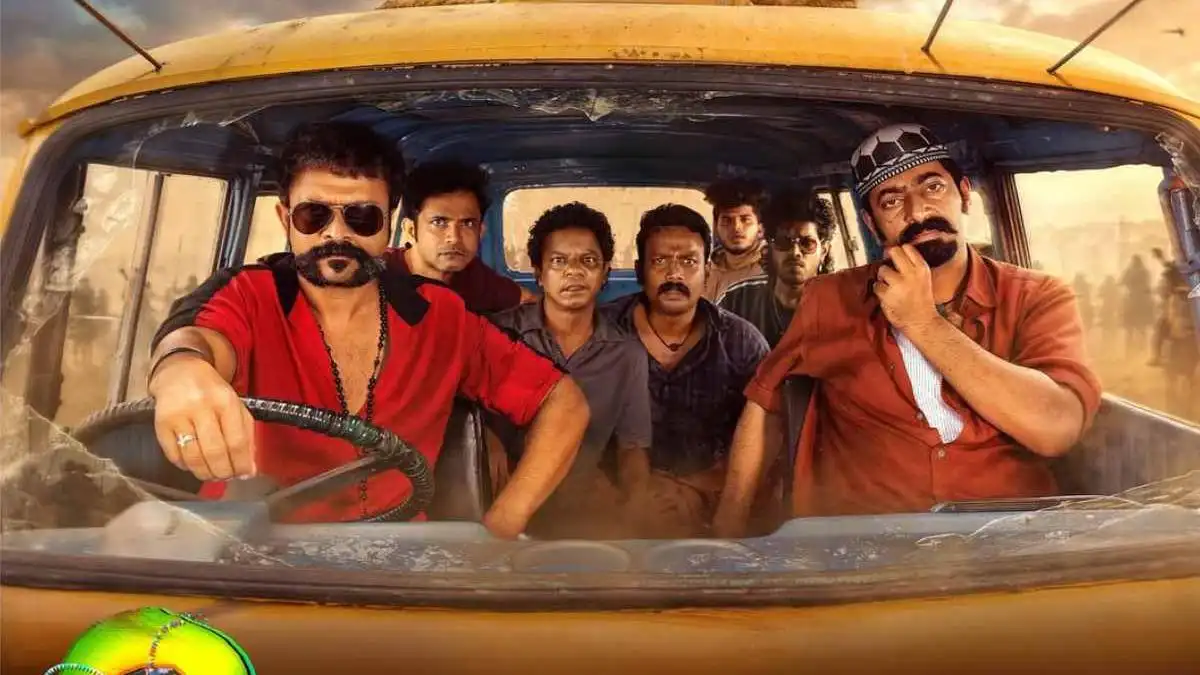
Why The Star Dust Mystery In Aadu 3 Needs A Better Explanation In Part 2
MUMBAI — Shaji Pappan is back in his mundu-clad glory, but this time he has traded his local tug-of-war ropes for literal time-travelling celestial dust!
Aadu 3: One Last Ride – Part 1 hit the screens on March 19, 2026, and while the box office numbers are screaming “Superhit,” the hardcore fans on Reddit and Twitter are doing some heavy-duty investigation.
The movie has already crossed the 120 crore mark worldwide, making it a massive winner for Jayasurya and director Midhun Manuel Thomas, but we need to talk about the “scientific chaos” that has left some viewers more confused than Arakkal Abu in a math class.
The Aadu franchise has always been about “controlled madness,” but with this third instalment, the scale went galactic—literally. We are looking at a story that spans three timelines: the year 1750, our present day, and a futuristic 2370 AD.
While the ambition is praiseworthy, jumping from a local bridge in Kerala to a dystopian future ruled by a “Totalitarian Organisation” has created some logic gaps that are currently trending under the “Aadu 3 Plot Holes” hashtag.
As per the latest social media sentiment analysis and detailed breakdowns from The Indian Express and Lensmen Reviews, the biggest point of contention is the MacGuffin of the film—the Star Dust. This celestial substance is supposed to rewrite timelines, yet half the characters chasing it don’t even know what it looks like or what it actually does.
In the chaotic final act, the “temporal rupture” pulls everyone across eras, but the logic of who goes where and why seems a bit too “convenient” even for a spoof.
There is a major question hanging over the 1750 timeline: If Padmanabhan Thampuran and his gang are ancestors of Shaji Pappan’s crew, why do they have the exact same quirks, weaknesses, and even the same “idiot DNA” across 500 years?
While it works for the comedy, it creates a massive continuity headache when the film tries to take its “sci-fi” elements seriously.
Are we watching a spoof of Project K or a serious fantasy epic?
The movie often struggles to decide, leading to what many are calling a “tonal identity crisis.”
The “Sarbath Shameer” Paradox and Future Flaws
One of the most viral complaints involves the futuristic version of the “Organisation.” For a group that has mastered time travel and exhausted Earth’s resources by 2370, they seem remarkably easy to outsmart by a bunch of guys from 2026 whose greatest achievement is winning a goat.
The power balance is completely off. If the Next Part is going to land the plane successfully, Midhun Manuel Thomas needs to explain why these high-tech villains are behaving like cartoon henchmen from a 90s Telugu movie.
The “fix” here is simple: lean into the spoof! The most successful parts of Aadu 3 are when the film acknowledges its own absurdity. Instead of trying to explain the physics of the Nagathan Bridge anomaly, the sequel should focus on the “idiocy” being the actual force that disrupts time.
As noted in several fan theories, the only way to patch the plot holes is to reveal that the characters’ collective lack of common sense is what actually protects them from the Organisation’s logic-based attacks.
Trimming the Fat for the Grand Finale
Another major issue is the 170-minute runtime. Many fans felt the subplot involving Captain Cleetus and his “Tamil Nadu track” was entirely unnecessary for the main plot. It felt like a filler episode in a high-stakes series. To fix the narrative flow for Part 2, the editors need to be as ruthless as Saathan Xavier.
Trimming the “fan service” sequences that don’t move the Star Dust plot forward would make the experience far more “crisp” and engaging.
The reality of the situation is that Aadu fans don’t actually care about “scientific accuracy.” They care about the chemistry. The “Reality Check” here is that while the visuals and the Shaan Rahman BGMs are top-tier, the soul of the franchise is Pappan’s equation with his gang.
When the script forces them to be “prophets of the future” rather than “idiots of the present,” the magic fades slightly.
I honestly believe that if Part 2 focuses more on the Donkey Life style parodies and less on the complex “Organisation” lore, we are looking at the greatest conclusion to a comedy trilogy in Indian cinema. The fans are ready to forgive the plot holes as long as the “Pinky the Goat” energy remains intact.
Let’s see if Shaji Pappan can fix the timeline without losing his mundu in the process!
Join BoxOfficeWala
Get Box Office Updates directly on WhatsApp from your personal Box Office Insider.
You May Have Missed


About the Author

Gulshan Mishra
Journalist
BoxOfficeWala News Desk have experienced reporters and analysts focused Team Lead by our Best Journalist Gulshan Mishra.