
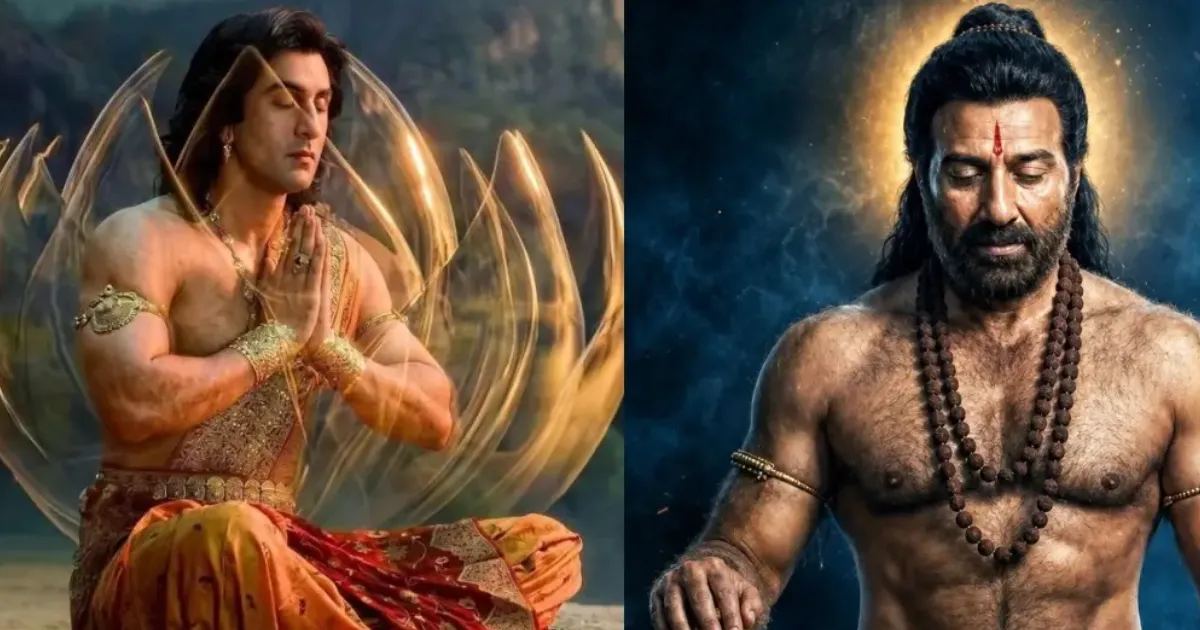
Hi, Everyone , in this article i am gonna use Ramayana 10 Days Worldwide collection as a baseline pre verdict. So Read the article, This is the first Deep researched article I am publishing on boxOfficeWala, If you like it then let me know in the comments, so i will continue Writing this types of article.
A Sort table of contents for you to know topis i have Covered. Trilogy Rumours → Sunny Deol’s Standalone Hanuman Movie in the Diwali 2027 → Hanuman’s Backstory Bridges Ramayana Part 1 and Part 2 → Hanuman 2027 Movie Box Office Blueprint → Endgame Blueprint → Upside of a 2027 Solo Film → Ideal 2026–2028 Release Roadmap
Nitesh Mishra
Ramayana: Part One hit theatres on November 5, 2026, and left audiences staring at a Diwali 2028 date card for the finale. When I walked out of the theatre after watching Ranbir Kapoor’s Rama take his vow over Jatayu’s funeral pyre, the lobby chatter wasn’t about Yash’s brief Ravana tease or Sai Pallavi’s Sita.
Everyone wanted to know why Nitesh Tiwari needed two full years to finish a story that was supposed to be a back-to-back duology. Within forty-eight hours, trade circles started floating whispers that Prime Focus Studios had quietly split the second half into two separate films.
You have to separate what producer Namit Malhotra actually confirmed from rumour-mill noise.
Malhotra and co-producer Yash (Monster Mind Creations) pushed Part 2 from Diwali 2027 to Diwali 2028 because the Lanka war sequences need another full year of action choreography and DNEG visual effects work. Malhotra did admit in interviews that he originally conceptualised the epic as a trilogy before tightening it into two parts, adding that future expansion depends on audience reception.
At his October 19 Hyderabad pre-release event, he also named character spin-offs for Hanuman, Surpanakha, Jatayu, Indrajit, and Angad — right before reports surfaced of talks with Sunny Deol, who charged ₹45 crore for his role, to lead a solo Hanuman movie.
Stretching the core Ramayana into three main-line films would be a creative trap.
Part One already runs 3 hours and 15 minutes to reach Sita’s abduction. Valmiki’s remaining chapters — Kishkindha, Sundara Kanda, Yuddha Kanda, and the return to Ayodhya — thrive on escalating war momentum, just like SS Rajamouli’s Baahubali 2: The Conclusion (2017) did when holding the line at two films delivered ₹1,810.6 crore worldwide.
Padding that second half into two parts risks bloating a reported ₹4,000 crore budget with filler.
Instead of ruining the core duology, Prime Focus Studios already has a much sharper way to fill that empty Diwali 2027 window.
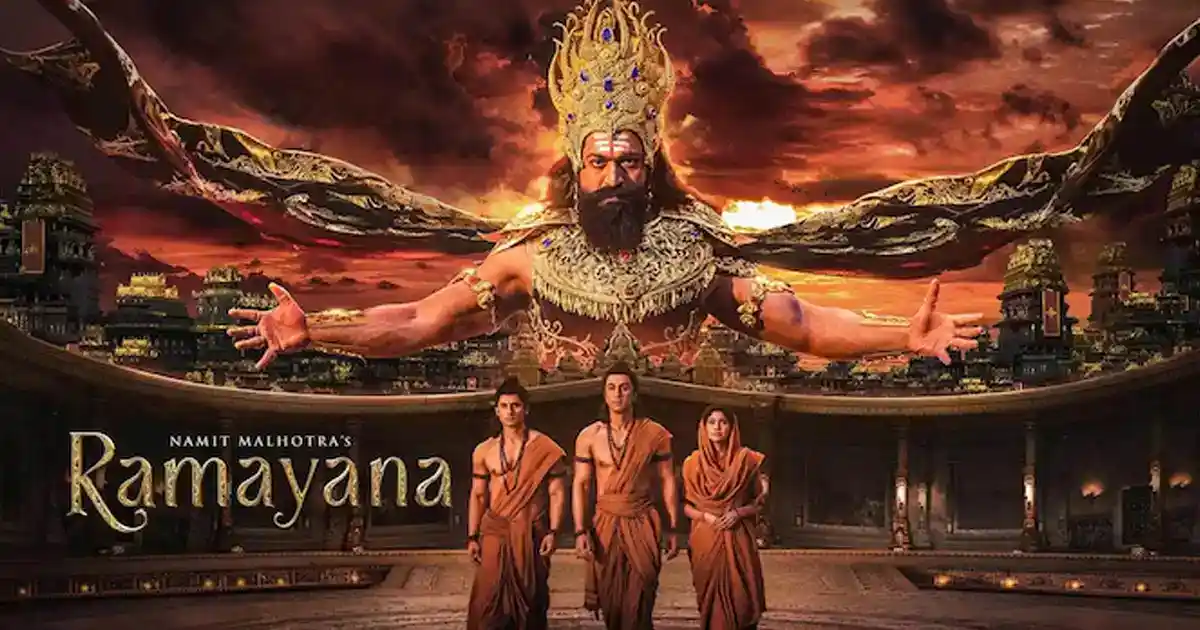
Why Namit Malhotra Delayed Ramayana: Part 2 to Diwali 2028 (Trilogy Rumours Fact-Checked)
Rather than dragging Ranbir Kapoor’s main arc across three bloated films, Prime Focus Studios has a much cleaner card to play in that empty Diwali 2027 window.
Whether Namit Malhotra and director Nitesh Tiwari are already quietly mapping this out behind closed doors or still debating when to roll cameras on Sunny Deol’s solo outing, the smartest move is sitting right in front of them. Current trade chatter places the standalone Lord Hanuman film after the main saga wraps up.
I think waiting until 2029 or 2030 misses the single biggest scheduling opportunity on the Indian release calendar.
Opinion
If you fast-track Sunny Deol’s Hanuman origin-and-awakening movie directly into Diwali 2027, you solve two massive headaches with one greenlight.
First, you protect the tight two-part structure of the core epic so Ramayana: Part 1 and Part 2 never lose their narrative grip. Second, you hand global audiences a high-emotion theatrical event twelve months before Ramayana: Part 2 lands in Diwali 2028.
Audiences don’t stay hyped for twenty-four months on posters and behind-the-scenes featurettes alone. We’ve all seen big-ticket Indian franchises bleed momentum when the gap between chapters stretches past a single festival cycle. Dropping a full-scale solo spectacle right in the middle turns a dead calendar year into an active franchise bridge.
This isn’t some random filler detour cooked up just to keep distributors happy. Hanuman’s personal journey actually fits the exact timeline gap between the two main chapters, leading straight toward his first meeting with Lord Rama and an explosive theatrical launchpad for the Part 2 teaser.
Can Sunny Deol’s Standalone Hanuman Movie Fill the Diwali 2027 Release Window?
You only have to look at the closing minutes of Ramayana: Part One to see how cleanly this puzzle locks together.
Right after Jatayu dies warning Rama that he and Lakshmana cannot conquer Lanka alone, the credits roll into that cliffside tease of Sunny Deol’s Hanuman gripping his gada from behind. When the Hanuman Chalisa kicks in with voices like Diljit Dosanjh, Sukhwinder Singh, Mohit Chauhan, Kailash Kher, and Anirudh Ravichander while Nitesh Tiwari deliberately hides Deol’s face, the theatre is primed for an immediate continuation.
A standalone 2027 film picks up that exact emotional thread without skipping a beat. Instead of rushing through Hanuman’s childhood as Vayuputra, the story gets room to breathe on an IMAX screen. You watch him leap toward Surya, thinking the sun is a ripe fruit, only to take Lord Indra’s vajrayudha strike and carry the sages’ curse that locked away his boundless strength.
Living with that amnesia inside Kishkindha gives Sunny Deol a grounded emotional arc before his powers ever awaken.
If Prime Focus Studios skips a solo release, Part 2 will have to cram decades of Vanara kingdom politics and Hanuman’s origin into fifteen hurried minutes of exposition. That kind of rushed backstory kills pacing right when the war for Lanka needs to accelerate.
We have already seen how compressed origin beats weigh down two-part spectacles. A solo chapter keeps Part 2 lean while letting audiences actually care about Sugriva’s exile and Jambavan’s mentorship.
Best of all, this structure builds toward one specific moment that every fan in the hall will wait two hours to see. Once Hanuman finally remembers who he is, his path leads straight into his first face-to-face meeting with Ranbir Kapoor’s Lord Rama — and sets up the loudest theatrical launchpad imaginable for the Part 2 teaser.
How Hanuman’s Backstory Bridges Ramayana Part 1 and Part 2
Picture that exact third-act payoff playing out on an IMAX screen in Diwali 2027. After spending two hours watching Bajrangbali wrestle with his forgotten past in Kishkindha, the film climbs toward the rocky terrain of Rishyamukha Hill.
Bajrangbali steps forward — first in disguise, then in his true form — and comes face-to-face with Ranbir Kapoor’s Lord Rama and Ravi Dubey’s Lakshmana as they search for Sita. That single reunion turns a solo origin story into mandatory viewing for anyone following the core epic.
I think audiences will walk out of that screening feeling like they just witnessed the true emotional launch of the Lanka campaign. They should not treat Hanuman’s devotion as an automatic trait; instead, the film should earn the exact second he pledges himself to Rama’s mission alongside Sugriva.
Then Prime Focus Studios drops the real theatrical hook right as the credits start rolling.
Attaching an exclusive post-credits teaser for Ramayana: Part 2 (Diwali 2028) — giving fans their first full look at Yash’s Ravana and the impending war across the ocean — guarantees massive repeat footfalls. Fans won’t wait for a compressed YouTube upload when they can experience that footage with a roaring festival crowd. We have seen how an attached theatrical preview turns a solo chapter’s opening weekend into a shared cultural event.
Of course, pitching a bridge film sounds bold on paper until you check the box office scoreboard. Global studios and Indian filmmakers have already tested this exact release formula and cashed massive checks from it.
The Box Office Blueprint: Avengers: Endgame, Hanu-Man, and Kalki 2898 AD
You don’t have to guess how a standalone bridge film performs between two massive franchise chapters because Hollywood already ran that exact experiment.
When Kevin Feige and Marvel Studios needed to hold audience attention between Avengers: Infinity War and Avengers: Endgame, they didn’t stretch the main battle into three parts or leave theatres empty for twelve months.
They dropped a solo origin movie right in the middle and turned a waiting period into a billion-dollar runway.
Look at why Prime Focus Studios sits in an even stronger position here than Disney did seven years ago. Marvel had to introduce an unfamiliar cosmic hero to general audiences from scratch before the big finale arrived.
Namit Malhotra and Nitesh Tiwari don’t have to explain who Lord Hanuman is to a single family in Mumbai, Patna, or Hyderabad. Every household across India already carries a deep emotional bond with Bajrangbali before a single frame of footage even hits the screen.
Recent domestic box office history backs up that cultural equity with hard cash. We have already watched Indian audiences turn Hanuman-rooted stories and mythological universes into massive pan-India moneymakers without needing Hollywood-scale marketing budgets.
To see why a Diwali 2027 Hanuman solo film is practically a low-risk goldmine, we should look at the exact numbers behind Marvel’s 2019 bridge strategy first — before putting Indian mythological box office returns right beside them.
The Avengers: Infinity War → Captain Marvel → Endgame Blueprint
Start with April 2018, when Avengers: Infinity War walked off with $2.05 billion worldwide on a $300 million budget and left theatres stunned. Thanos snapped away half of all life, and Nick Fury’s pager flashed a symbol belonging to a hero nobody had ever seen on screen before. They did not rush Avengers: Endgame into cinemas; Marvel slotted Brie Larson’s Captain Marvel into March 2019 on a tighter $175 million production budget. That seven-week window before the finale turned a standalone origin story into required homework for anyone tracking the main saga.
Tell the truth, How many of you liked Captain Marvel movie, I did not, the story was poorly written and captain marvel has too much power to handle in and ‘alien war’ fighting movie. She has power to fight gods.
Only Powerful villains make a main character journey worthy of watching.
Opinion

Even with mixed reviews and noisy fan debates, cliffhanger momentum pushed Captain Marvel to $1.13 billion globally — roughly 6.4 times its production cost. Seven weeks later, Avengers: Endgame ($400 million budget) detonated for $2.799 billion worldwide.
I watched that exact pattern play out across Indian multiplexes too, where audiences bought tickets just to make sure they didn’t miss a single clue before the finale.
Now compare Marvel’s risk profile with what Prime Focus Studios holds today. Disney had to convince mainstream ticket buyers to care about Carol Danvers from zero before she ever met Tony Stark or Steve Rogers. Namit Malhotra and Nitesh Tiwari face zero character-awareness risk with Lord Hanuman, who already stands as the most revered devotee and action icon in the Ramayana canon.
Better still, you don’t even have to rely on a Hollywood case study to prove how fiercely Indian audiences show up for mythological spectacles. Two massive domestic box office runs from 2024 already handed Prime Focus Studios all the local proof it needs.
Hanu-Man and Kalki 2898 AD Prove Audience Appetite
In January 2024, Prasanth Varma’s Hanu-Man arrived in theatres over Sankranti. Mounted on a modest ₹40 crore budget with Teja Sajja and zero pan-India star power, the film grossed between ₹298 crore and ₹350 crore worldwide. That 7.5x to 8.75x return launched the Prasanth Varma Cinematic Universe overnight and proved how fiercely devotee-driven Hanuman action pulls multi-generational families across urban and rural centres back into cinema halls.
Five months later, Nag Ashwin’s Kalki 2898 AD scaled that exact formula onto a much larger canvas.
Led by Prabhas, the June 2024 release converted a ₹600 crore production budget into ₹1,042 crore to ₹1,100 crore globally by fusing Hindu epic lore with serialised universe-building. In theatre single-screen crowds cheer louder for Ashwatthama’s mythological payoffs than any futuristic weapon or vehicle on screen.
Indian ticket buyers clearly reward studios that treat ancient lore as an ongoing theatrical event.
Ramayana: Part One has already confirmed that exact appetite exists for this franchise.
Collecting ₹685.60 crore net in India within its first ten days across Hindi, Telugu, Tamil, Kannada, and Malayalam, the film has locked in family audiences across every major domestic circuit.
You don’t have to wonder whether viewers will show up for Nitesh Tiwari and Namit Malhotra’s visual world when the box office ledger is already shouting yes. Putting Sunny Deol’s Hanuman front and centre in Diwali 2027 simply captures an audience already eager to buy tickets.
Once you look past domestic ticket counters, the studio balance sheet makes this financial math look even sharper. Fast-tracking a 2027 solo chapter lets Prime Focus Studios spread heavy VFX asset costs across three releases — while unlocking serious toy merchandising and international revenue before 2028 arrives.
The Financial Math and Global Upside of a 2027 Solo Film
When a studio commits a reported ₹4,000 crore across a two-part mythological epic, every idle festival window burns real money.
Prime Focus Studios and DNEG have already sunk years of R&D into constructing Kishkindha environments, Vanara motion-capture rigs, weapon models, and lighting pipelines for this universe.
Leaving those heavy digital tools sitting in storage until Diwali 2028 makes zero commercial sense when you can put them straight back to work. Routing Sunny Deol’s solo outing into Diwali 2027 turns sunken production spending into an immediate revenue engine.
I have watched too many Indian banners treat each sequel like an isolated expense from Bagghi to Bhool Bhulyiya.
Here, Namit Malhotra owns both the creative IP and the visual effects powerhouse executing the frames. Amortising those pre-built digital assets across a third theatrical release drops the solo film’s production overhead while pulling fresh cash flow into the studio twelve months ahead of schedule.
A Standalone Bajrangbali adventure opens overseas territories that sometimes hesitate over dense, multi-character ensemble epics. Action-driven monkey-god folklore carries instant visual appeal across East Asia, especially in China, where Indian family dramas and mythological heroes have historically found strong theatrical traction.
Releasing a tighter solo spectacle in 2027 warms up those foreign circuits right before Ramayana: Part 2 arrives in theatres. You can see how cleanly the studio ledger stacks up here.
Still, high-level balance sheets only tell half the story until you look closely at controlled production budgets and consumer products. We should look at how asset reuse and toy merchandising multiply operating margins first — before mapping out the China play and an ideal 2026–2028 release roadmap.
Controlled Budgets and Merchandising Scale
You can see where the real profit margin hides once you break down the unit economics of a 2027 solo release.
Part One already absorbed an estimated ₹2,000 crore per-film share of the ₹4,000 crore two-part outlay to build Kishkindha’s terrain and Vanara creature designs from scratch. Because DNEG and Prime Focus Studios already own those finished digital rigs and lighting setups, a character-driven Hanuman feature costs a fraction of Part 2‘s massive Lanka war sequences while keeping identical IMAX visual polish. We rarely see an Indian banner amortise world-building expenses across three theatrical windows like this.
Pair that controlled production spend with Sunny Deol’s raw mass-market pull across North India plus Hans Zimmer and A.R. Rahman’s musical branding, and you get strong family repeat viewings. Beyond ticket counters, Namit Malhotra has already spoken openly about expanding Ramayana into video games alongside theme-park IP.
Lord Hanuman sits right at the centre of that consumer flywheel for families across India. Kids want gada replicas or animated tie-ins, turning a Diwali 2027 theatrical run into a year-round licensing engine before Part 2 even arrives. Even a modest merchandise cut adds clean, high-margin revenue directly to the studio’s bottom line. You don’t get that kind of multi-year retail shelf life from a conventional ensemble war sequel.
Still, domestic ticket sales and toy shelves don’t tell the whole story when you are mounting a ₹4,000 crore global franchise.
International territories that rarely embrace standard Bollywood dramas, led by China and East Asia, hold the biggest upside for a solo Hanuman adventure. Those markets respond immediately to mythological action icons. Tapping that overseas demand also dictates how Prime Focus Studios should sequence its ideal 2026–2028 release roadmap.
If you did not understand something, use this table of contents to read it quickly.
The China & East Asia Factor — And the Ideal 2026–2028 Release Roadmap
Look at what Ramayana: Part One has already pulled off outside India in just ten days, banking roughly ₹408.50 crore across overseas circuits.
Prime Focus Studios is now lining up a Q1 2027 theatrical push across China, Russia, Japan, and South Korea, with Beijing’s censorship review process already underway. When I track how Indian blockbusters cross over in East Asia, one cultural link jumps straight off the page.
Chinese and East Asian audiences grew up on Sun Wukong, the legendary Monkey King whose literary roots share deep historical DNA with Lord Hanuman.
If Part One connects in China during early 2027, dropping Sunny Deol’s solo Hanuman film in Diwali 2027 becomes a smart international play.
You aren’t asking foreign ticket buyers to decode a dense family tree before buying a seat. Instead, you hand them a pure mythological action spectacle built around an icon they instinctively recognise right before Ramayana: Part 2 arrives in Diwali 2028.
That clean cadence turns every festival cycle from 2026 through 2028 into an annual theatrical habit without stretching the main story thin.
Once that bridge holds, Namit Malhotra can roll out his wider spin-off slate covering Indrajit, Jatayu, Angad, and Surpanakha from a position of real box office strength. Each of those side chapters works far better once audiences trust the studio’s universe pacing. We rarely see an Indian banner line up three consecutive festival tentpoles using characters viewers already love. Prime Focus Studios has the overseas momentum plus an open Diwali slot sitting right in front of it.
If you were sitting in Namit Malhotra’s chair right now, would you leave Diwali 2027 empty or bet everything on Bajrangbali?
I personaly woude love to watch a movie on Bajrangbali with the visuals we saw in Ramayna part 1, and it woude help to set up the World of Ramayna too before the big Battel between Lord Rama and Ravana.
Then they can continue with movies and series on Other famous Personalities from Ramayana Movie like a prequel of raja Dashrath Young days or Sequel.
Opinion
Do Not Forget to Rate this Article